


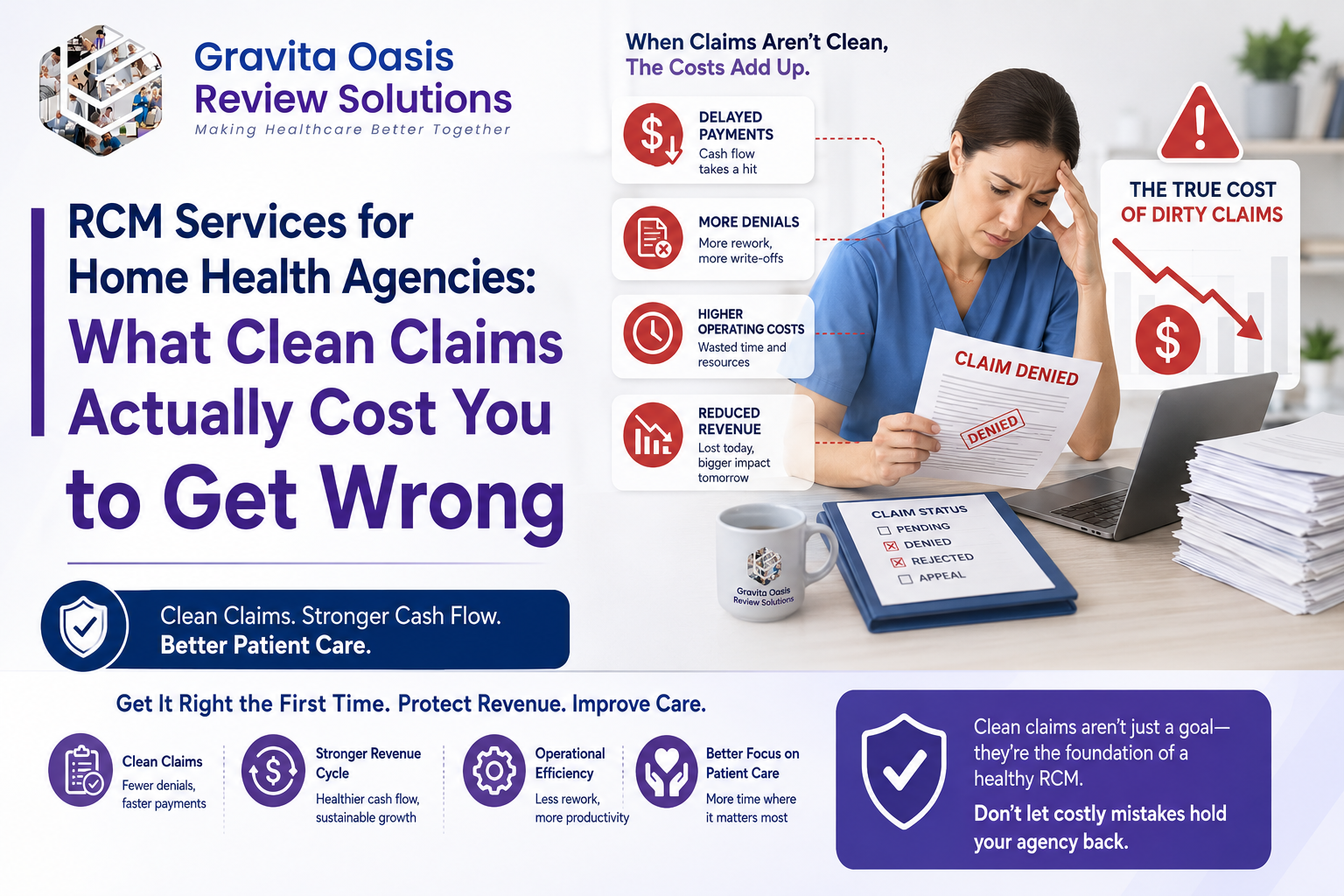
Sarah, the owner of Bright Horizon Home Care, thought everything looked fine when her billing team submitted a Medicare claim for a newly admitted patient. The patient had recently been discharged from the hospital after treatment for congestive heart failure. However, the claim listed generalized weakness as the primary diagnosis instead of heart failure.
At first, nobody noticed the mistake.
The claim went out as scheduled. A few days later, Medicare rejected it because the diagnosis failed to support the patient's eligibility and clinical documentation. The billing team corrected the claim and resubmitted it. Unfortunately, the delay pushed reimbursement back by several weeks.
The problem did not end there.
The coder had to revisit the chart. The clinician spent additional time clarifying documentation. The biller followed up repeatedly with the payer. Management reviewed the case to determine what happened. By the time the agency finally received payment, several employees had invested hours correcting one preventable error.
Months later, an internal audit uncovered similar diagnosis issues in other charts, exposing the agency to additional compliance concerns.
Stories like this happen more often than many agency owners realize. One incorrect claim rarely affects only a single payment. It often triggers a chain reaction that affects cash flow, staff productivity, and compliance performance.
The Real Cost of One Bad Claim
Many agency leaders focus only on the denied reimbursement amount. The actual cost of a bad claim extends much further.
The first expense involves labor.
When a claim denial occurs, someone must identify the reason, review documentation, gather supporting records, correct the error, and resubmit the claim. Depending on complexity, this process may involve coders, billers, clinicians, quality assurance staff, and management.
Resubmission cost adds up quickly.
If an agency experiences frequent coding errors or documentation deficiencies, staff members spend significant portions of their workday correcting previously completed tasks rather than performing productive revenue cycle activities.
Delayed payment creates another financial burden.
Most home health agencies operate with tight cash flow margins. Delayed reimbursement affects payroll planning, staffing decisions, and growth initiatives. Extended accounts receivable aging can place considerable strain on operations.
Claim denials also increase audit exposure.
Repeated errors often attract payer attention. Medicare contractors monitor billing patterns closely. High denial rates, recurring diagnosis discrepancies, and inconsistent documentation may trigger Additional Documentation Requests or other reviews.
Many agencies strengthen financial performance by partnering with RCM Services for Home Health Agencies specialists who identify issues before claims reach payers.
How OASIS Errors Create a Chain Reaction in Billing
OASIS inaccuracies frequently create problems throughout the billing process.
An incorrect functional score, incomplete assessment response, or unsupported clinical finding can affect reimbursement calculations significantly. Even small inconsistencies may alter payment grouping under Medicare billing rules.
The consequences rarely stop there.
When OASIS responses conflict with physician documentation, coding professionals often struggle to assign appropriate diagnoses. Documentation discrepancies may delay claim submission while clinicians clarify patient conditions.
Quality reporting can also suffer.
Agencies rely on accurate assessments to measure patient outcomes and support care planning. Incorrect information may affect quality scores, reimbursement, and public reporting metrics.
OASIS inaccuracies also increase compliance risk.
During audits, reviewers compare assessments against visit notes, physician orders, and supporting documentation. Inconsistencies can result in payment recoupments or additional scrutiny.
Strong quality assurance processes help agencies identify problems before they create downstream billing complications.
What Gravita's QA Process Catches Before Claims Go Out
Prevention starts with thorough review procedures.
At Gravita Oasis Review, quality assurance focuses on identifying documentation and billing issues before claims leave the agency.
OASIS review specialists examine assessments for completeness, consistency, and clinical accuracy. They look for missing information, unsupported responses, and discrepancies that could affect reimbursement.
Coding professionals verify diagnosis selection and sequencing to ensure documentation supports billed services appropriately.
Clinical documentation reviews identify missing physician signatures, incomplete orders, and inconsistencies between disciplines.
Billing teams review claims carefully for authorization issues, demographic errors, eligibility concerns, and payer-specific requirements.
Denial management specialists also monitor trends across multiple claims. Pattern recognition often reveals operational weaknesses before they become significant financial problems.
This proactive approach helps agencies reduce claim denials, shorten reimbursement cycles, and strengthen compliance performance.
Many organizations rely on RCM Services for Home Health Agencies because experienced specialists provide multiple layers of protection throughout the revenue cycle.
Prevention Is Always Cheaper Than Fixing Denials
After auditing many home health agencies, I have learned one consistent lesson: prevention costs less than correction.
A strong quality assurance process requires investment. However, the cost of prevention remains far lower than repeated denials, delayed payments, staff overtime, and compliance risk.
Agencies should review denial trends regularly, conduct internal chart audits, educate clinicians continuously, and monitor documentation quality closely.
Leadership should also evaluate workflow efficiency. Bottlenecks involving coding, physician signatures, authorizations, or documentation often contribute to recurring problems.
The goal is not perfection. Every agency experiences occasional errors. The objective is to identify issues early, correct root causes, and prevent repeated mistakes.
Organizations that prioritize clean claims usually experience healthier cash flow, lower administrative costs, and reduced audit exposure.
Final Thoughts
Clean claims protect much more than reimbursement. They support operational efficiency, reduce administrative burden, strengthen compliance, and improve financial stability.
One preventable error can trigger weeks of delays, additional labor, and unnecessary risk. Agencies that invest in proactive quality assurance position themselves for stronger long-term performance.
If your agency wants to reduce denials, improve documentation quality, and strengthen revenue cycle performance, connect with Gravita Oasis Review through their contact page: https://www.gravitaoasisreview.com/contact.
Frequently Asked Questions
Q1: What makes a home health claim "clean"?
A clean claim contains accurate patient information, complete documentation, proper coding, required authorizations, and no billing errors. Payers can process clean claims without requesting additional information.
Q2: How much does a single claim denial cost a home health agency?
The exact cost varies, but a denial often requires additional labor from billers, coders, clinicians, and managers. Delayed reimbursement and administrative time significantly increase total expense.
Q3: What is the most common reason home health claims get denied?
Documentation deficiencies, coding errors, missing authorizations, and eligibility issues remain among the most common causes of claim denials.
Q4: How long does it take to appeal a denied home health claim?
Appeal timelines vary by payer and denial type. Some appeals resolve within a few weeks, while others may take several months.
Q5: What is the difference between a soft denial and a hard denial in home health?
A soft denial usually involves correctable issues such as missing information or billing errors. A hard denial generally indicates non-covered services or situations where reimbursement is unlikely.

 English
 Arabic
 French
 Spanish
 Deutsch
 Turkish
 Dutch
Dutch
 Italiano
 Russian
 Romaian
 Portuguese (Brazil)
 Greek
Greek