


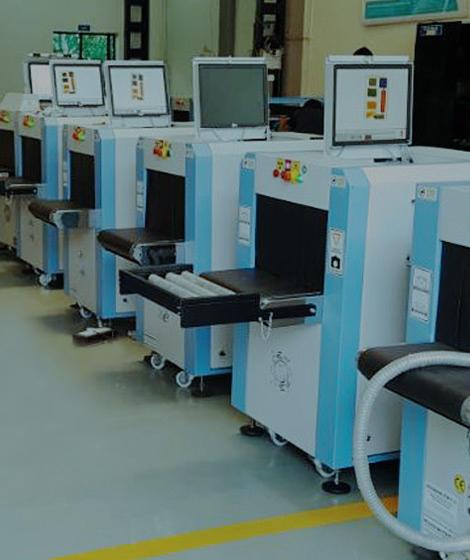
Security threats have changed dramatically over the past two decades, and so has the equipment used to counter them. Bags today carry a far more complex mix of electronics, layered materials, and disguised objects than screening systems were originally designed to detect. This is why modern X-Ray Baggage Scanners rely on dual-energy technology instead of the older single-beam methods that once defined the industry. For facility managers, procurement teams, and security professionals, understanding this shift isn't just a technical curiosity; it directly affects safety, efficiency, and long-term operational cost.
In this article, we'll break down what dual-energy technology actually is, why it has become the industry standard, and how it compares to conventional systems — all in plain, practical language.
What Is Dual-Energy Technology?
Dual-energy technology works by scanning an object with two different X-ray energy levels rather than just one. Each energy level reacts differently with materials based on their density and atomic makeup.
By comparing how much of each energy level is absorbed, the system can distinguish between organic, inorganic, and metals, something a single energy beam cannot perform with the same precision.
A simple analogy: consider shining a spotlight through a curtain vs a metal sheet. A single light source indicates that something is blocking it, but does not specify what it is constructed of. Consider utilizing two distinct types of light and examining how they travel through—you'll notice patterns that indicate the material itself. That is essentially what dual-energy imaging does with X-rays.
How Dual-Energy Technology Works
The process, while sophisticated, follows a logical sequence:
-
Baggage enters the conveyor and goes steadily through the scanning tunnel.
-
Two energy beams scan the object at the same time, each with a unique response to the materials therein.
-
The data is captured by a detector array as the beams pass through the bag.
-
The software compares the absorption levels of the two energy readings to determine the material type.
-
Different materials are color-coded on screen based on their composition.
-
The operator examines the image and makes a final decision, frequently aided by on-screen alerts.
This layered technique provides operators with significantly more useful information than a flat, single-tone image ever could.
Why Traditional Single-Energy Systems Have Limitations
Older single-energy X-ray systems were a significant advancement at the time, but they have serious limitations in today's security environment:
- Similar-looking things might appear practically the same on screen, even if they are composed of very different materials.
- Without a second reference point, it is difficult to distinguish across material compositions.
- Operators must rely on experience and instinct rather than obvious visual clues.
- False alarms proliferate, slowing down checks and causing unneeded bottlenecks.
These shortcomings are not a criticism of earlier technology; they are merely the reason the industry has shifted to a more capable approach.
Benefits of Dual-Energy Technology
Better Material Identification
Color distinction enables operators to quickly distinguish between organic, inorganic, and metallic materials.
Faster Threat Detection
Color distinction enables operators to quickly distinguish between organic, inorganic, and metallic materials.
Higher Image Accuracy
Layered data from two energy levels results in clearer, more detailed high-resolution images.
Improved Operator Confidence
When the screen tells a clearer story, decision-making becomes more efficient and consistent.
Reduced False Alarms
Better material discrimination leads to fewer needless bag checks.
Faster Passenger Throughput
Fewer human re-checks lead to shorter lineups.
Better Security Compliance
Dual-energy systems are more compatible with modern security screening equipment standards set by regulators and industry agencies.
Understanding Colour Coding
Most dual-energy systems employ a color scheme to represent material types.
- Orange is commonly associated with organic compounds (such as explosives, food, and polymers).
- Inorganic materials are generally represented by the colors blue or green.
- Metals are often represented as green or black, depending on their density.
It is worth mentioning that real colour representations may differ depending on the manufacturer, therefore operator training should always adhere to the specific system in use.
Industries That Benefit Most
Dual-energy baggage inspection technology is not exclusive to airports. Its value spans numerous sectors:
- Airports - large passenger numbers necessitate quick, precise screening.
- Railway stations – open access sites necessitate effective checkpoint control.
- Metro Stations – everyday commuting traffic necessitates speed.
- Hotels - guest and luggage screening contribute to a safer property.
- Non-intrusive bag and parcel checking benefits hospitals and other sensitive situations.
- Shopping malls, which have high foot traffic, require inconspicuous but effective security checkpoints.
- Government offices, which handle sensitive records and workers, require a strong security infrastructure.
- Manufacturing plants prioritize asset protection and safety compliance.
- Logistics hubs require constant, scalable screening due to the high number of parcels and cargo.
- Data Centers: Physical security is just as vital as digital security in securing key infrastructure.
Dual-Energy vs Conventional X-Ray Systems
| Feature | Dual-Energy Systems | Conventional Single-Energy Systems |
| Detection Accuracy | High | Moderate |
| Material Identification | Precise, colour-coded | Limited, shape-based only |
| Image Clarity | Sharp, layered detail | Flatter, less defined |
| Threat Detection | Faster and more reliable | Slower, more manual review needed |
| False Alarms | Reduced | More frequent |
| Inspection Speed | Faster overall throughput | Slower due to re-checks |
| Security Level | Higher compliance | Basic compliance |
| Operator Efficiency | Improved decision-making | Higher dependence on experience |
| Suitable Applications | High-traffic, high-risk sites | Low-traffic, low-risk sites |
This comparison is one of the reasons why procurement teams looking for the Best X-Ray Baggage Scanners for their facility are increasingly favouring dual-energy models over older single-beam alternatives, especially when budgets are limited.
The Role of Artificial Intelligence
Artificial intelligence is currently altering how dual-energy systems operate. AI-assisted software can:
- Recognize typical shapes and classifications of objects automatically.
- Potential risks should be highlighted directly on the screen to attract attention faster.
- Reduce human error during lengthy shifts or high traffic times.
- Improve picture analysis by cross-referencing known threat patterns.
- Speed up inspections without sacrificing thoroughness.
Looking forward, the next generation of AI-Powered X-Ray Baggage Scanners is projected to integrate real-time object detection with predictive alerts, making checkpoints faster and more intelligent than ever before. The combination of dual-energy imaging and AI provides the clearest picture yet of where intelligent security screening is headed.
How to Choose the Right Dual-Energy Scanner
Selecting the right system involves more than comparing specification sheets. Key factors include:
- Tunnel size — matched to the volume and size of items being screened.
- Conveyor capacity — supports consistent throughput during peak hours.
- Image quality directly affects detection accuracy.
- Software features — including colour coding, zoom, and image enhancement tools.
- AI capabilities — for automated threat highlighting and analysis.
- Service support — availability of responsive technical assistance.
- Maintenance requirements — ease of upkeep over the system's lifespan.
- Warranty terms — protection against defects and operational issues.
- Compliance certifications — alignment with relevant safety and security standards.
- Training provided — ensuring operators can use the system to its full potential.
Why Choosing the Right Manufacturer Matters
Even the most advanced dual-energy scanner is only as good as the firm that developed it. When evaluating vendors, consider the following:
- Product quality — consistent build standards and reliable components.
- Installation support — smooth setup without operational disruption.
- Technical expertise — knowledgeable teams who understand real-world screening challenges.
- After-sales service — responsive support when issues arise.
- Spare parts availability — minimising downtime during repairs.
- Long-term reliability — equipment that performs consistently over years of use.
This is where an established provider like Krystalvision comes into play – not as the loudest voice in the room, but as a manufacturer dedicated to dependable engineering, timely support, and systems designed for demanding, high-traffic areas.
Conclusion
Dual-energy technology has become the industry standard for a simple reason: it provides better material identification, higher image accuracy, and fewer false alarms than traditional single-energy systems. This results in safer checks and easier daily operations at airports, hospitals, malls, government buildings, and countless other places.
When evaluating sophisticated screening systems, consider performance, safety, scalability, and long-term support just as much as the initial cost. If you're looking for options from a reputable X-Ray Baggage Scanner Manufacturer, Krystalvision's security screening solutions are worth investigating further.

 Arabic
 French
 Spanish
 Portuguese
 Deutsch
 Turkish
 Dutch
Dutch
 Italiano
 Russian
 Romaian
 Portuguese (Brazil)
 Greek
Greek