


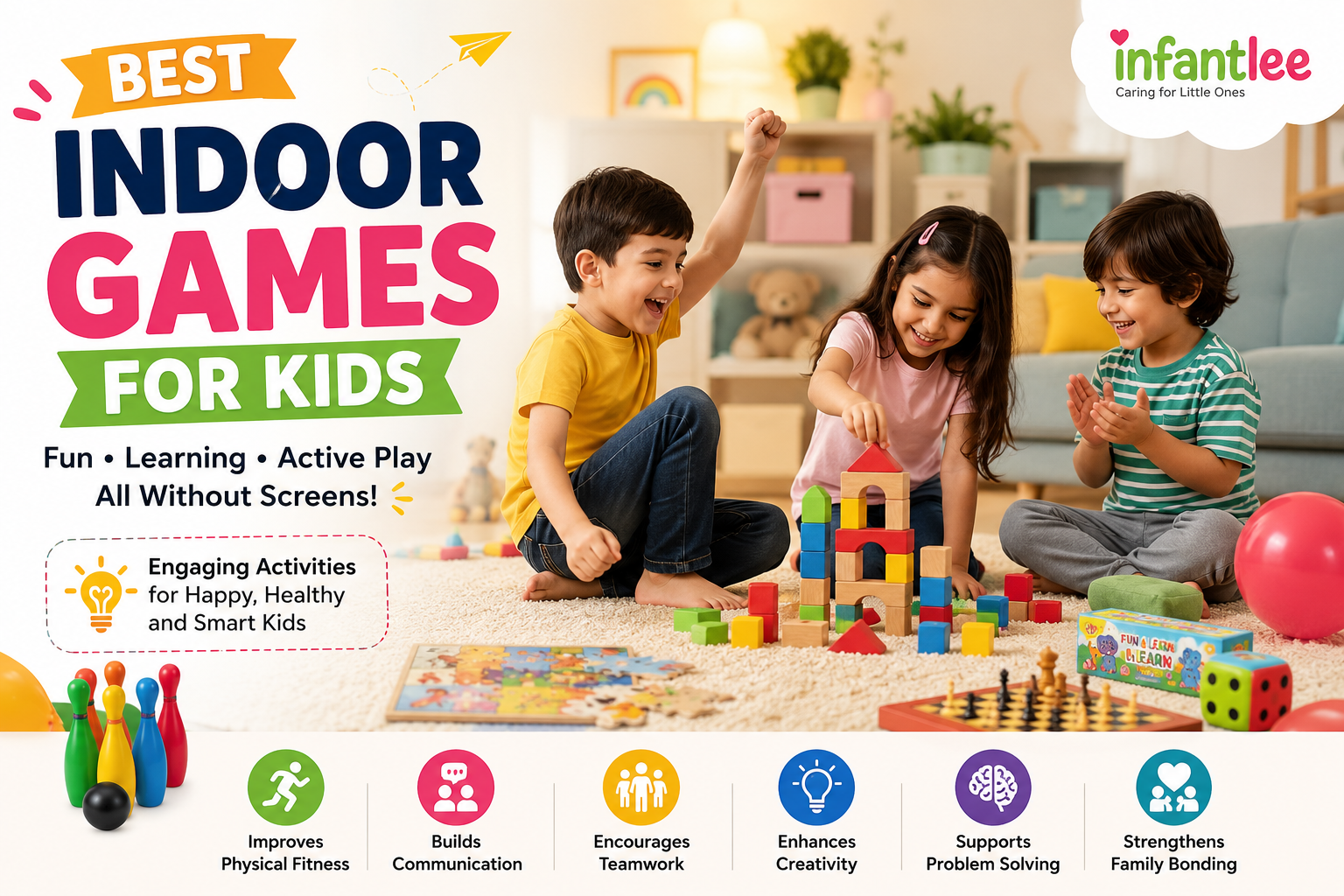
Today's children spend more time than ever using smartphones, tablets, televisions, and gaming devices. While technology offers educational benefits, excessive screen time can reduce physical activity, creativity, and family interaction. That's why introducing indoor games for kids is one of the best ways to encourage active learning while keeping children entertained at home.
At Infantlee, we believe that play is an essential part of childhood development. Whether it's a rainy day, school holiday, or weekend at home, the right indoor activities can help children stay active, improve communication, and develop important life skills. From puzzles and role play to obstacle courses and sports games, these activities create fun learning experiences without relying on screens.
Why Indoor Games for Kids Matter
Indoor games offer much more than entertainment. They encourage movement, teamwork, imagination, and problem-solving while strengthening family relationships. Some of the biggest benefits include:
- Improves physical coordination and motor skills
- Builds communication and social skills
- Encourages teamwork and cooperation
- Boosts creativity and imagination
- Supports emotional development
- Enhances concentration and problem-solving
- Reduces screen time
- Strengthens family bonding
10 Best Indoor Games for Kids
1. Treasure Hunt Adventure
Hide small toys or clues around your home and let children solve simple puzzles to find the final prize. Treasure hunts improve observation skills, logical thinking, patience, and physical activity while keeping children excited throughout the game.
2. Indoor Obstacle Course
Transform your living room into an adventure zone using cushions, chairs, pillows, and soft toys. Children can crawl, jump, balance, and weave through different obstacles. This activity improves balance, coordination, confidence, and overall fitness.
3. Puzzle Challenge
Puzzles help children recognize shapes, colors, and patterns while improving concentration and memory. Parents can join the activity, making it both educational and a wonderful opportunity for quality family time.
4. Simon Says
This classic game teaches children to listen carefully and follow instructions. Commands like "Simon says clap your hands" or "Simon says jump five times" improve listening skills, attention, and body coordination while keeping children active.
5. Balloon Volleyball
Replace a regular ball with a balloon for a safe indoor volleyball game. Children can play individually or in teams while improving reflexes, hand-eye coordination, teamwork, and physical movement. Since balloons move slowly, even younger children can easily participate.
6. Building Block Challenge
Building blocks encourage imagination while strengthening fine motor skills and creativity. Ask children to build a house, castle, bridge, zoo, or school using blocks. These creative challenges promote independent thinking and problem-solving.
7. Musical Freeze Dance
Play your child's favorite music and let everyone dance freely around the room. When the music stops, everyone must freeze immediately. This energetic activity improves balance, listening skills, coordination, and quick reactions while providing excellent exercise.
8. Role Play Games
Pretend play allows children to become chefs, doctors, teachers, firefighters, or shopkeepers. Role-playing develops creativity, confidence, communication, and social skills while encouraging children to express their imagination through storytelling.
9. Board Games
Board games remain one of the best indoor activities for families. They teach children patience, decision-making, strategic thinking, following rules, and taking turns. Simple board games are suitable even for younger children and create enjoyable family bonding moments.
10. Indoor Sports Games
Mini basketball hoops, bowling sets, bean bag toss, ring toss, and soft football games keep children physically active indoors. These activities improve coordination, balance, and fitness while encouraging healthy daily movement.
Tips for Choosing the Right Indoor Games
When selecting indoor games for kids, always choose activities that match your child's age and interests. Prioritize toys made from child-safe materials and ensure there is enough space for safe movement. Games become even more enjoyable when parents and siblings participate together. Combining learning with fun through puzzles, educational toys, building sets, and creative activities helps children develop valuable life skills while staying entertained.
Conclusion
Choosing the right indoor games for kids is one of the best ways to reduce screen time while supporting healthy physical, social, and cognitive development. Activities like treasure hunts, obstacle courses, puzzles, role play, board games, and indoor sports encourage creativity, teamwork, confidence, and active learning in an enjoyable way. By making indoor play a regular part of family life, parents can create meaningful memories while helping children develop skills that benefit them for years to come. At Infantlee, we believe every child deserves opportunities to learn, imagine, and grow through fun, engaging, and screen-free play.

 English
 French
 Spanish
 Portuguese
 Deutsch
 Turkish
 Dutch
Dutch
 Italiano
 Russian
 Romaian
 Portuguese (Brazil)
 Greek
Greek