


Mental health care has become one of the fastest-growing areas of healthcare in the USA. As more people seek counseling, psychiatric care, addiction treatment, and behavioral health services, providers face increasing pressure to maintain accurate documentation while ensuring timely reimbursement. This is where coding and billing for mental health services plays a critical role.
Even the best clinical care can lead to payment delays or claim denials if coding errors, incomplete documentation, or insurance requirements are overlooked. Understanding how the billing process works helps practices improve cash flow, reduce administrative stress, and stay compliant with changing healthcare regulations.
This guide explains the essentials of mental health coding and billing, common challenges, and practical ways to improve reimbursement.
Why Accurate Mental Health Coding and Billing Matters
Mental health billing is different from many other medical specialties. Providers often deliver services that vary in length, treatment approach, and documentation requirements. Insurance companies carefully review claims to ensure they meet payer guidelines.
Accurate coding and billing helps practices:
- Receive timely reimbursement
- Reduce claim denapials and rejections
- Maintain compliance with payer policies
- Improve financial stability
- Support better patient experiences
Every claim should accurately represent the service provided, supported by complete clinical documentation.
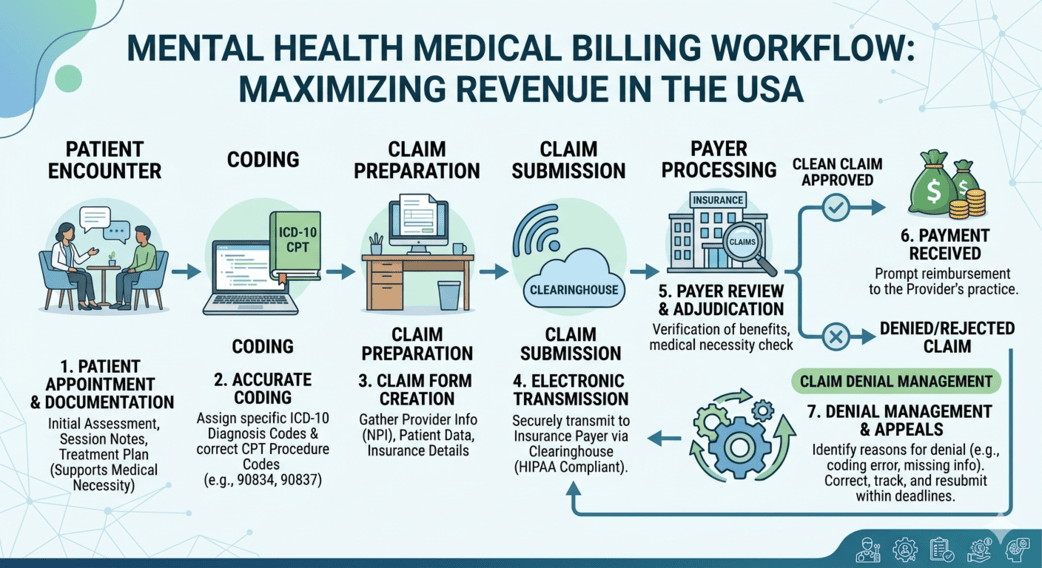
Understanding the Mental Health Billing Process
The billing process involves several connected steps rather than simply submitting a claim.
Patient Registration and Insurance Verification
Before treatment begins, staff should verify:
- Active insurance coverage
- Mental health benefits
- Copay and deductible information
- Referral or authorization requirements
- Telehealth eligibility when applicable
Early verification prevents unexpected billing issues later.
Clinical Documentation
Providers should document:
- Patient history
- Diagnosis
- Treatment plan
- Time spent during the session
- Progress notes
- Medical necessity
Strong documentation supports accurate coding and reduces audit risks.
Medical Coding
Medical coders assign standardized diagnosis and procedure codes that describe the patient's condition and services provided.
Many healthcare organizations rely on experienced medical coding services to improve coding accuracy and reduce compliance risks.
Claim Submission
Once coding is complete, claims are submitted electronically to insurance payers for review.
Claims with missing information, incorrect codes, or documentation gaps are more likely to be denied.
Payment Posting and Follow-Up
After payment is received, practices should:
- Post payments accurately
- Review explanations of benefits
- Appeal denied claims when appropriate
- Track outstanding balances
Consistent follow-up improves collections and minimizes revenue loss.
Common Mental Health Services That Require Accurate Coding
Mental health practices provide a wide range of services, including:
- Individual psychotherapy
- Family therapy
- Group counseling
- Psychiatric evaluations
- Medication management
- Psychological testing
- Crisis intervention
- Substance use disorder treatment
- Telepsychiatry services
Each service has its own documentation and coding requirements, making accuracy essential throughout the billing cycle.
Challenges in Coding and Billing for Mental Health Services
Behavioral health providers often encounter billing complexities that differ from other specialties.
Frequent Changes in Insurance Policies
Insurance companies regularly update coverage rules, authorization requirements, and billing guidelines.
Keeping staff informed helps avoid unnecessary denials.
Documentation Errors
Incomplete notes may not support billed services, leading to payment delays or audit concerns.
Documentation should clearly explain:
- Medical necessity
- Treatment goals
- Session details
- Provider observations
- Patient progress
Coding Mistakes
Using incorrect diagnosis or procedure codes can result in rejected claims or reduced reimbursement.
Even small coding errors may require claim corrections and resubmissions.
Prior Authorization Requirements
Some treatments require approval before services are provided.
Missing authorization can result in denied claims, even when care was medically necessary.
Telehealth Compliance
Virtual mental health services continue to grow across the USA, but billing rules differ by payer.
Practices should stay updated on telehealth policies, modifiers, and documentation requirements.
Best Practices for Better Mental Health Billing
Improving billing performance doesn't always require major changes. Small process improvements often produce meaningful results.
Train Staff Regularly
Billing regulations evolve throughout the year.
Regular education helps providers and billing teams stay current with coding updates and payer policies.
Verify Insurance Before Every Visit
Patient benefits can change throughout the year.
Confirming eligibility before appointments helps reduce billing surprises.
Submit Claims Promptly
Delayed claim submission increases the risk of missing payer filing deadlines.
Submitting clean claims quickly improves payment turnaround.
Monitor Denial Trends
Rather than addressing claims individually, identify patterns such as:
- Missing documentation
- Incorrect coding
- Authorization issues
- Eligibility problems
Finding the root cause helps reduce future denials.
Conduct Internal Audits
Routine audits help identify documentation gaps before insurance companies do.
Regular reviews also improve compliance and coding accuracy.
How Technology Supports Mental Health Billing
Modern practice management systems help streamline administrative tasks while reducing manual errors.
Many solutions now offer:
- Electronic claim submission
- Eligibility verification
- Automated payment posting
- Coding support tools
- Claim tracking dashboards
- Reporting and analytics
Technology cannot replace experienced billing professionals, but it significantly improves workflow efficiency.
The Role of Credentialing in Mental Health Reimbursement
Many providers focus on coding but overlook the importance of credentialing.
Credentialing confirms that healthcare professionals meet payer requirements before submitting claims.
Without proper credentialing, insurance companies may reject claims regardless of coding accuracy.
Keeping provider credentials updated also prevents interruptions in reimbursement.
How Revenue Cycle Management Improves Financial Performance
Successful practices view billing as part of a larger financial strategy.
Effective revenue cycle management covers every stage of the patient journey, including:
- Appointment scheduling
- Insurance verification
- Clinical documentation
- Coding
- Claim submission
- Payment posting
- Denial management
- Patient collections
When these processes work together, practices experience fewer payment delays and healthier cash flow.
Many behavioral health organizations also partner with experienced medical billing services to manage these tasks efficiently while allowing providers to spend more time with patients.
Choosing the Right Billing Support
As mental health practices grow, billing becomes more complex.
When evaluating external billing partners, consider:
- Behavioral health experience
- Coding accuracy
- Compliance knowledge
- Denial management expertise
- Transparent reporting
- Responsive customer support
Organizations like 247 Medical Billing Services support healthcare providers by assisting with billing operations while helping practices maintain efficient financial workflows. The goal should always be improving operational efficiency without compromising compliance or patient care.
Frequently Asked Questions
1. Why is coding and billing for mental health services more complex than other specialties?
Mental health services often involve varying session lengths, therapy types, payer-specific rules, telehealth requirements, and detailed documentation standards, making accurate coding especially important.
2. What causes most mental health claim denials?
Common reasons include incorrect coding, incomplete documentation, missing prior authorization, insurance eligibility issues, and filing claims after payer deadlines.
3. How often should providers verify patient insurance?
Insurance eligibility should ideally be verified before every appointment because coverage, deductibles, and benefits can change during the year.
4. What is the difference between coding and billing?
Coding translates medical documentation into standardized diagnosis and procedure codes, while billing uses those codes to create and submit insurance claims for reimbursement.
5. Why is credentialing important for mental health providers?
Credentialing ensures providers are approved by insurance companies to deliver covered services. Without it, claims may be denied even if coding is accurate.
6. How does revenue cycle management benefit mental health practices?
Strong revenue cycle management improves collections, reduces claim denials, speeds reimbursement, and provides better financial visibility for the practice.
7. Should small mental health practices outsource billing?
Many small practices choose professional medical billing services to reduce administrative workload, improve claim accuracy, and allow providers to focus more on patient care rather than billing operations.

 English
 French
 Spanish
 Portuguese
 Deutsch
 Turkish
 Dutch
Dutch
 Italiano
 Russian
 Romaian
 Portuguese (Brazil)
 Greek
Greek