


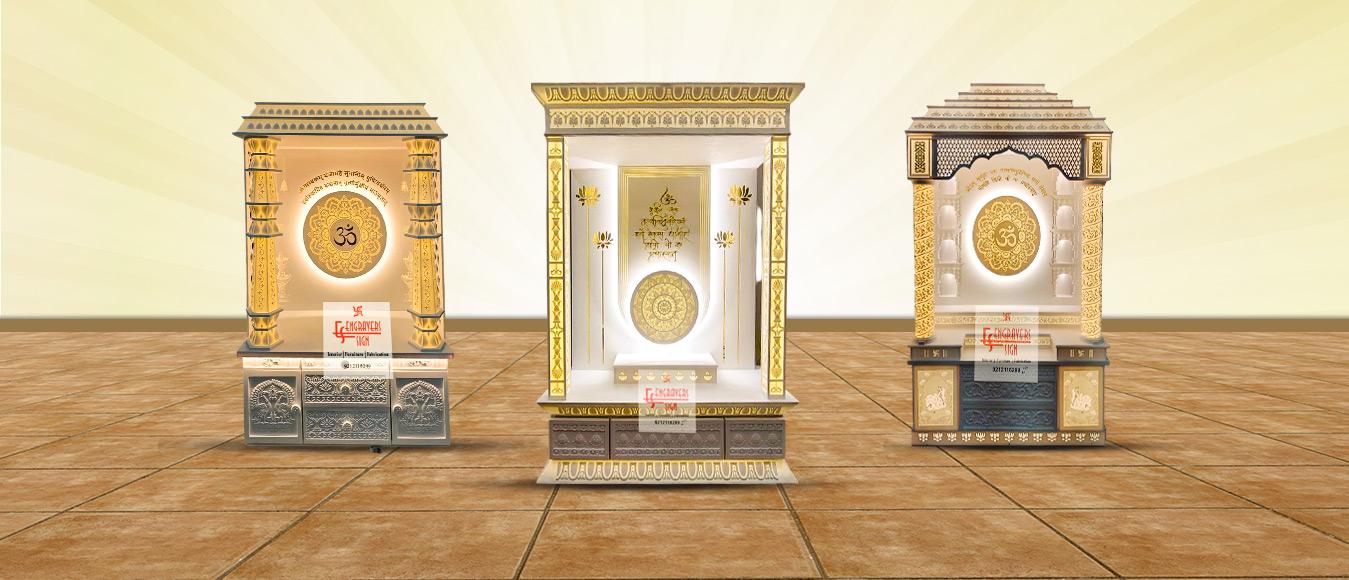
Corian Temple vs Marble Temple: A Detailed Comparison for Delhi Homeowners
Anyone shopping for a home mandir in Delhi eventually runs into the same decision: go with the traditional route and choose marble, or opt for a corian temple that mimics the same look with different practical trade-offs. Both have loyal followings, and the right answer depends on your priorities around budget, maintenance, and design flexibility. Here's an honest, side-by-side comparison.
Material Composition
Marble is a natural stone, quarried and cut into slabs, then carved or CNC-machined into temple shapes. Every piece has natural veining, meaning no two temples are ever exactly identical.
Corian, on the other hand, is an engineered solid surface made from acrylic polymer and natural minerals. It can be manufactured to mimic marble veining fairly convincingly, though the pattern is more uniform and repeatable rather than naturally random.
Weight and Installation
This is one of the starkest differences. A marble temple, even a modestly sized one, can weigh significantly more than a comparable Corian structure, since natural stone is considerably denser. This has real practical implications:
- Marble often requires structural reinforcement, especially for wall-mounted or elevated designs, and is difficult to install on upper floors of apartment buildings without additional support.
- Corian is significantly lighter, making it suitable for wall-mounted, recessed, or floating designs even in high-rise apartments without extra structural work.
Design Flexibility
Marble is carved or CNC-cut, which limits how intricate or curved a design can get without dramatically increasing cost and fabrication time. Corian, being thermoformed, allows for continuous curves, domes, and jaali cutwork with far more design freedom and typically shorter fabrication timelines for complex shapes.
If you're aiming for a corian temple design with an elaborate backlit jaali pattern or a smoothly curved dome, Corian generally makes this achievable at a more reasonable cost than an equivalent marble design.
Maintenance and Durability
- Marble is porous, meaning it can absorb oil, turmeric, kumkum, and incense residue over time, leading to staining that's often difficult to fully reverse. It also requires periodic professional polishing to maintain its shine.
- Corian is non-porous, resists staining significantly better, and can be cleaned with just a damp cloth and mild soap in most cases. Minor scratches can also be sanded and re-polished by a fabricator, something that's far more difficult with natural marble.
Cost Comparison
Generally speaking:
- Marble sits at the premium end of the pricing spectrum, with cost driven by the quality of stone, complexity of carving, and transport/installation charges due to its weight.
- Corian typically costs less than natural marble for a comparable design, while still delivering a similar visual aesthetic, making it an attractive middle-ground option between marble and basic wood.
Longevity
Both materials, when properly maintained, can last for decades. Marble has been used in temple construction for centuries and, structurally, can outlast almost any other material if properly cared for. Corian is a newer material by comparison, but its resistance to cracking, staining, and temperature-related stress makes it a strong long-term option for home use, particularly in regions like Delhi with significant seasonal temperature swings.
Which One Should You Choose?
Consider marble if:
- Budget is less of a constraint and you specifically want the authenticity of natural stone.
- Your home has strong structural support for heavier installations.
- You prefer the idea of natural, non-repeating veining patterns.
Consider a corian pooja mandir if:
- You live in an apartment where weight and structural support are a concern.
- You want more design flexibility, including intricate jaali work or curved domes.
- Low maintenance and stain resistance are priorities, especially for daily-use pooja rituals involving oil, turmeric, and incense.
- You want a marble-like appearance at a comparatively lower cost.
Getting Expert Guidance
Because both materials require specialized fabrication skills, it helps to consult a fabricator who works with both, so you get an honest comparison based on your specific home rather than a one-size-fits-all recommendation. Kirti Nagar, a long-established hub for Delhi's furniture and interiors industry, is home to specialists like Engravers Sign, who can walk you through actual material samples of both marble and Corian side by side before you make a final decision.
Final Thoughts
There's no universally "better" choice between a corian temple in Delhi and a traditional marble temple — it comes down to your home's structural realities, budget, and design preferences. Corian tends to be the more practical choice for modern apartments with weight and space constraints, while marble remains the choice for those specifically seeking natural stone authenticity. Seeing both materials in person, ideally at a fabricator experienced with each, is the best way to make an informed decision.

 English
 Arabic
 French
 Spanish
 Portuguese
 Deutsch
 Turkish
 Dutch
Dutch
 Russian
 Romaian
 Portuguese (Brazil)
 Greek
Greek