


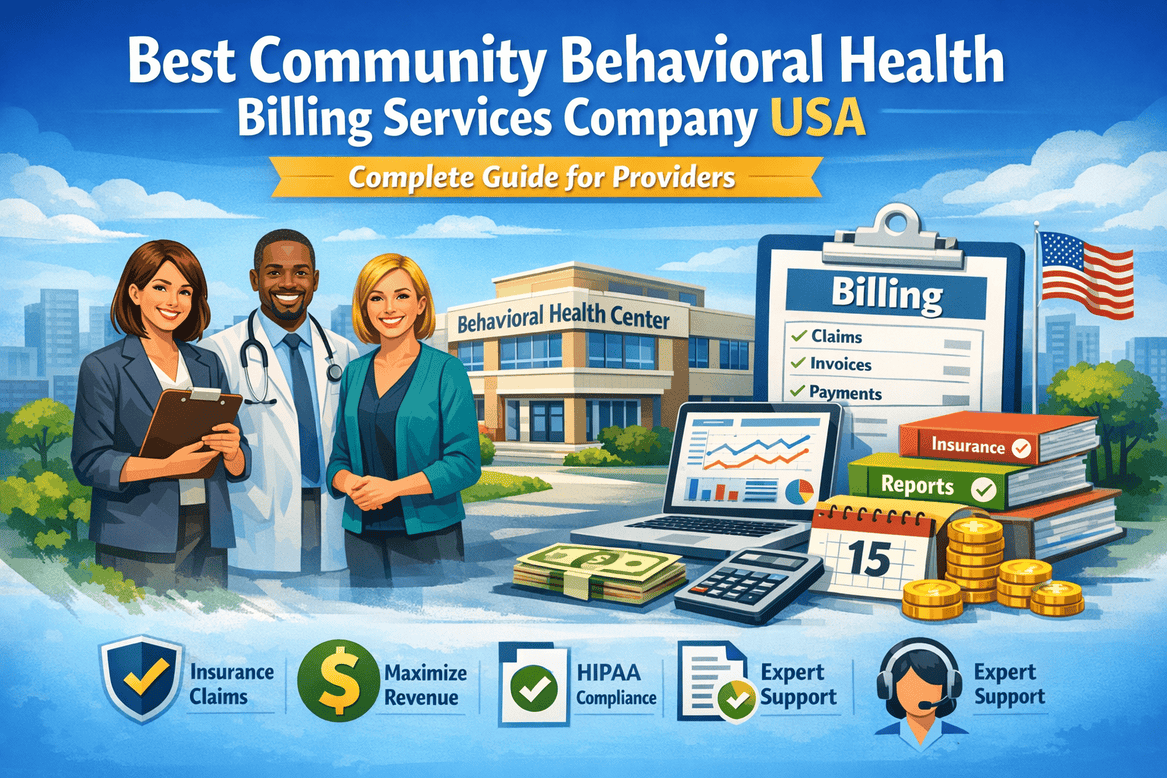
Community behavioral health providers play an essential role in supporting individuals with mental health conditions, substance use disorders, and emotional challenges. While delivering quality care is the top priority, managing insurance claims, billing regulations, and reimbursement requirements can become overwhelming. That is where a community behavioral health billing agency can make a meaningful difference.
From handling complex payer rules to reducing claim denials, a specialized billing agency helps providers focus more on patient care and less on administrative work. Understanding how these agencies operate can help organizations improve financial performance while maintaining compliance with healthcare regulations.
Why Community Behavioral Health Billing Is Different
Behavioral health billing is more complicated than many other medical specialties. Providers often work with different treatment settings, varying session lengths, multiple payer policies, and evolving documentation standards.
Common services include:
- Individual therapy
- Group counseling
- Family therapy
- Psychiatric evaluations
- Medication management
- Crisis intervention
- Intensive outpatient programs (IOP)
- Partial hospitalization programs (PHP)
- Community outreach services
Each service may require different coding, documentation, authorization, and billing rules. Even a small mistake can delay payment or lead to denied claims.
A dedicated community behavioral health billing agency understands these unique challenges and helps organizations manage them efficiently.
What Does a Community Behavioral Health Billing Agency Do?
A specialized billing agency manages the financial side of behavioral healthcare. Instead of simply submitting claims, it supports the entire reimbursement process from patient registration through final payment.
Its responsibilities often include:
- Insurance eligibility verification
- Prior authorization management
- Accurate claim preparation
- Claims submission
- Payment posting
- Denial management
- Appeals processing
- Compliance monitoring
- Financial reporting
These services help reduce administrative burden while improving the overall billing workflow.
How Accurate Documentation Supports Faster Payments
Insurance companies expect detailed and consistent documentation before approving reimbursement.
Providers should ensure documentation includes:
- Patient diagnosis
- Treatment goals
- Session duration
- Type of service provided
- Clinical notes
- Provider credentials
- Appropriate signatures
Incomplete documentation is one of the leading causes of claim denials in behavioral health practices.
A reliable billing agency reviews documentation before claim submission to minimize preventable errors.
Common Billing Challenges for Community Behavioral Health Providers
Many organizations experience similar obstacles when handling billing internally.
Frequent Claim Denials
Claims may be denied because of:
- Incorrect diagnosis codes
- Missing modifiers
- Invalid provider information
- Authorization issues
- Documentation errors
Repeated denials increase administrative workload and delay revenue collection.
Changing Insurance Policies
Behavioral health coverage continues to evolve across commercial insurers, Medicaid, and Medicare. Keeping up with policy changes requires continuous monitoring and staff education.
Prior Authorization Requirements
Many behavioral health services require approval before treatment begins. Missing an authorization deadline may result in unpaid claims even when services are medically necessary.
Staff Turnover
Training new billing employees takes time. Frequent turnover often results in inconsistent billing practices and delayed reimbursements.
Working with experienced billing professionals helps maintain stability and consistency.
The Role of medical coding services
Accurate coding is the foundation of successful behavioral health billing.
Professional medical coding services ensure that diagnoses, procedures, and treatment sessions are coded correctly according to current coding guidelines.
Correct coding helps:
- Reduce claim rejections
- Improve reimbursement accuracy
- Support compliance
- Minimize audit risks
- Create reliable financial records
Behavioral health coding often involves complex documentation requirements that require specialized knowledge.
Why credentialing Matters Before Billing Begins
Many providers focus on billing while overlooking the importance of credentialing.
Credentialing verifies that providers are enrolled and approved with insurance companies before services are billed.
Without proper credentialing:
- Claims may be rejected
- Reimbursements may be delayed
- Providers may be unable to participate in payer networks
A community behavioral health billing agency often coordinates credentialing activities to help providers avoid unnecessary payment interruptions.
Improving Financial Performance Through revenue cycle management
Billing is only one part of the financial process.
Effective revenue cycle management covers every financial step from scheduling appointments to collecting final payments.
Strong revenue cycle management includes:
- Insurance verification
- Charge capture
- Accurate coding
- Timely claim submission
- Payment reconciliation
- Denial analysis
- Patient billing
- Financial reporting
When every stage works together, organizations typically experience healthier cash flow and fewer unpaid claims.
Signs Your Organization May Need Professional Billing Support
Not every practice immediately recognizes billing problems.
Here are several warning signs:
- Growing accounts receivable
- Increasing claim denials
- Slow reimbursements
- Staff spending excessive time on billing
- Frequent coding corrections
- Missed filing deadlines
- Difficulty tracking payer requirements
If these issues occur regularly, partnering with a community behavioral health billing agency may improve operational efficiency.
Benefits of Outsourcing medical billing services
Many behavioral health organizations choose outsourced medical billing services because maintaining an in-house billing department can become expensive and time-consuming.
Potential advantages include:
Greater Billing Accuracy
Experienced billing specialists stay current with payer requirements and coding updates.
Better Cash Flow
Faster claim submission and proactive follow-up often lead to quicker reimbursements.
Lower Administrative Burden
Clinical teams spend less time resolving billing problems and more time supporting patients.
Improved Compliance
Billing agencies monitor regulatory updates and billing standards to reduce compliance risks.
Better Reporting
Organizations receive financial reports that help identify reimbursement trends, denial patterns, and improvement opportunities.
Choosing the Right Community Behavioral Health Billing Agency
Selecting a billing partner requires careful evaluation.
Consider the following factors:
Behavioral Health Experience
Choose an agency with proven experience in community behavioral health rather than general medical billing.
Knowledge of Multiple Payers
The agency should understand Medicaid, Medicare, managed care organizations, and commercial insurance plans.
Transparent Communication
Look for regular reporting, responsive support, and clear explanations of billing performance.
Compliance Standards
The agency should follow HIPAA regulations and maintain secure handling of patient information.
Technology Integration
Billing software should integrate smoothly with your electronic health record (EHR) system whenever possible.
Technology Is Changing Behavioral Health Billing
Modern billing agencies increasingly use technology to improve accuracy and efficiency.
Current innovations include:
- Automated eligibility verification
- Electronic claim submission
- Real-time claim tracking
- Denial analytics
- Payment dashboards
- Reporting automation
These tools help reduce manual work while giving providers better visibility into their financial performance.
Supporting Providers Without Taking Focus Away from Patient Care
Behavioral health professionals enter the field to help people—not to spend hours correcting denied claims or tracking insurance requirements.
An experienced community behavioral health billing agency supports the administrative side of healthcare while allowing providers to concentrate on delivering quality treatment.
Organizations seeking dependable billing support often look for experienced partners such as 247 Medical Billing Services, which provides specialized solutions including medical billing services, medical coding services, credentialing, and revenue cycle management for healthcare providers. The goal is not simply processing claims but helping practices build a more efficient and sustainable billing operation while maintaining compliance and improving reimbursement outcomes.
Frequently Asked Questions
1. What is a community behavioral health billing agency?
A community behavioral health billing agency specializes in managing insurance claims, coding, payment processing, denial management, and reimbursement for behavioral health organizations, mental health clinics, and community care providers.
2. Why is behavioral health billing more complex than general medical billing?
Behavioral health billing involves unique therapy services, payer-specific rules, prior authorizations, detailed documentation, and specialized coding requirements that often vary between insurance providers.
3. How can a billing agency reduce claim denials?
A specialized agency reviews documentation, verifies insurance eligibility, ensures coding accuracy, submits clean claims, and follows up quickly on denied or delayed claims.
4. Is outsourcing billing cost-effective for community behavioral health providers?
For many organizations, outsourcing reduces staffing costs, improves billing accuracy, speeds reimbursements, and allows clinical teams to spend more time caring for patients.
5. What should providers look for when selecting a billing agency?
Providers should evaluate behavioral health expertise, coding knowledge, payer experience, compliance practices, reporting capabilities, communication, and technology integration.
6. How does credentialing affect behavioral health billing?
Proper credentialing ensures providers are approved by insurance companies before services are billed. Without credentialing, claims may be denied regardless of the quality of care provided.
7. How does revenue cycle management improve financial health?
Effective revenue cycle management streamlines the entire payment process, reduces billing errors, improves collections, minimizes denials, and supports consistent cash flow for behavioral health organizations.

 English
 Arabic
 French
 Spanish
 Portuguese
 Turkish
 Dutch
Dutch
 Italiano
 Russian
 Romaian
 Portuguese (Brazil)
 Greek
Greek