


Introduction
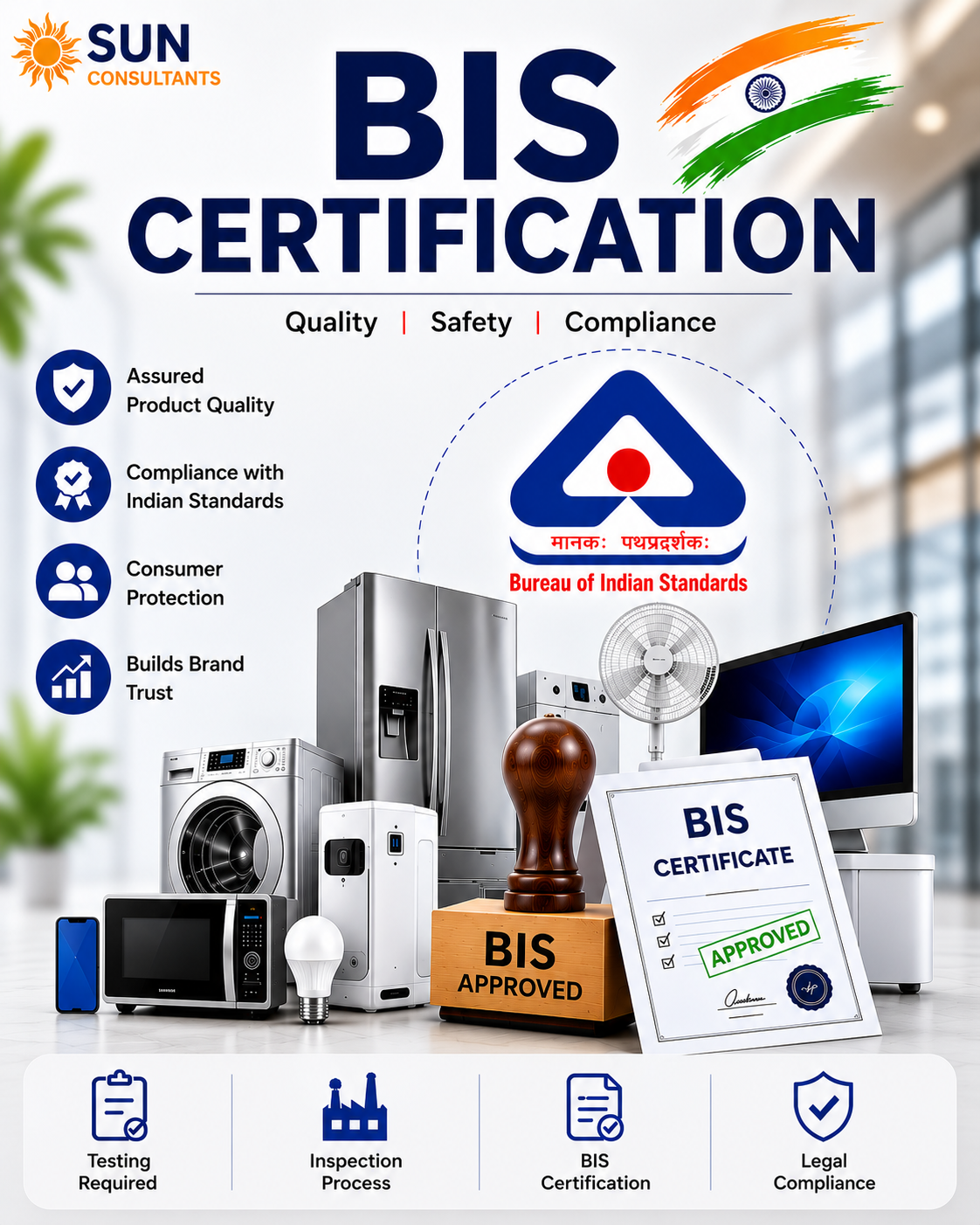
If you manufacture or import products for the Indian market, obtaining a BIS Certificate India is often a legal requirement. The Bureau of Indian Standards (BIS) ensures that products meet quality, safety, and performance standards before they reach consumers. Whether you are a domestic manufacturer or a foreign company, understanding the BIS Application process, the BIS Certification full form, and the latest BIS Notification is essential. This guide explains everything you need to know in a simple and practical way.
What is BIS Certification?
The BIS Certification full form is Bureau of Indian Standards Certification. The Bureau of Indian Standards is India's national standards body operating under the Ministry of Consumer Affairs, Food and Public Distribution. It develops standards and certifies products to ensure they comply with Indian quality and safety requirements. A BIS Certificate India confirms that a product has successfully met applicable Indian Standards and is authorized for sale in the Indian market.
Why is BIS Certification Important?
Obtaining BIS certification offers several benefits:
-
Ensures product quality and safety
-
Builds customer trust
-
Complies with Indian government regulations
-
Improves market acceptance
-
Reduces the risk of legal penalties
-
Supports smooth product imports and sales
Many products cannot be legally sold in India without a valid BIS certification.
What is a BIS Application?
A BIS Application is the formal request submitted to the Bureau of Indian Standards for obtaining product certification.
The application includes:
-
Manufacturer details
-
Product information
-
Manufacturing process
-
Quality control procedures
-
Product testing reports
-
Factory information
-
Required declarations and documents
Once submitted, BIS reviews the application before moving to inspection and certification stages.
Who Needs a BIS Certificate India?
A BIS Certificate India is generally required for:
-
Indian manufacturers
-
Foreign manufacturers exporting to India
-
Importers
-
Brand owners
-
Electronic product manufacturers
-
Industrial equipment manufacturers
-
Construction material manufacturers
-
Consumer goods manufacturers
The certification requirement depends on whether the product falls under mandatory BIS regulations.
Step-by-Step BIS Application Process
1. Identify the Applicable Standard
The first step is identifying the correct Indian Standard (IS Code) applicable to your product.
Different products follow different certification schemes.
2. Prepare Required Documents
Collect all necessary documentation, including:
-
Company registration
-
Factory license
-
Manufacturing details
-
Product specifications
-
Quality management documents
-
Testing reports
-
Authorized signatory documents
Proper documentation speeds up approval.
3. Product Testing
The product must be tested in a BIS-recognized laboratory.
Testing verifies compliance with applicable Indian Standards.
If the product passes testing, the laboratory issues a test report.
4. Submit the BIS Application
The completed BIS Application is submitted along with:
-
Required documents
-
Test reports
-
Applicable government fees
Accuracy is essential to avoid delays.
5. Factory Inspection
For many certification schemes, BIS officials inspect the manufacturing facility.
The inspection generally includes:
-
Manufacturing process review
-
Production capability
-
Quality control systems
-
Laboratory facilities
-
Product consistency
6. Document Verification
BIS reviews:
-
Application forms
-
Technical documents
-
Inspection reports
-
Test reports
Additional information may be requested if necessary.
7. Grant of BIS Certificate
After successful verification, BIS issues the BIS Certificate India.
The manufacturer can then use the applicable BIS certification mark according to regulations.
Documents Required for BIS Application
Commonly required documents include:
-
Company registration certificate
-
Manufacturing license
-
Factory address proof
-
Product specifications
-
Quality control documents
-
Test reports
-
Production process details
-
Authorized representative details
-
Trademark documents (if applicable)
-
Identity proof of authorized signatory
Specific document requirements may vary depending on the product category.
Understanding BIS Notification
A BIS Notification is an official announcement issued by the Government of India or the Bureau of Indian Standards.
These notifications may include:
-
Newly added mandatory products
-
Revised Indian Standards
-
Changes in certification procedures
-
Updated compliance requirements
-
New Quality Control Orders (QCOs)
-
Implementation deadlines
Manufacturers should regularly monitor BIS notifications to remain compliant.
Products That Commonly Require BIS Certification
Some commonly certified products include:
-
Electrical appliances
-
LED lighting products
-
Electronics
-
Steel products
-
Cement
-
Chemicals
-
Pressure cookers
-
Toys
-
Household appliances
-
Industrial machinery
-
Construction materials
The mandatory product list continues to expand through new BIS Notifications.
Common Reasons for BIS Application Rejection
Many applications are delayed or rejected because of:
-
Incorrect documentation
-
Incomplete application forms
-
Invalid testing reports
-
Product test failures
-
Missing technical information
-
Factory non-compliance
-
Incorrect product classification
Careful preparation significantly improves approval chances.
Benefits of Obtaining a BIS Certificate India
A valid BIS Certificate India offers numerous business advantages:
-
Legal authorization to sell products
-
Higher consumer confidence
-
Improved product credibility
-
Competitive market advantage
-
Compliance with Indian regulations
-
Better business opportunities
-
Reduced regulatory risks
-
Stronger brand reputation
For importers and manufacturers, certification also simplifies regulatory approvals.
How Long Does the BIS Application Process Take?
The processing time depends on factors such as:
-
Product category
-
Certification scheme
-
Laboratory testing duration
-
Factory inspection schedule
-
Document accuracy
-
BIS verification timeline
Submitting complete documentation and accurate information helps reduce processing delays.
Tips for a Smooth BIS Application
To improve your approval process:
-
Understand the applicable Indian Standard before applying.
-
Prepare complete documentation.
-
Use BIS-recognized laboratories for testing.
-
Ensure manufacturing quality systems are in place.
-
Respond promptly to BIS queries.
-
Stay updated with every new BIS Notification.
Following these practices helps minimize delays and ensures smoother certification.
Conclusion
A successful BIS Application is the first step toward obtaining a BIS Certificate India, allowing manufacturers and importers to legally market products in India. Understanding the BIS Certification full form, following the correct application procedure, and keeping track of every BIS Notification helps businesses remain compliant while building customer confidence. Whether you are launching a new product or expanding into the Indian market, proper BIS certification ensures quality, regulatory compliance, and long-term business success.

 English
 French
 Spanish
 Portuguese
 Deutsch
 Turkish
 Dutch
Dutch
 Italiano
 Russian
 Romaian
 Portuguese (Brazil)
 Greek
Greek