


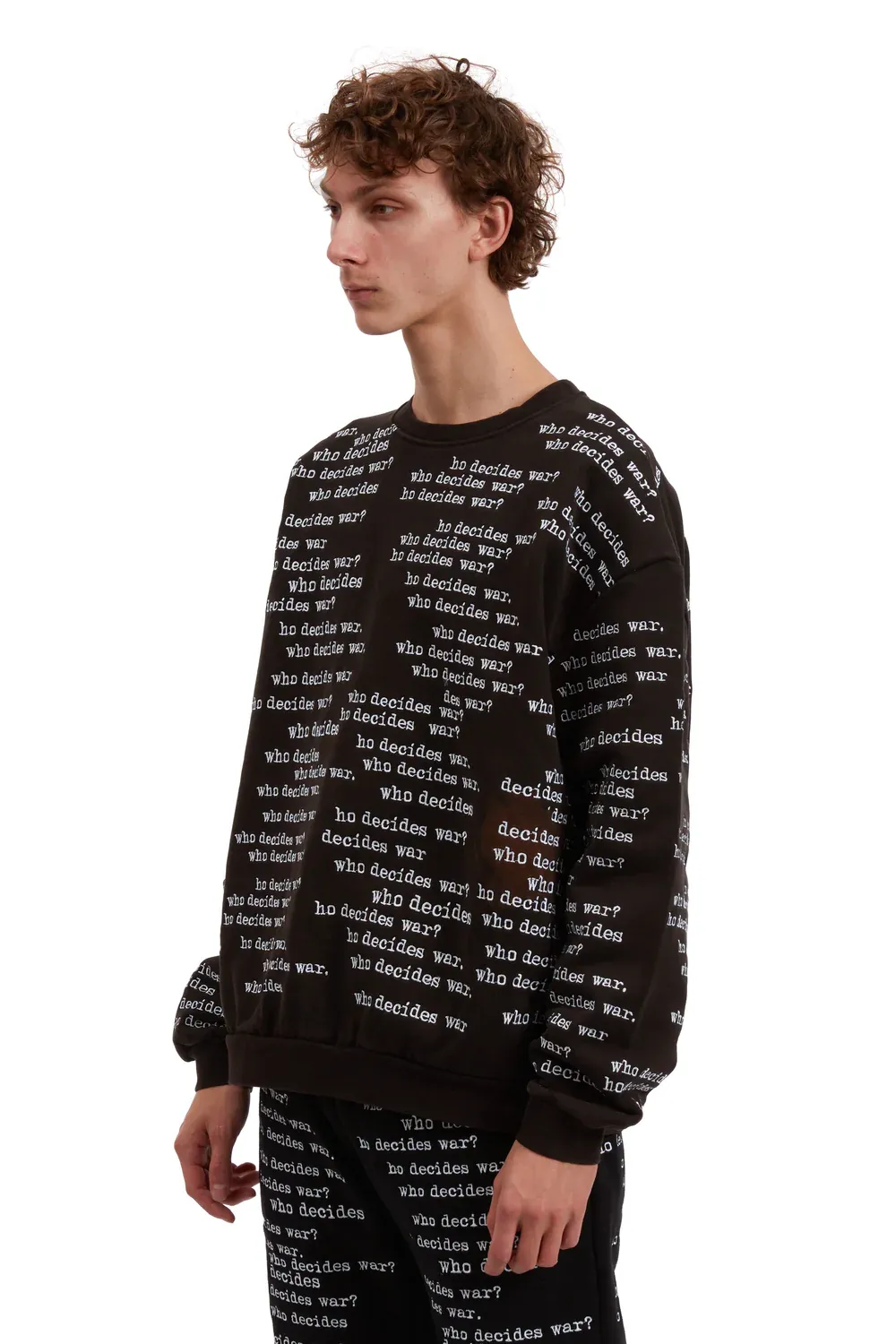
At first glance, Who Decides War sounds like the title of a documentary rather than a fashion label. That's intentional. The phrase was never meant to be answered literally — it's a rhetorical question designed to make people pause and think. Instead of naming the brand after a founder or a trend, Everard Best and Téla D'Amore chose something that forces buyers to sit with a bigger idea every time they see it printed on a tag or hear it mentioned online.
The Rhetorical Meaning Explained
According to interviews with the brand's founders, the name Who Decides War was chosen carefully so it aligned directly with the label's mission. The idea is simple but heavy: conflict exists everywhere, whether between nations, between two people, or within a single person's own mind. No single group or individual truly controls it. That ambiguity is the entire point — the name doesn't offer an answer, it just asks the question and lets the wearer sit with it.
War as a Universal Theme
Part of what makes whodecideswar resonate with so many people is that "war" isn't limited to literal battles. The founders have described conflict as something constant — internal struggles, personal battles, and social tension all count. This broader interpretation is why the brand's storytelling feels personal rather than political. It's less about geopolitics and more about the everyday tension people carry, which is a theme that shows up across nearly every collection the label releases.
The Brand's First Collection
The meaning behind the name became clearer with the brand's debut collection, titled "Fall from Grace." That collection was built around the biblical story of Adam and Eve, focusing specifically on their exile from the Garden of Eden. Using raw silks, canvas, and cotton, paired with embroidery and rhinestones, the collection translated a story of separation and consequence into wearable pieces — tying the brand's name directly to themes of judgment, conflict, and human struggle from the very beginning.
Religious and Spiritual Symbolism
Who Decides War leans heavily into spiritual imagery, and that choice isn't accidental either. Stained glass motifs, angelic figures, and Catholic iconography appear throughout many collections, reflecting Best's personal relationship with faith. This symbolism ties back to the brand name in a subtle way — questions about who controls conflict often overlap with questions about morality, judgment, and redemption, themes that religious imagery naturally represents within the label's overall design language.
A Reflection of Personal History
The name also connects to Best's own journey. Before Who Decides War existed, he built an earlier label that led him down a difficult path marked by personal struggle. Rebuilding his career under the name Ev Bravado, and eventually evolving that into Who Decides War, turned the brand into something closer to a redemption story. In that sense, the name isn't just about global conflict — it's also about internal battles the designer had personally lived through.
Why the Name Encourages Activism
Multiple sources describe the brand's designs as a canvas for activism, encouraging wearers to express personal beliefs and embrace their own identity. The name Who Decides War supports that mission directly, since it invites people to question authority, power, and control rather than accept things at face value. This is part of why the brand resonates beyond typical streetwear fans, reaching people who connect with its deeper social commentary.
How the Meaning Shows Up in Design
The philosophy behind the name doesn't stay abstract — it shows up in the actual garments. Deconstructed denim, intentional distressing, and mixed symbolism throughout who decides war jeans all reflect a larger narrative of struggle and rebuilding. Even the choice to hand-distress pieces rather than mass-produce them mirrors the brand's message: nothing about conflict, or the human experience, is clean, uniform, or fully controlled by one force.
The Name's Role in Brand Identity
Unlike labels named after their founders, Who Decides War keeps the focus on the message rather than any single personality. This was reportedly intentional, since the founders wanted attention to stay on the clothing and the story being told rather than on themselves individually. That decision has helped the brand build an identity around ideas rather than personal branding, which is somewhat rare in a fashion industry often built around designer celebrity status.
Fan Interpretations of the Name
Because the name is rhetorical rather than explanatory, fans have developed their own interpretations over the years. Some view it as a commentary on global politics, others see it as personal and introspective, and many simply appreciate that it doesn't hand them an easy answer. This openness is part of why searches for "whodecideswar" often lead people down a rabbit hole of think-pieces and interviews rather than a single definitive explanation.
Why the Meaning Still Matters Today
Years after launch, the name continues to shape how people talk about the brand, whether they're shopping who decides war shorts or reading about the label's runway shows. It's rare for a fashion brand's name to carry this much intentional weight, but that's exactly what makes Who Decides War stand out. The question format keeps the brand feeling relevant, since conflict — internal or external — never really stops being part of the human experience.
Final Thoughts
At its core, Who Decides War isn't just a clever name — it's a mission statement disguised as a question. From its rhetorical intent to its ties with faith, personal history, and activism, the name shapes everything from runway concepts to the smallest design details on who decides war jeans and accessories. Understanding that meaning adds a layer of depth to the brand that goes far beyond typical streetwear branding.

 English
 Arabic
 French
 Spanish
 Portuguese
 Deutsch
 Turkish
 Dutch
Dutch
 Russian
 Romaian
 Portuguese (Brazil)
 Greek
Greek