


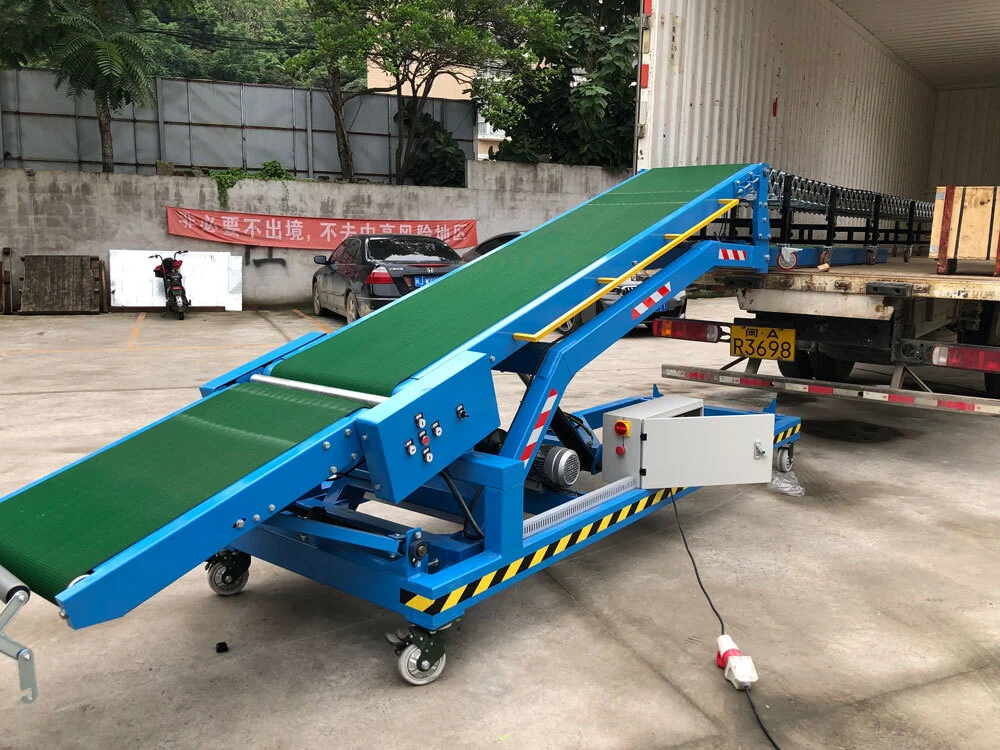
Loading a truck by hand still happens in more warehouses than you'd expect, with workers carrying boxes or stacking pallets one at a time under a hot dock door. It works, technically, but it's slow, physically demanding, and prone to bottlenecks whenever staffing gets tight or a shipment runs late. A truck loading conveyor changes that equation entirely, moving goods continuously from the warehouse floor straight into the trailer without relying on repeated manual carrying. For operations juggling tight delivery windows, that shift alone often justifies the investment within the first year of use.
The Real Cost of Manual Loading
Manual loading isn't just slower; it's expensive in ways that don't always show up on a single line item. Workers get tired, pace slows over a shift, and injury risk climbs the longer a crew spends lifting and carrying heavy goods repeatedly. Overtime costs creep in when a shipment takes longer than planned, and any given worker calling in sick can throw off an entire day's loading schedule. When you add up wages, injury claims, and lost productivity from fatigue, the true cost of manual loading is considerably higher than it first appears on paper.
How Automated Conveyors Change the Equation
An automated loading conveyor removes much of that physical strain by carrying goods directly to the truck bed or trailer opening, letting workers guide and stack rather than haul every single item by hand. This reduces the number of steps between the warehouse floor and the truck, which translates directly into faster loading times across an entire shift. Fewer physical steps also means fewer opportunities for dropped goods, awkward lifts, or repetitive strain injuries that build up gradually over weeks and months of manual work.
Labor Savings That Compound Over Time
The labor savings from conveyor loading aren't a one-time benefit; they compound every single day the system is in use. A crew that once needed six people to load a truck within an hour might accomplish the same task with three, freeing up staff for other warehouse duties or reducing overall headcount needs during slower periods. Over a year, this kind of staffing flexibility adds up to meaningful savings, particularly for operations running multiple loading docks simultaneously throughout a typical working day.

Faster Turnaround Means More Trucks Per Day
Beyond labor costs, faster loading directly increases how many trucks a facility can process in a single day, which matters enormously for high-volume distribution centers. When loading time drops from an hour to twenty minutes, that same dock door can handle noticeably more shipments before the day ends, improving overall throughput without requiring any additional physical space. This kind of efficiency gain becomes especially valuable during peak seasons, when demand spikes put pressure on every part of the supply chain simultaneously.
Making the Switch Without Disrupting Operations
Transitioning from manual to conveyor-assisted loading doesn't have to mean shutting down operations for weeks while new equipment is installed and tested. Many portable and modular conveyor systems can be introduced gradually, starting with the busiest dock doors first, letting a facility measure the impact before committing to a full-scale rollout across every location. This phased approach lets managers build a genuine business case with real data, rather than relying purely on projected savings before making a larger capital commitment.

 English
 Arabic
 French
 Spanish
 Portuguese
 Turkish
 Dutch
Dutch
 Italiano
 Russian
 Romaian
 Portuguese (Brazil)
 Greek
Greek