


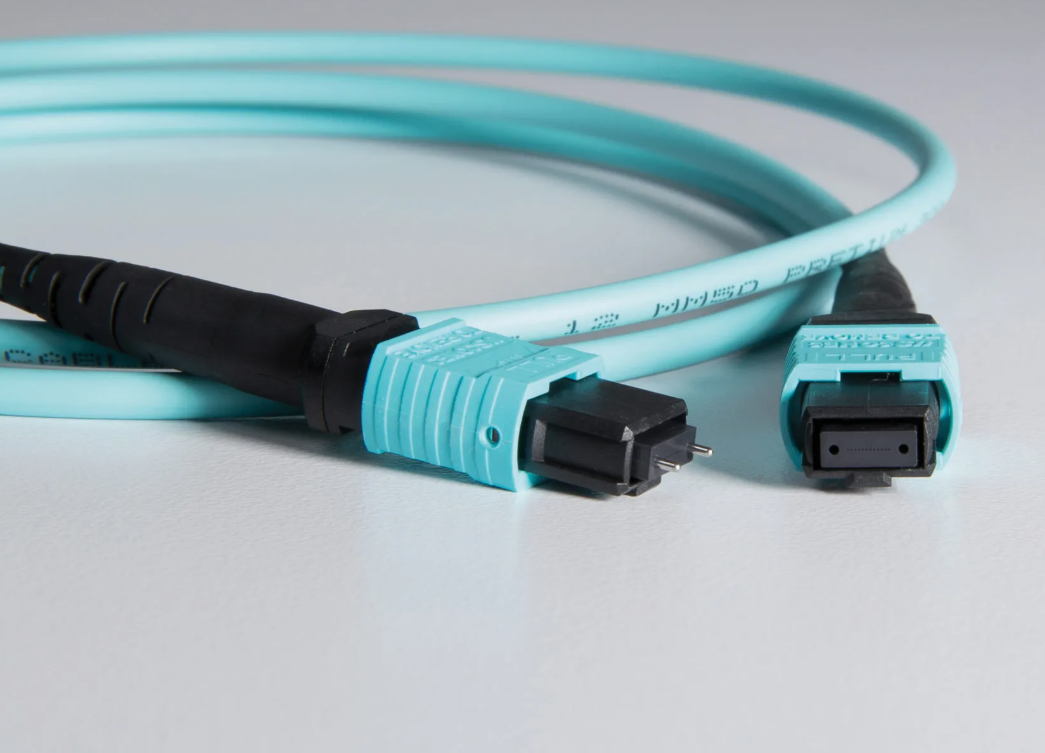
Modern data centers and enterprise networks require reliable connectivity capable of handling increasing bandwidth demands while using physical infrastructure efficiently. As cloud computing, artificial intelligence, virtualization, and high-performance applications continue to grow, network professionals need compact solutions that can manage multiple optical connections without creating unnecessary cable congestion. The MPO fiber connector addresses this requirement by combining multiple optical fibers within a single connector interface, making it well suited to high-density network environments.
For data center professionals, efficient fiber connectivity can influence installation speed, cable management, maintenance, and future scalability. MPO technology provides a structured approach to connecting multiple fibers through one compact interface and can be integrated into trunk cables, patching systems, breakout assemblies, and modular connectivity solutions. When properly selected and installed, it can help organizations build cleaner, more efficient optical infrastructure capable of supporting demanding network applications.
Understanding MPO Fiber Connector Technology
The MPO fiber connector is a multi-fiber optical connector designed to connect several fibers through one compact interface. MPO stands for Multi-Fiber Push On, and the connector uses a precision ferrule to position multiple optical fibers accurately. Guide features help maintain alignment when mating connector assemblies, supporting efficient optical coupling between corresponding fibers. MPO connectors are available in different fiber counts and configurations to accommodate various network architectures. They can be incorporated into pre-terminated trunk cables, patch cords, modules, adapter panels, and breakout systems. This multi-fiber design allows network professionals to consolidate numerous optical channels into fewer physical connection points, making MPO technology particularly valuable in data centers and other environments where connection density and space efficiency are major considerations.
Why Businesses Need Multi-Fiber Connectivity
The rapid expansion of digital services has increased the number of optical connections required by modern businesses. Data centers may need extensive connectivity between servers, switches, storage systems, and distribution equipment, while enterprise networks can require high-capacity backbone connections between equipment rooms and buildings. Managing each fiber individually can lead to crowded pathways and complicated maintenance. Multi-fiber connectivity provides an alternative by grouping multiple optical channels into compact assemblies. This can help businesses use rack and pathway space more efficiently while creating a more organized network environment. For organizations planning infrastructure expansion, MPO-based systems can also provide a structured foundation for adding capacity without requiring every new connection to be installed as an independent cable.
Applications of MPO Fiber Connectors
Data centers are among the most important applications for MPO technology because they require high connection density and increasingly higher transmission speeds. MPO connectors can be used in trunk cabling systems that connect distribution points and equipment racks, as well as in modular patching and breakout architectures. Enterprise facilities can use MPO-based systems for backbone connectivity between telecommunications rooms, while cloud and high-performance computing environments may use multi-fiber connections to support demanding data transmission requirements. Telecommunications infrastructure can also benefit from compact multi-fiber connectivity where large numbers of optical channels must be organized efficiently. The appropriate MPO configuration depends on the fiber type, transmission technology, connector count, polarity, and equipment interfaces used within the network.
Key Benefits of MPO Fiber Connectivity
One of the primary advantages of an MPO fiber connector is its ability to consolidate multiple optical fibers into one compact connection. This can reduce physical cable congestion and help data center professionals maintain cleaner equipment areas. Multi-fiber assemblies can also simplify installation because fewer individual cable routes may be needed to establish a large number of connections. Factory-terminated solutions can further improve deployment efficiency by reducing the amount of field connectorization required. Properly designed MPO systems can also support scalability, allowing organizations to add network equipment and increase optical capacity while maintaining an organized physical architecture. For businesses operating dense network environments, these benefits can contribute to better space utilization, simpler cable management, and more efficient infrastructure deployment.
Choosing the Right MPO Connector Solution
Selecting an MPO connector requires careful consideration of the complete network architecture. Professionals should evaluate fiber type, fiber count, connector configuration, polarity, key orientation, cable length, transmission requirements, and equipment compatibility. Single-mode and multimode applications have different characteristics, while the connector configuration must correspond with the equipment and distribution components being used. Future network requirements should also be considered because replacing cabling after a facility becomes densely populated can be disruptive. Businesses can reduce these risks by selecting connector systems that provide sufficient capacity and compatibility for anticipated upgrades. Working with an experienced optical connectivity supplier can help ensure that the selected MPO products integrate correctly with cables, modules, patch panels, and transceivers.
Polarity and Installation Considerations
MPO systems require careful polarity planning because several fibers are connected through a single interface and each optical channel must correspond correctly between transmitting and receiving equipment. Connector gender, key orientation, and fiber position must also be considered when assembling a complete link. Technicians should follow the planned polarity scheme and maintain accurate labeling throughout the installation. Connector cleanliness is equally important because contamination on a multi-fiber end face can potentially affect several optical channels at once. Proper inspection and cleaning procedures should be followed before connectors are mated. Cable routing should also maintain appropriate bend-radius requirements and protect assemblies from excessive physical stress. Testing after installation can verify optical performance and identify connection problems before the network enters service.
Supporting High-Speed Network Growth
Data centers are rapidly adopting technologies that require greater bandwidth and more efficient connectivity. Artificial intelligence workloads, cloud services, virtualization, advanced storage, and high-performance computing can all increase the number and capacity of optical links needed within a facility. MPO connectivity can support this development by providing a compact multi-fiber interface that can be incorporated into structured cabling architectures. When combined with suitable trunk cables, breakout assemblies, patching systems, and optical equipment, MPO technology can help create a scalable network foundation. Planning fiber capacity and connection architecture in advance can reduce the need for disruptive infrastructure changes as data center requirements continue to evolve.
Why Professional MPO Fiber Solutions Matter
The reliability of an MPO deployment depends on more than connector design. Product quality, fiber alignment, polarity configuration, cable construction, installation practices, connector cleanliness, and testing all contribute to network performance. Professional suppliers can help businesses select appropriate MPO products and develop configurations that match their equipment and network architecture. They may also provide pre-terminated assemblies, technical support, testing, labeling, and documentation for large-scale deployments. This professional approach can be especially valuable in data centers where a configuration error can affect multiple optical channels simultaneously. By investing in properly specified MPO fiber connector solutions and professional installation practices, organizations can improve deployment efficiency and establish optical infrastructure that is easier to manage and expand.
Conclusion
High-density optical connectivity is becoming increasingly important as data centers and enterprise networks manage greater amounts of information and higher-speed equipment. The MPO fiber connector provides a compact and efficient way to connect multiple optical fibers while supporting organized cabling, high connection density, and scalable network architectures. Its applications span data centers, enterprise facilities, telecommunications infrastructure, cloud environments, and high-performance computing. With careful attention to fiber compatibility, polarity, connector cleanliness, installation, and testing, MPO technology can provide a dependable foundation for modern optical networks and help organizations prepare for future connectivity demands.

 English
 Arabic
 Spanish
 Portuguese
 Deutsch
 Turkish
 Dutch
Dutch
 Italiano
 Russian
 Romaian
 Portuguese (Brazil)
 Greek
Greek