


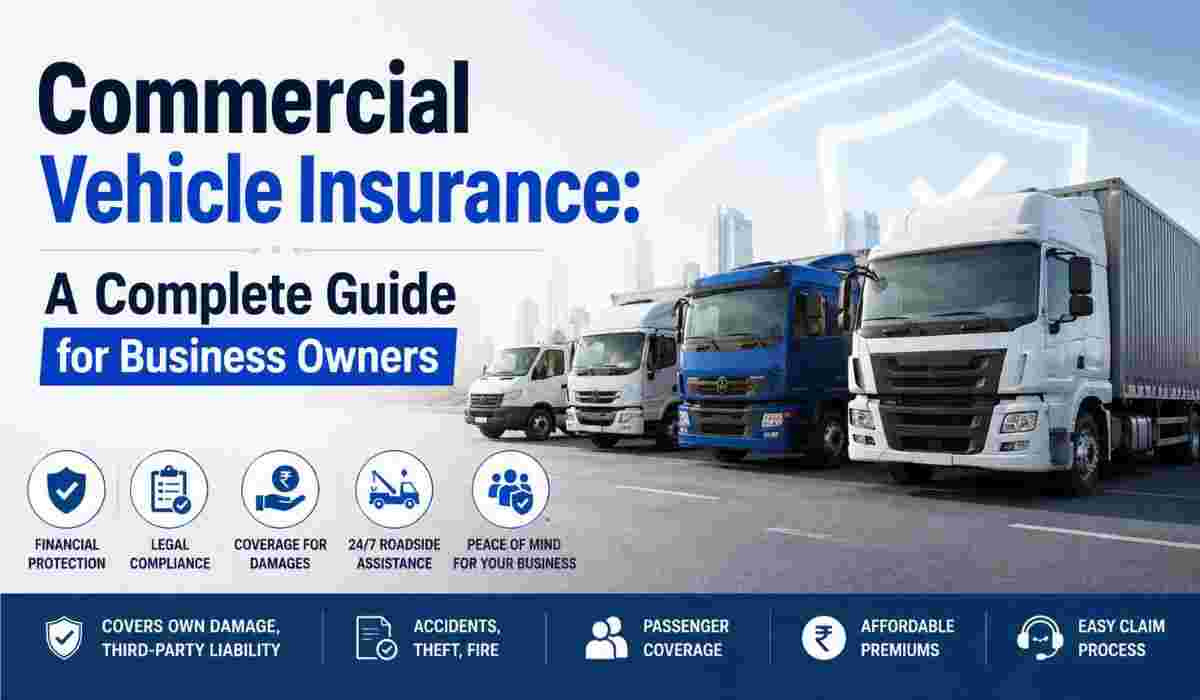
Running a business that depends on vehicles comes with many responsibilities. Whether you own delivery vans, trucks, taxis, auto-rickshaws, or company cars, protecting these vehicles is essential for smooth business operations. This is where Commercial Vehicle Insurance becomes extremely important.
Many business owners think insurance is only a legal requirement, but it is much more than that. A single accident, theft, or natural disaster can lead to huge financial losses. The right Commercial Vehicle Insurance policy can protect your business from unexpected expenses and help you continue operations without major disruptions.
What is Commercial Vehicle Insurance?
Commercial Vehicle Insurance is a type of motor insurance designed specifically for vehicles used for business purposes. Unlike personal car insurance, this policy covers vehicles that generate income or support commercial activities.
It can be purchased for trucks, buses, taxis, school vehicles, delivery vehicles, agricultural vehicles, and other business-use vehicles. The policy provides financial protection against accidents, theft, fire, natural disasters, and third-party liabilities.
Why Business Owners Need Commercial Vehicle Insurance
For businesses that rely on transportation, vehicle damage can directly affect revenue. Repair costs, legal liabilities, and medical expenses can become a serious burden. Commercial Vehicle Insurance helps reduce these risks.
It also ensures compliance with Indian motor vehicle laws, which require at least third-party insurance for commercial vehicles. Without valid insurance, you may face penalties, fines, and operational issues.
Another major advantage is business continuity. If a delivery van or truck is damaged, the insurance policy can help cover repair costs, allowing the vehicle to return to service faster.
Types of Commercial Vehicle Insurance
There are mainly two types of Commercial Vehicle Insurance available in India.
Third-party insurance covers legal liabilities arising from injury, death, or property damage caused to a third party. It is mandatory by law but does not cover damage to your own vehicle.
Comprehensive insurance offers wider protection. It includes third-party coverage as well as damage to the insured vehicle caused by accidents, fire, theft, floods, earthquakes, and other covered events.
For most businesses, comprehensive Commercial Vehicle Insurance is usually the better option because it provides broader financial protection.
What Does Commercial Vehicle Insurance Cover?
A comprehensive policy generally covers accidental damage to the vehicle, theft, fire, explosion, lightning, floods, storms, earthquakes, riots, and third-party liabilities.
It may also include personal accident cover for the owner-driver and additional protection through add-ons such as zero depreciation, engine protection, roadside assistance, and return to invoice cover.
These features make Commercial Vehicle Insurance a valuable safety net for business owners.
What is Not Covered?
Insurance policies also have exclusions. Normal wear and tear, mechanical or electrical breakdowns, driving under the influence of alcohol or drugs, using the vehicle for unauthorized purposes, and driving without a valid license are generally not covered.
Reading the policy document carefully is important so that you understand both the coverage and the limitations.
How Premiums Are Calculated
The premium for Commercial Vehicle Insurance depends on several factors. The type of vehicle, its age, engine capacity, location of registration, nature of business use, and claim history all influence the premium amount.
A new truck used for long-distance transport will usually have a higher premium than a small delivery van used within a city. Installing safety devices and maintaining a good claim record can help reduce the premium.
How to Choose the Right Policy
Choosing the right Commercial Vehicle Insurance requires careful evaluation of your business needs.
Start by assessing how the vehicle is used. Consider the distance traveled, the value of the vehicle, and the risks involved in your business operations. Compare policies from different insurers, check the claim settlement ratio, and review customer feedback.
Do not select a policy based only on the lowest premium. A slightly higher premium with better coverage and faster claim support can save much more money in the long run.
Claim Process
If an accident or loss occurs, inform the insurer immediately. Take photographs of the damage, file an FIR in case of theft or major accidents, and submit the required documents such as the registration certificate, driving license, policy copy, and repair estimates.
After inspection and approval, the insurer will either settle the claim directly with the garage or reimburse the eligible amount.
Conclusion
For any business that depends on transportation, Commercial Vehicle Insurance is not just a legal formality but a critical financial protection tool. It safeguards your vehicles, protects you from third-party liabilities, and helps maintain business continuity during unexpected events.
By understanding the coverage, exclusions, premium factors, and claim process, business owners can make informed decisions and choose the most suitable Commercial Vehicle Insurance policy for their needs. Investing in the right protection today can prevent significant financial stress tomorrow.

 English
 Arabic
 French
 Spanish
 Deutsch
 Turkish
 Dutch
Dutch
 Italiano
 Russian
 Romaian
 Portuguese (Brazil)
 Greek
Greek