


Chronic back pain is exhausting. Not just physically, but mentally too, because you start wondering if you'll ever feel normal again. A lot of people spend months trying physical therapy, pain pills, and heating pads before someone finally mentions spinal decompression. And then the questions start piling up. Does it actually work? What does it feel like? Is it safe? If you've been going down that road, this article is for you. We're going to walk through exactly how this treatment works, who tends to benefit most, and what you can realistically expect from the process. For anyone in the New York area already looking at options, Back on Trac Decompression Therapy in Rockville Centre NY is one specific program worth looking into before you make any decisions.
What Spinal Decompression Therapy Actually Is
Here's the basic idea. Your spinal discs sit between the vertebrae and act like shock absorbers. Over time, from injury, aging, or just bad posture, those discs can compress, bulge, or herniate. When that happens, they press on nearby nerves. That's where a lot of chronic back pain comes from. Spinal decompression therapy uses a motorized table to gently stretch the spine in a very controlled way, creating negative pressure inside the disc. Think of it like a vacuum pulling the disc back into shape. That negative pressure can pull herniated material back toward the center of the disc, and it also encourages blood flow and nutrients to move back into the disc tissue, which helps with healing over time.
It's not traction in the old-school sense, where someone just pulls on your legs. Modern decompression equipment is computer-controlled and adjusts the angle and force precisely throughout the session. Your body doesn't go into muscle spasm and resist the stretch, which is what happened with older traction methods. The process is slow, rhythmic, and surprisingly gentle. Most people are honestly a little surprised by how comfortable it is.
The science behind disc decompression and intradiscal pressure has been studied for decades, and the general consensus is that controlled decompression can meaningfully reduce pressure on spinal nerves when applied correctly.
Which Conditions Respond Best
Not every back problem is the same. Spinal decompression tends to work best for conditions that involve compressed or damaged discs. The big ones are herniated discs, degenerative disc disease, sciatica caused by disc pressure, and facet syndrome. Sciatica in particular responds well, because the sciatic nerve gets irritated when a disc bulges into the space where the nerve travels. Relieving that disc pressure often brings real relief to the leg pain, numbness, and tingling that sciatica causes.
Degenerative disc disease is another one. As discs dry out and flatten with age, the space between vertebrae shrinks and the surrounding joints get overloaded. Decompression can slow that process and give the disc a better environment to recover. Facet syndrome, where the small joints along the back of the spine become inflamed and arthritic, can also benefit because decompression takes load off those joints.
That said, it's not a fix for everything. Conditions like spinal fractures, severe osteoporosis, spinal fusion hardware, or certain tumors are contraindications. Anyone who's had spinal surgery with metal implants should talk to their doctor before trying this. Pregnant women should also skip it. The point is, it works really well for a specific set of conditions and not so well for others, so getting an honest assessment first matters a lot.
What a Typical Session Looks Like
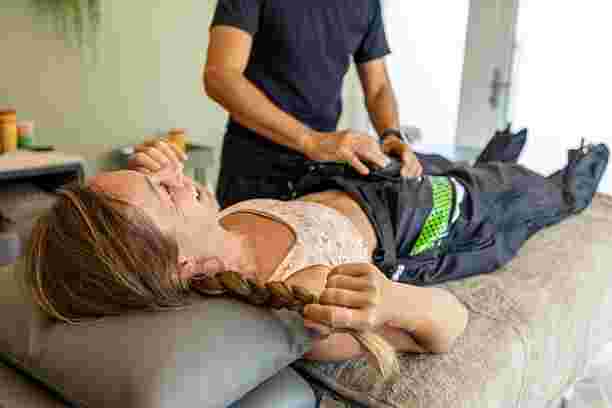
Sessions usually run somewhere between 30 and 45 minutes. You stay fully clothed. You lie on a specialized table, and a harness is fitted around your hips or torso depending on whether the treatment targets the lumbar or cervical spine. The table then gently separates, creating that slow stretch. It's not dramatic. Most people describe it as a mild pulling sensation, and some find it so relaxing they nearly fall asleep.
The machine cycles through phases of pulling and releasing throughout the session. That rhythm is intentional. It prevents your muscles from bracing against the pull, which would undo the whole effect. Between cycles, the pressure eases off slightly, then builds again. The practitioner sets the parameters based on your weight, your condition, and your comfort level. It's adjusted over the course of your treatment plan as your body responds.
How Many Sessions Before You Notice a Difference
Honest answer: it varies. Some people feel noticeably better after three or four sessions. Others take longer. A typical full treatment plan runs somewhere between 15 and 30 sessions spread over six to eight weeks. That might sound like a lot, but consider the alternative, which for many people is surgery or a lifetime of pain management.
Most practitioners recommend pairing decompression with other care like stretching, core strengthening, or chiropractic adjustments to get the best results. The decompression creates the right conditions for healing, but your body still needs to do the work. Staying hydrated matters more than most people realize, because discs absorb water and hydration genuinely affects how well they recover. Progress tends to be gradual, not overnight.
Clinics running Back on Trac Therapy in Rockville Centre NY typically track patient progress at regular intervals to see how the spine is responding and whether adjustments to the plan are needed. That kind of ongoing monitoring makes a real difference in outcomes.
Is This Right for You
Good candidates are generally adults with chronic disc-related pain who haven't had major spinal surgery, don't have fractures or advanced osteoporosis, and are willing to commit to a full treatment plan rather than just a session or two. Age isn't usually a barrier. Plenty of people in their 60s and 70s do really well with this. The key is that the underlying cause of pain is mechanical, meaning it's coming from disc pressure or joint compression, not from something like an infection or tumor.
If you've been told surgery is your only option but you'd rather try something less invasive first, decompression therapy is a reasonable route to explore. Many people avoid surgery entirely after a full course of treatment. That's not a guarantee, but it happens often enough that it's worth trying before committing to an operation.
Practices like Robert Gerov Media have written about how patient education before starting treatment leads to better follow-through and outcomes, which tracks with what chiropractors in this space tend to report. Knowing what to expect makes people more likely to complete the full plan.
If you're in the area and want to see this in person, Back on Trac Decompression Therapy in Rockville Centre NY is available through Rhino Chiropractic, where they can do a proper evaluation and tell you honestly whether you're a good candidate. Back on Trac Therapy in Rockville Centre NY is designed specifically around this type of non-surgical disc care, so it's a good starting point for anyone weighing their options.
Frequently Asked Questions
Is spinal decompression therapy painful?
Most patients don't find it painful at all. The stretch is gentle and controlled, and the table moves slowly enough that your muscles don't brace against it. Some people feel mild soreness after the first couple of sessions, similar to how you might feel after starting a new exercise, but that usually fades quickly.
Can decompression therapy replace surgery?
For some people, yes. There are plenty of cases where patients who were told they needed surgery saw their symptoms resolve after completing a full course of decompression therapy. But it depends entirely on the specific diagnosis and how far the condition has progressed. It's not a replacement in every case, and a qualified provider should be honest with you about what's realistic.
How long do the results last?
Results tend to hold well when patients follow through with the full treatment plan and make lifestyle changes like staying active, improving posture, and keeping their core muscles strong. Disc problems can recur if the underlying habits don't change. Some people need periodic maintenance sessions, while others stay pain-free for years without them.
Who should NOT try spinal decompression therapy?
People with spinal fractures, advanced osteoporosis, spinal fusion hardware, active cancer involving the spine, or during pregnancy should avoid this treatment. Anyone with a pacemaker or implanted electrical device should also check with their doctor first. The contraindications are real, so a proper intake evaluation matters before starting.
How do I know if my back pain is disc-related?
Disc-related pain often radiates into the legs or arms, gets worse with sitting or bending, and may come with numbness or tingling. An MRI is usually the clearest way to confirm it. A chiropractor or orthopedic specialist can review your imaging and symptoms to figure out whether decompression is a sensible option for your specific situation.

 English
 Arabic
 French
 Spanish
 Portuguese
 Turkish
 Dutch
 Italiano
 Russian
 Romaian
 Portuguese (Brazil)
 Greek