


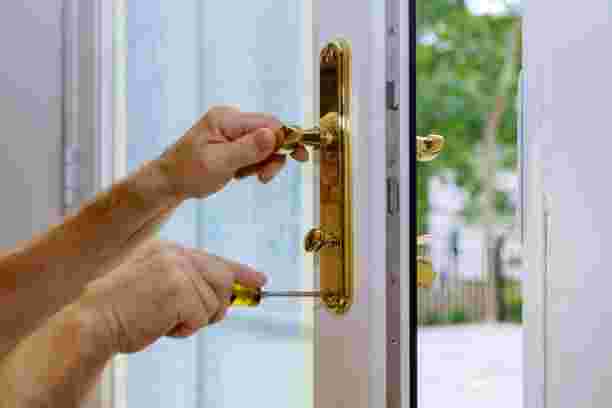
Getting locked out is one of those situations where your brain immediately starts running bad ideas. You jiggle the handle. You check every window. You start Googling "how to pick a lock with a bobby pin" at 10pm in a parking lot. Most people don't know where the line is between a fix you can genuinely pull off yourself and a situation where DIY is going to cost you more than just calling someone from the start. If you're in the Lancaster area and weighing your options, knowing when to reach out to an Emergency Locksmith in Lancaster PA versus when to try it yourself can save you real money and a lot of frustration. This breakdown is going to be honest about both sides.
What DIY Methods Actually Exist (And What They Demand)
There are really only a handful of DIY approaches that have any shot at working. Credit card shimming is one. It works on spring-bolt locks, the kind that click shut when you close the door, but it won't touch a deadbolt. You slide a flexible card between the door and the frame and push against the angled latch. Sounds simple. It's not, especially if the door fits tight or the frame is weather-stripped.
Bobby pin picking is the one everyone thinks they can do after watching a YouTube video for four minutes. Honest answer? It takes real practice. Most people give up after 20 minutes with sore fingers and a bent pin. Lock picking is a skill, not a trick. If you've never done it before, a locked door isn't the place to learn.
The best DIY option, by far, is a spare key. A neighbor holding one, a lockbox on the property, a family member who can drive over. That's it. That's the whole list of genuinely easy solutions. Everything else has a learning curve or a risk attached to it.
The Hidden Costs of a Failed DIY Attempt
Here's what doesn't show up in the YouTube tutorial. Scratched door frames from repeated card shimming. Broken bobby pins jammed inside the keyway, which then require a professional to extract before anything else can happen. Damaged lock cylinders from forcing tools in wrong. These aren't rare outcomes. I've heard from people who spent two hours trying to get in, scratched the paint off their door frame, and still called a locksmith, except now the locksmith had to deal with a partially broken lock on top of the original problem.
That raises the bill. A standard lockout service might run $75 to $150 depending on the lock type and time of day. But if you've bent a key inside the cylinder or cracked a component, you're now looking at a lock replacement on top of the service call. Worth keeping in mind before you start experimenting.
There's also the time cost. Most people underestimate how long a failed DIY attempt runs. An hour of trying, then another 20 minutes finding a locksmith's number, then waiting for response. A Locksmith in Lancaster PA who does mobile service can often be on-site in 20 to 30 minutes from the moment you call. That's sometimes faster than your DIY attempt alone.
Situations Where DIY Is Genuinely Fine
Not every lockout needs a professional. Some are straightforward. If you've locked yourself out of an interior room with a push-button privacy lock, those are usually easy to open with a thin tool pushed into the small hole on the outside knob. Most interior privacy locks aren't meant to be high-security, and the manufacturer basically builds in a bypass.
Got a spare key with a neighbor two blocks away? Go get it. Sounds obvious, but people sometimes forget to check before they start panicking. Same goes for a realtor lockbox or a key hidden on the property. If there's a clean, no-damage path back inside, take it.
Old-style push-button car locks on older vehicles without electronic systems can sometimes be opened with a slim jim or a wedge and rod if you know what you're doing. But the window for "knowing what you're doing" is narrow, and modern cars have sensors, airbag wiring, and weather seals that make this risky even for experienced people.
Situations Where You Should Just Call a Pro
High-security deadbolts. Full stop. These are designed specifically to resist picking, shimming, and forced entry. Trying to open one yourself is likely to damage it without getting you in. A Locksmith in Lancaster PA with the right tools can open most of them without any damage to the door or the hardware.
Transponder car keys are another one. If your car key has a chip in it, which most do after the mid-1990s, you can't just cut a new one at a hardware store. The chip has to be programmed to the vehicle's immobilizer system. You need a pro with the right equipment, full stop. According to information on transponder car keys, the programming process involves the vehicle's ECU and can't be bypassed with basic tools.
Frozen lock cylinders in winter, corroded locks, or locks that are visibly damaged are all situations where forcing anything will make it worse. And if there's a child or a pet locked inside a car or a room, skip the DIY entirely. Call a pro and call them now. Speed matters more than saving $100.
If you're in central Pennsylvania and need someone fast, PrimeKey Mobile Locksmith is one option people in the area use for exactly these kinds of situations, whether it's a car lockout, a home deadbolt, or a broken key extraction.
How to Make the Call Honestly
Ask yourself three things before you try anything. First, do I have a clean, no-damage way back in, like a spare key or an unlocked window I can reach safely? Second, is this a basic interior lock or a high-security deadbolt? Third, is anyone or anything in danger right now?
If the answer to the first question is no, the second answer is "high-security," or the third answer is yes, call a professional. Don't spend 45 minutes on a problem that a trained person can solve in 10. The Emergency Locksmith in Lancaster PA you call is going to be faster, and you won't risk turning a $100 lockout into a $300 lock replacement.
If the situation is genuinely simple, like a neighbor has your spare, or it's an interior push-button lock, handle it yourself. No shame in that. The goal is just to match the solution to the actual problem, not to default to one extreme or the other.
Frequently Asked Questions
Can a credit card really open a locked door?
Sometimes. It only works on spring-bolt latches, the kind that angle back when the door closes. It won't work on deadbolts at all. And if the door frame is tight or weather-stripped, even the spring-bolt trick gets pretty difficult. It's worth a quick try before anything else, but don't count on it.
How long does a locksmith usually take to arrive?
Most mobile locksmiths in a city or suburb can get to you in 20 to 45 minutes. Response time varies by location and time of day. Calling early in the process rather than after a failed DIY attempt gets you help faster overall.
Will a locksmith damage my lock or door to get in?
A good one won't. Professional locksmiths use non-destructive entry techniques on most standard locks. Damaged or frozen locks sometimes require drilling as a last resort, but that's not the starting point. They'll tell you upfront if the lock can't be opened without damage.
Is it cheaper to DIY a lockout?
It can be, if it works cleanly. But a failed attempt that damages the lock or jams a broken key inside can turn a $0 solution into a bill that's higher than a simple service call would've been. Factor in your time too. An hour of frustration has a real cost.
What should I have ready when I call a locksmith?
Your location, the type of lock or vehicle if you know it, and proof of ownership or residency. A driver's license matching the address or a vehicle registration is standard. Reputable locksmiths ask for this every time, so don't be surprised when they do.

 English
 Arabic
 Spanish
 Portuguese
 Deutsch
 Turkish
 Dutch
 Italiano
 Russian
 Romaian
 Portuguese (Brazil)
 Greek