


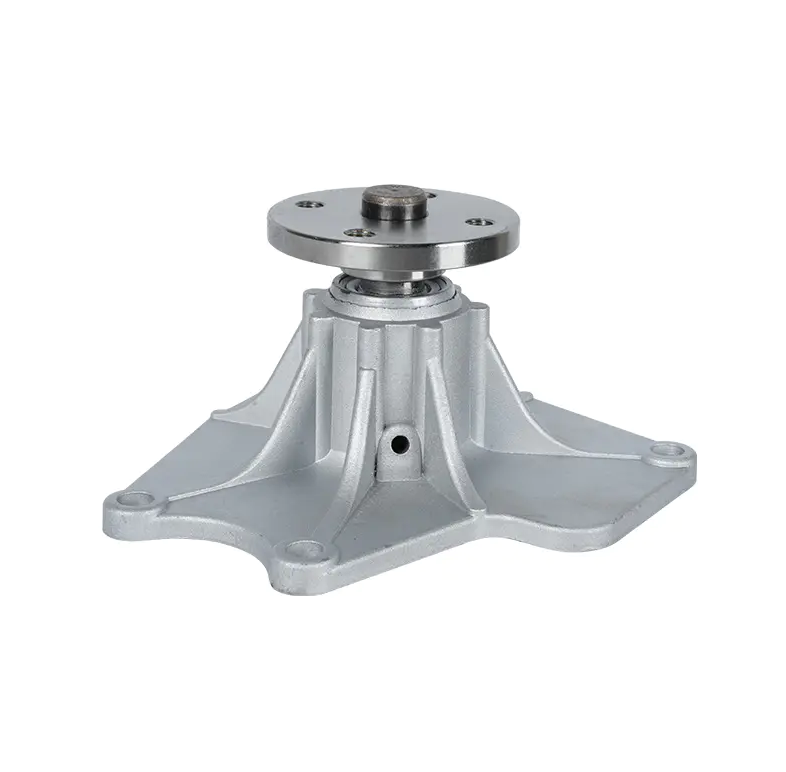
An excavator pump links the hydraulic system of an excavator to a pumping unit that moves water, slurry, or other fluids across a work site. The excavator’s hydraulic circuit supplies pressurized oil through quick-connect lines, spinning the pump’s impeller or piston assembly. Once the lines are joined, the operator activates the auxiliary circuit from the cab, and fluid begins to flow through the attached hoses. This arrangement turns the excavator into a mobile power source that can place the pump exactly where liquid needs to move.
The pump body itself sits either on the ground near the machine or mounts to a bracket on the boom or stick. When ground-mounted, the excavator simply parks close enough for the hydraulic hoses to reach. When boom-mounted, the operator swings and extends the arm to position the intake over a trench, pond, or sump. The discharge hose then carries the fluid to a temporary holding area, a drainage ditch, or a waiting tank. Control of flow rate comes from the excavator’s joystick or foot pedal, which varies the oil volume sent to the pump motor.
Different impeller designs handle different materials. An open impeller passes water mixed with fine sediment, while a more enclosed style favors clearer streams. The operator matches the pump type to the fluid before connecting the lines. Hose diameter also shapes performance; wider hoses reduce friction and allow greater volume, while narrower ones suit precise placement into tight openings. A simple strainer on the intake keeps larger debris from entering the chamber and interrupting the flow.
Positioning requires attention to the machine’s stability. The added weight of the pump and the reaction forces from flowing fluid shift the balance slightly, so the operator keeps the tracks level and the boom movements smooth. Travel with the pump attached stays slow and deliberate. Once the unit is set, the parking brake holds the excavator steady while the pump runs. Clear communication between the cab and any ground crew helps keep the hoses free of kinks and the discharge end secured.
The hydraulic connection itself remains straightforward. Matching couplers prevent oil loss during attachment, and a check valve on the pump side holds residual pressure when the circuit shuts off. Operators learn the feel of the controls quickly, adjusting oil flow until the discharge stream matches the needed volume. This direct link between excavator pump gives the crew a flexible tool that moves with the progress of the earthwork rather than remaining fixed in one location.

 English
 Arabic
 French
 Spanish
 Portuguese
 Deutsch
 Turkish
 Dutch
 Italiano
 Russian
 Romaian
 Portuguese (Brazil)