


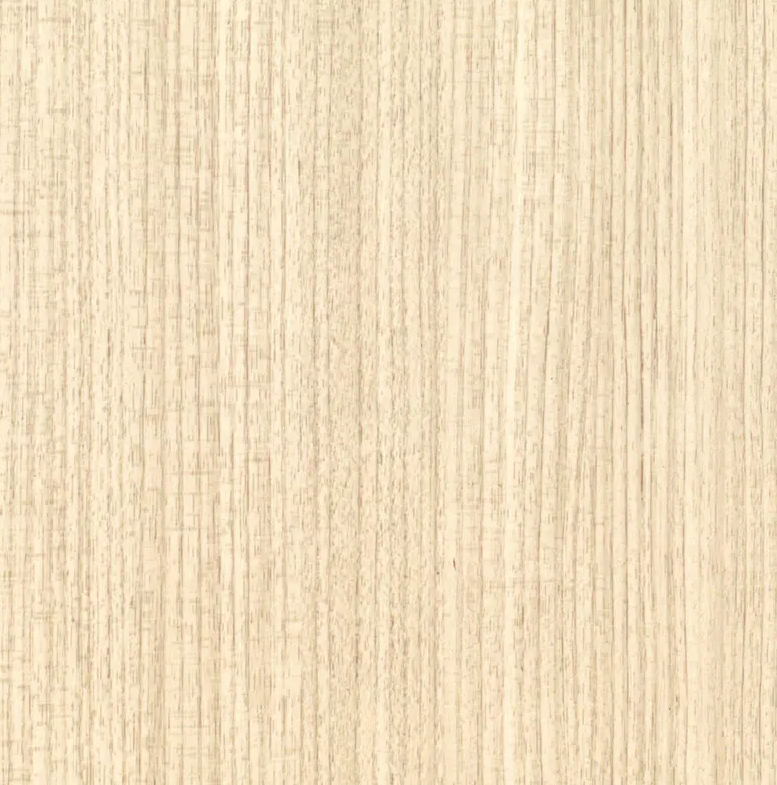
The printing process places ink beneath a clear wear layer so the design stays protected while remaining sharp. Light moves across the finish in different ways depending on whether the top surface is matte, satin, or lightly textured. A matte version absorbs glare from nearby windows; a satin version gives a soft reflection that still shows the grain underneath. PVC furniture film with a slight embossed texture invites the fingers to trace the lines of the printed wood or stone.
Application begins with a clean, smooth substrate—usually MDF or particleboard. Heat and pressure activate the adhesive on the reverse side so the film bonds evenly. On flat panels the sheet lays down in one continuous motion. On shaped pieces the operator works section by section, easing the material around radii and into recessed profiles. PVC furniture film conforms to these contours when the temperature and tension are balanced, leaving no air pockets or wrinkles.
Color consistency across a large run of cabinets matters for a coherent look. The film arrives in rolls that share the same print batch, so doors, sides, and tops match without noticeable shifts. Patterns that continue from one panel to the next create the impression of a single piece of material rather than separate boards. PVC furniture film printed with a continuous grain direction helps the finished furniture read as intentional rather than assembled from mismatched parts.
Different rooms call for different moods. A calm gray oak pattern suits a quiet study. A warmer walnut tone softens a living-room sideboard. Solid colors in muted greens or soft whites give a contemporary edge to storage units. The same PVC furniture film technology supports all these choices, letting the designer select the visual language while the underlying construction stays practical and consistent.

 Arabic
 French
 Spanish
 Portuguese
 Deutsch
 Turkish
 Dutch
 Italiano
 Russian
 Romaian
 Portuguese (Brazil)
 Greek