


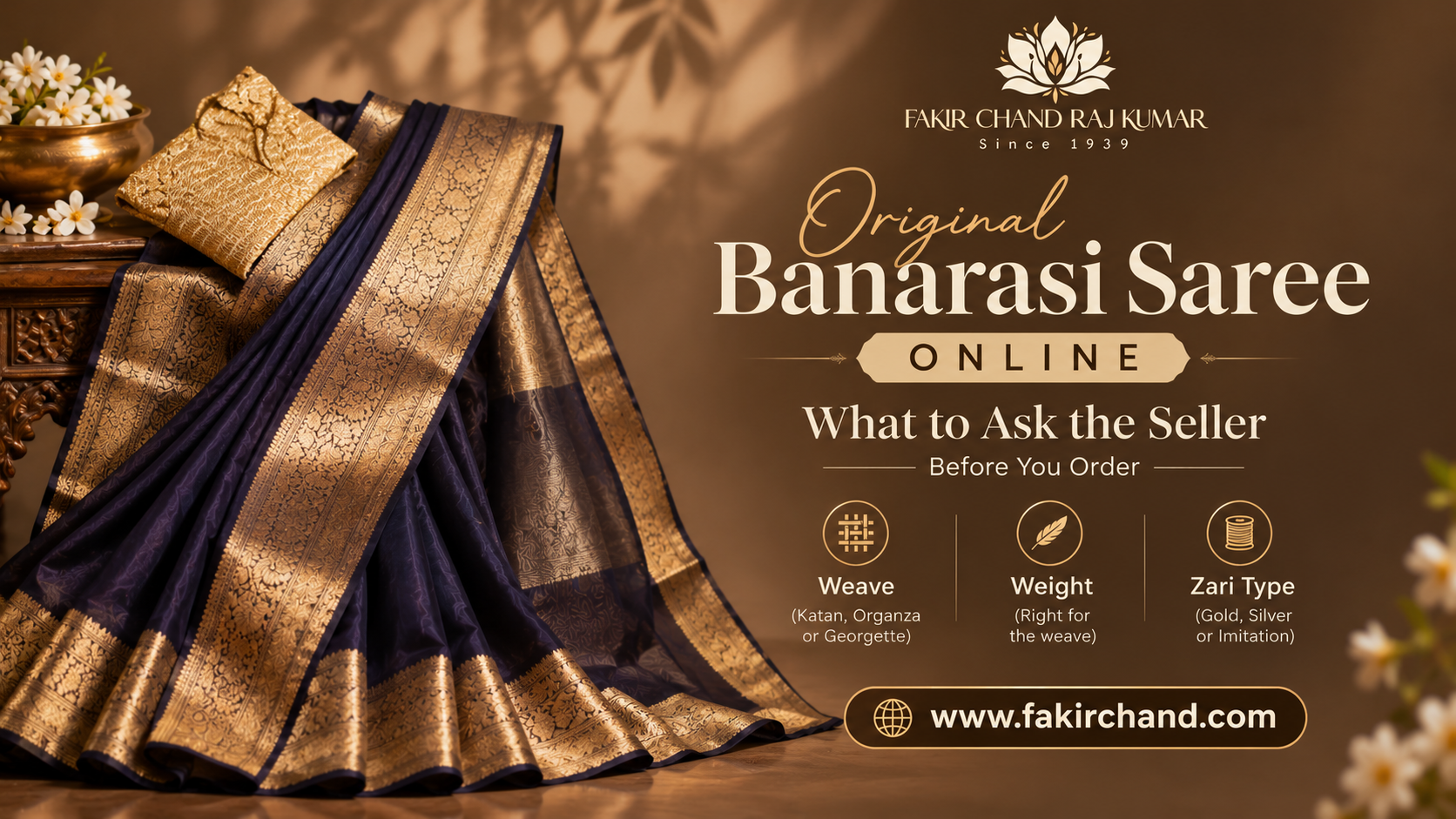
Banarasi sarees have earned their reputation over centuries, which is exactly why imitations flood the market today. Vague descriptions and edited photos make it hard to tell a genuine piece from a power-loom copy, and you can't touch the fabric yourself. This guide walks you through what to ask about weave, weight, and zari type so you can order with confidence, not guesswork.
Before buying an Original Banarasi Saree Online, ask the seller about the weave type (Katan, Organza, or Georgette), the saree's weight, and whether the zari is real gold/silver or imitation. Request close-up photos, certification if available, and a clear return policy to confirm authenticity before you pay.
What Makes a Banarasi Saree Authentic?
An authentic Banarasi saree is handwoven on a traditional loom using silk threads and zari work, often taking anywhere from a few weeks to several months to complete depending on the intricacy of the design. The weaving originated in Varanasi, where artisans developed distinctive brocade techniques passed down through generations.
A few characteristics separate genuine pieces from imitations:
- Handwoven texture: Slight irregularities in the weave, which machine-made sarees lack
- Zari detailing: Metallic threadwork woven directly into the fabric, not printed or embroidered on top
- Weight and drape: A substantial, fluid fall that mass-produced sarees rarely replicate
- Motifs: Traditional patterns like paisleys, florals, and jaal (net) designs with consistent symmetry
Knowing these basics gives you a foundation. But when you're shopping an Original Banarasi Saree Online, you can't run your fingers over the fabric. You have to ask the right questions instead.
Critical Questions About Weave
The weave is the backbone of a Banarasi saree's identity. Different weaving techniques produce different textures, weights, and finishes, and sellers should be able to explain exactly which one your saree uses.
What type of weave does this saree use?
The three most common Banarasi weave types are:
- Katan: Pure silk weave known for a rich, lustrous finish. Often considered the gold standard for bridal pieces.
- Organza (Kora): Lightweight and semi-transparent, with delicate zari work. Popular for festive wear where comfort matters.
- Georgette: Softer and easier to drape, suited to long events and more contemporary styling.
A seller who can't specify which weave they're using, or who gives you a vague answer like "pure silk blend," should raise questions.
How can you verify weave authenticity through seller responses?
Verify weave authenticity by asking the seller for:
- Close-up photos or short videos in natural light, since a genuine handwoven piece shows subtle texture variation that a power-loom saree typically won't
- A direct answer on whether the saree was woven on a handloom or a power loom (reputable sellers often highlight this as a selling point)
Watch for these red flags:
- Generic terms like "silk-like" or "Banarasi-style" instead of the specific weave name
- No mention of handloom versus power loom
- Stock photos that don't match the actual product
- Reluctance to provide additional images on request
Understanding Weight and Quality
Weight is one of the most reliable, and most overlooked signs while buying an Original Banarasi Saree Online. Real silk and zari give these sarees more heft than synthetic alternatives. But weight varies by weave: Organza is naturally lighter, while Katan silk is heavier. Instead of assuming "heavier is better," ask the seller for the expected weight of your specific weave, and check:
- Does the weight match what's typical for this weave (Katan, Organza, or Georgette)?
- Does it cover the saree alone, or the blouse piece too?
- Can it be compared to a known authentic piece?
If a seller can't answer, dig deeper before ordering.
Decoding Zari Type and Composition
Zari is the metallic thread that gives a saree its shimmer and intricate patterns. It's also easy to misrepresent, since "zari" can mean anything from real gold-wrapped thread to plastic coated in metallic paint. Here are the main types:
- Gold zari (Kalabattu): Silver thread wrapped in gold and wound around a silk core. It's the most premium and expensive option.
- Silver zari: Pure silver thread with a cooler tone, usually priced lower than gold.
- Imitation zari: Polyester or copper coated in metallic color. It looks similar at first glance but tarnishes quickly and lacks durability.
Questions to Ask About Zari Purity and Thread Quality
Before ordering, ask the seller directly:
- Is the zari real metal (gold or silver) or imitation?
- What is the approximate zari content as a percentage of the design?
- Will the zari tarnish or change color over time, and if so, how should it be cared for?
- Can you provide a certificate or documentation confirming zari purity?
Sellers who deal in authentic pieces are usually upfront about zari composition because it directly affects pricing. Vague or evasive answers here are one of the clearest signs you should look elsewhere.
Common Mistakes to Avoid When Buying Online
Even careful shoppers fall into a few predictable traps when purchasing an Original Banarasi Saree Online:
- Overlooking detailed product descriptions: Skimming past weave and zari details because the photos look appealing
- Ignoring seller reviews and ratings: Reviews often reveal whether past orders matched their descriptions, which is more telling than the product listing itself
- Falling for unrealistic pricing: Treating a steep discount as a lucky find instead of a warning sign about material quality
Avoiding these mistakes comes down to one habit: asking questions before you pay, not after the saree arrives.
Shop with Confidence, Not Guesswork
Buying an Original Banarasi Saree online doesn't have to be a gamble. Ask about weave, weight, and zari type, and it's much harder for a seller to gloss over the details that matter. Choose Organza or Georgette for comfort, or Katan silk with real zari for the richest bridal finish. Either way, confirm the weight and zari composition before you commit.
For a starting point, sellers like House of Fakirchand openly showcase their weave types, zari details, and craftsmanship, making them a useful reference as you compare options.
Frequently Asked Questions
How do I know if a Banarasi saree is handwoven or machine-made?Ask the seller for close-up photos or videos of the fabric. Handwoven pieces usually show slight texture irregularities.
What is the ideal weight for an authentic Banarasi saree?It depends on the weave. Katan silk is heavier due to dense weaving, while Organza is intentionally lighter. Ask what's standard for your chosen weave.
Is real gold zari used in all Banarasi sarees?No. Many modern sarees use silver or imitation zari to keep costs down. Confirm the zari composition before ordering.
Why do prices vary so much between Banarasi sarees that look similar?Prices depend on zari type, weave complexity, and whether the piece is handwoven or power-loom made. A good seller can explain their pricing.

 English
 Arabic
 French
 Spanish
 Portuguese
 Deutsch
 Turkish
 Dutch
 Italiano
 Russian
 Romaian
 Portuguese (Brazil)