


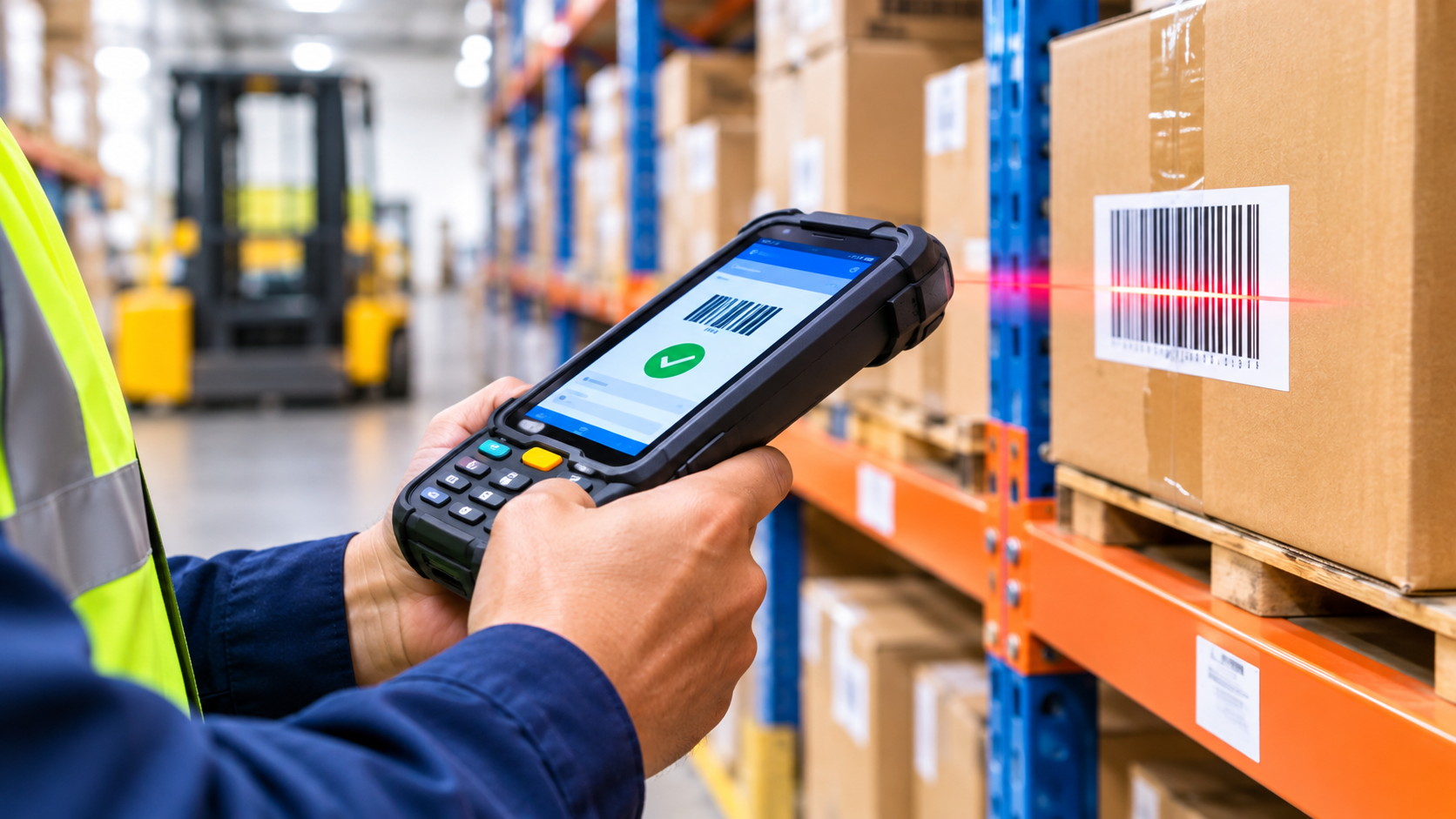
Inventory accuracy is essential for warehouses that want to reduce errors, improve order fulfillment, and maintain reliable stock records. When inventory data does not match the physical stock available, businesses may experience misplaced products, delayed shipments, and unnecessary operating costs.
A warehouse barcode PDA scanner can help address these challenges by allowing employees to scan products and update inventory records directly from the warehouse floor. Instead of relying on handwritten notes or manual data entry, workers can capture barcode information and send it to connected inventory or warehouse management systems.
Businesses exploring solutions may also compare the warehouse barcode pda scanner price kuwait and zebra handheld mobile computer price kuwait to understand equipment costs and choose devices that match their operational requirements.
This article explains how barcode PDA scanners can improve inventory accuracy and what businesses should consider when implementing them.
Table of Contents
-
What Is a Warehouse Barcode PDA Scanner?
-
Why Is Inventory Accuracy Important?
-
How Barcode PDA Scanners Improve Inventory Accuracy
-
Key Warehouse Applications
-
Benefits of Using Handheld Mobile Computers
-
What to Consider Before Choosing a Scanner
-
Frequently Asked Questions
-
Conclusion and CTA
1. What Is a Warehouse Barcode PDA Scanner?
A warehouse barcode PDA scanner is a handheld mobile computer that combines barcode scanning with computing capabilities. Depending on the model, it may include a screen, operating system, physical scan trigger, keypad or touchscreen, and wireless connectivity.
Warehouse employees can use these devices to scan barcodes on products, cartons, shelves, pallets, and storage locations. The scanned information can then be sent to inventory software, a warehouse management system (WMS), or another compatible business application.
Unlike a basic barcode scanner that may only capture barcode data, a mobile computer can also support warehouse workflows such as receiving, picking, stock transfers, and cycle counting. Capabilities vary by device and software configuration.
2. Why Is Inventory Accuracy Important?
Inventory accuracy means that the quantities and locations recorded in a business system reflect the physical stock in the warehouse.
Inaccurate records can lead to:
-
Products appearing available when they are out of stock
-
Items being misplaced or difficult to locate
-
Incorrect quantities being picked for orders
-
Delays during receiving and dispatch
-
Excess stock or unnecessary replenishment
-
Time-consuming inventory investigations
Maintaining accurate records helps employees make better decisions and gives managers a clearer view of warehouse operations.
3. How Barcode PDA Scanners Improve Inventory Accuracy
Reduce Manual Data Entry
Manual inventory updates can lead to typing mistakes, missed digits, and inconsistent product codes. Barcode scanning captures encoded information directly, reducing the need for employees to enter long product identifiers manually.
When connected to the correct inventory system, scans can help update stock records more consistently.
Verify Products During Receiving
When new stock arrives, employees can scan product or carton barcodes and compare them with purchase orders or expected deliveries.
This can help workers identify incorrect items, unexpected quantities, or products that require further inspection before being added to available inventory.
Confirm Storage Locations
Warehouse PDA scanners can support location-based inventory tracking. Employees may scan a shelf, bin, or pallet location and then scan the product being stored.
This creates a record of where the item was placed, helping reduce misplaced stock and making future picking easier.
Improve Picking Accuracy
During order picking, employees can scan the assigned location and product barcode to verify that they have selected the correct item.
Depending on the software, the device may provide an alert if the scanned product or location does not match the order. This helps catch mistakes before the order reaches packing or dispatch.
Support Cycle Counting
Cycle counting involves checking selected inventory regularly instead of waiting for a full warehouse count.
A PDA scanner can help employees scan items and locations, record counted quantities, and compare them with system records. This makes it easier to identify discrepancies and investigate potential causes.
Update Inventory More Quickly
With compatible wireless connectivity and software, scan information can be sent to the inventory system as work happens. This can reduce the delay between a physical stock movement and the corresponding digital update.
Real-time or near-real-time updates depend on the device, network coverage, and application setup.
4. Key Warehouse Applications
Warehouse barcode PDA scanners can support several inventory processes:
| Warehouse process | How scanning helps |
|---|---|
| Receiving | Checks incoming products against expected deliveries |
| Put-away | Associates products with storage locations |
| Picking | Verifies products and locations during order preparation |
| Stock transfers | Records movement between bins or warehouse areas |
| Cycle counting | Captures counted quantities for inventory reconciliation |
| Dispatch | Confirms products before they leave the warehouse |
Using a consistent scanning process across these activities helps maintain a more complete inventory record.
5. Benefits of Using Handheld Mobile Computers
A dedicated handheld mobile computer can be useful in busy warehouses where scanning is a frequent part of daily work.
Potential benefits include:
-
Faster data capture: Workers can scan barcodes without repeatedly typing product information.
-
More consistent workflows: Standardized prompts can guide employees through receiving, picking, and counting.
-
Improved visibility: Connected systems can provide clearer information about stock quantities and locations.
-
Greater mobility: Employees can perform inventory tasks while moving around the warehouse.
-
Fewer avoidable errors: Product and location verification can help catch mistakes earlier.
These benefits depend on suitable hardware, software, barcode quality, network coverage, and employee training.
6. What to Consider Before Choosing a Scanner
Before comparing the warehouse barcode pda scanner price kuwait or zebra handheld mobile computer price kuwait, businesses should consider the complete requirements of their warehouse.
Important factors include:
-
Barcode compatibility: Confirm that the scanner supports the 1D or 2D barcode types used in the warehouse.
-
Scanning performance: Consider barcode size, condition, scanning distance, and the environment.
-
Software compatibility: Check whether the device works with the existing WMS, ERP, or inventory application.
-
Connectivity: Review Wi-Fi, Bluetooth, or cellular requirements and coverage.
-
Durability: Choose a device appropriate for the warehouse environment, including dust, handling, and potential drops.
-
Battery performance: Consider how long the device must operate between charges.
-
Ergonomics: Check weight, grip, screen, keypad, and scan-trigger design for repeated use.
-
Total cost: Include accessories, software, support, device management, and replacement needs—not only the purchase price.
Zebra handheld mobile computers are one option businesses may evaluate. Features and capabilities differ across models, so specifications should be checked against the actual warehouse workflow.
7. Frequently Asked Questions
What is a warehouse barcode PDA scanner used for?
It is used to scan barcodes and support warehouse tasks such as receiving, put-away, picking, stock transfers, cycle counting, and dispatch.
Can a PDA scanner improve inventory accuracy?
Yes. It can reduce manual data entry and help employees verify products, quantities, and locations. Results depend on correct setup and consistent scanning procedures.
Is a barcode PDA scanner different from a regular barcode scanner?
A basic barcode scanner primarily captures barcode data. A PDA scanner or handheld mobile computer typically combines scanning with a computing device and applications for completing warehouse tasks.
Are Zebra handheld mobile computers suitable for warehouses?
Some Zebra handheld mobile computer models are designed for business and warehouse workflows. Businesses should compare the model’s scanning capabilities, durability, connectivity, and software compatibility with their needs.
What affects warehouse barcode PDA scanner prices in Kuwait?
Price can vary based on the device model, barcode engine, durability, connectivity, memory, accessories, software requirements, and supplier terms. Businesses should compare specifications and total ownership costs.
8. Conclusion and CTA
A warehouse barcode PDA scanner can help businesses improve inventory accuracy by reducing manual data entry, verifying products and locations, supporting cycle counting, and recording stock movements more consistently.
The best results come from combining suitable scanning devices with compatible inventory software, reliable barcodes, clear warehouse procedures, and employee training. When comparing equipment, businesses should evaluate operational needs and total cost—not just the initial device price.
Pointus Solutions can be a starting point for businesses exploring barcode and inventory identification equipment. Review your warehouse requirements and compare available options before selecting a solution.
Call to Action
Looking to improve warehouse inventory accuracy with mobile barcode scanning? Contact Pointus Solutions to discuss your requirements and explore suitable barcode identification products. Compare the warehouse barcode pda scanner price kuwait and zebra handheld mobile computer price kuwait based on the features and workflows your business needs.

 English
 French
 Spanish
 Portuguese
 Deutsch
 Turkish
 Dutch
 Italiano
 Russian
 Romaian
 Portuguese (Brazil)
 Greek