


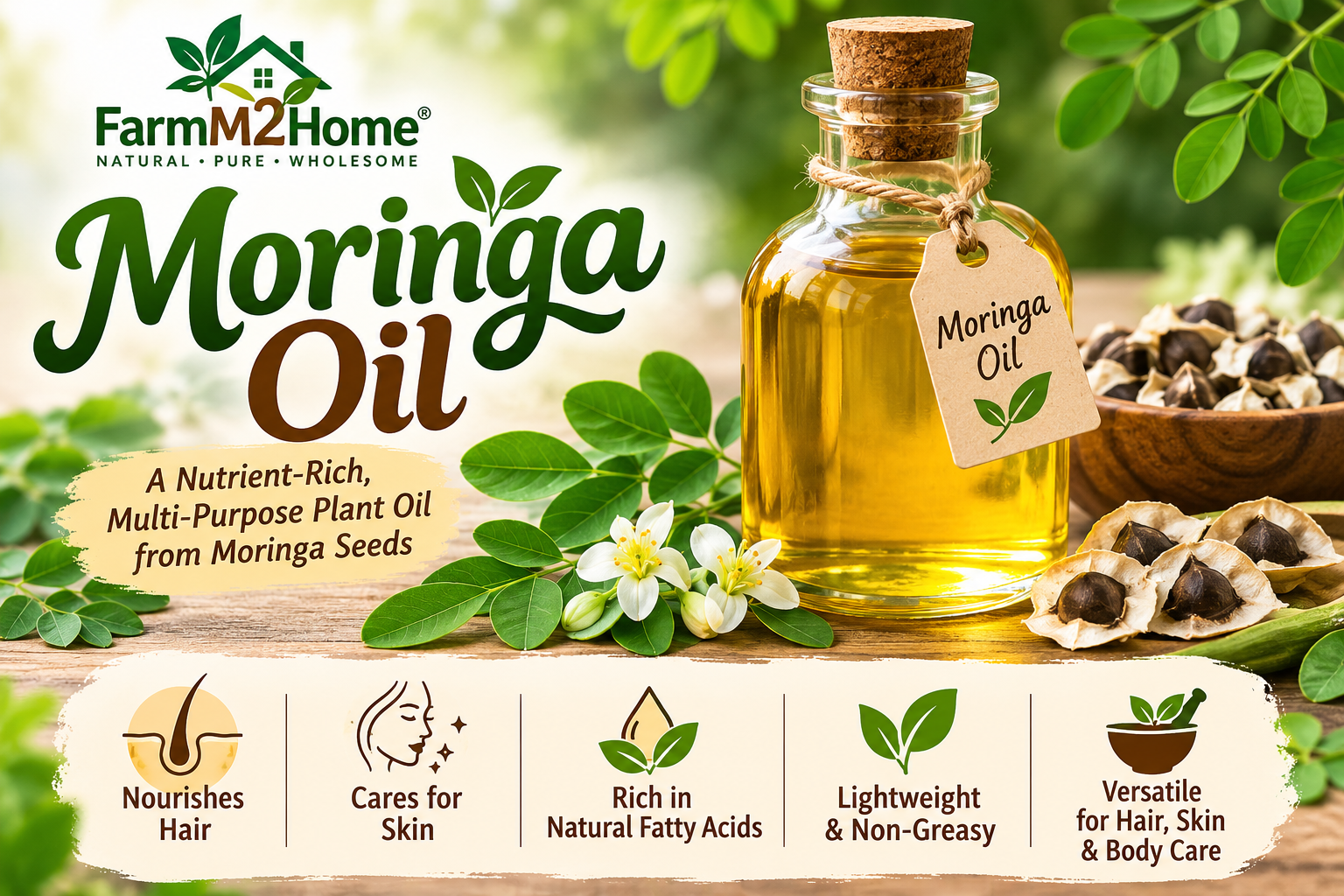
Dry hair can feel rough, look dull, and become difficult to manage. Changes in weather, frequent washing, heat styling, chemical treatments, and everyday friction can all contribute to dryness. Many people explore plant-based oils as part of their hair-care routine, and Moringa Oil is one ingredient used in selected cosmetic products.
Extracted from the seeds of the moringa tree, Moringa Oil has a smooth texture and naturally occurring fatty acids. It can be used as a conditioning ingredient to help hair lengths feel softer. Farm M2 Home shares this practical guide to using Moringa Oil for dry hair and building a simple routine.
Why Does Hair Become Dry?
Hair can lose its smooth feel for several reasons. Frequent shampooing, hot water, excessive heat styling, strong chemical treatments, and environmental exposure may affect the hair's outer surface.
Naturally curly or textured hair may also feel dry because the scalp's natural oils do not spread easily along the hair lengths.
Dry hair may become tangled and difficult to comb. Using suitable cleansing and conditioning products can help improve manageability. An oil may be one optional step, but it cannot reverse all types of hair damage.
What Is Moringa Oil?
Moringa Oil is obtained from the seeds of Moringa oleifera. It is sometimes known as ben oil or behen oil.
The oil contains oleic acid and other naturally occurring fatty acids. It is generally liquid at room temperature and may have a light golden appearance.
Moringa Oil is used in some hair oils, conditioners, and other cosmetic formulations. For hair care, choose a product specifically intended for external cosmetic use.
How Can Moringa Oil Be Used for Dry Hair?
1. Conditioning Hair Lengths
A small amount of Moringa Oil can be spread over the middle lengths and ends of dry or slightly damp hair, depending on the product directions.
Rub a few drops between your palms and gently apply them to the hair. Start with a small quantity because using too much can make the strands look oily.
This method may help improve the feel and manageability of dry hair.
2. Pre-Wash Oil Application
Some people prefer applying oil before shampooing. This can be a simple way to include Moringa Oil in a hair-care routine.
Take a small quantity and distribute it over the hair lengths. Leave it for a comfortable period according to your routine and product instructions. Then wash your hair with a suitable shampoo.
There is no requirement to leave the oil on overnight. If it causes irritation or discomfort, stop using it.
3. Apply to Hair Ends
Hair ends may feel particularly dry because they are older sections of the hair strand and experience repeated friction and styling.
If your product permits leave-on use, apply a very small quantity to the ends. Avoid applying too much because this can make the hair appear greasy.
4. Use a Moringa-Based Conditioner
Some commercial conditioners and hair masks contain Moringa Oil along with other conditioning ingredients.
A ready-made product may be convenient because it is formulated for a particular application. Follow its directions for quantity, application time, and rinsing.
A Simple Weekly Hair-Care Routine
A consistent routine does not need to involve many products.
Wash day: Use a gentle shampoo suitable for your scalp. Avoid very hot water and excessive rubbing.
Conditioning: Apply a suitable conditioner to the hair lengths and follow the product instructions.
Optional oil application: If Moringa Oil suits your hair, apply a small quantity before washing or to the ends as directed by the product.
Drying: Gently squeeze out excess water using a soft towel. Avoid aggressive rubbing.
Styling: Reduce frequent use of high-heat styling tools. Use suitable heat protection when heat styling is necessary.
Adjust the routine according to your hair type and how often you wash it.
Is Moringa Oil Suitable for All Hair Types?
Different hair types may respond differently.
Dry hair: A small amount may help condition the lengths and improve the feel of the strands.
Fine hair: Use very little oil to avoid a heavy or greasy finish.
Thick hair: Applying the oil in sections may help distribute it more evenly.
Curly hair: It may be included in a conditioning routine if the product suits your hair.
Oily scalp: Consider using the oil on the lengths rather than applying it directly to the scalp.
Does Moringa Oil Repair Split Ends?
Moringa Oil may temporarily improve the appearance and feel of dry hair ends by coating the strands. However, it cannot permanently join split ends or repair severely damaged hair.
Trimming damaged ends and reducing repeated heat or chemical exposure are more practical steps for managing split ends.
Does It Promote Hair Growth?
Moringa Oil is sometimes marketed for hair growth, but there is insufficient reliable clinical evidence to establish that applying it directly increases hair growth or prevents hair loss.
If you experience sudden thinning, persistent shedding, or scalp problems, consult a dermatologist or qualified healthcare professional.
Choosing the Right Moringa Oil
Check the label for cosmetic use, complete ingredients, manufacturer details, and storage instructions. If the product contains added fragrances or other botanical ingredients, check whether they are suitable for your scalp.
Choose a properly sealed product and avoid exaggerated promises about guaranteed hair growth.
Safety Tips
Perform a patch test before regular use. Avoid contact with your eyes and do not apply the oil to broken or irritated skin. Stop using it if you notice itching, redness, or discomfort.
Moringa Oil can be an optional conditioning ingredient for people who want to include a plant-based oil in their dry-hair routine. It may help hair lengths feel smoother, but it is not a guaranteed treatment for split ends, hair damage, or hair loss.
Farm M2 Home encourages simple and informed hair-care habits. Choose a suitable cosmetic product, use a small amount, and follow the manufacturer's instructions.

 English
 French
 Spanish
 Portuguese
 Deutsch
 Turkish
 Dutch
 Italiano
 Russian
 Romaian
 Portuguese (Brazil)
 Greek