


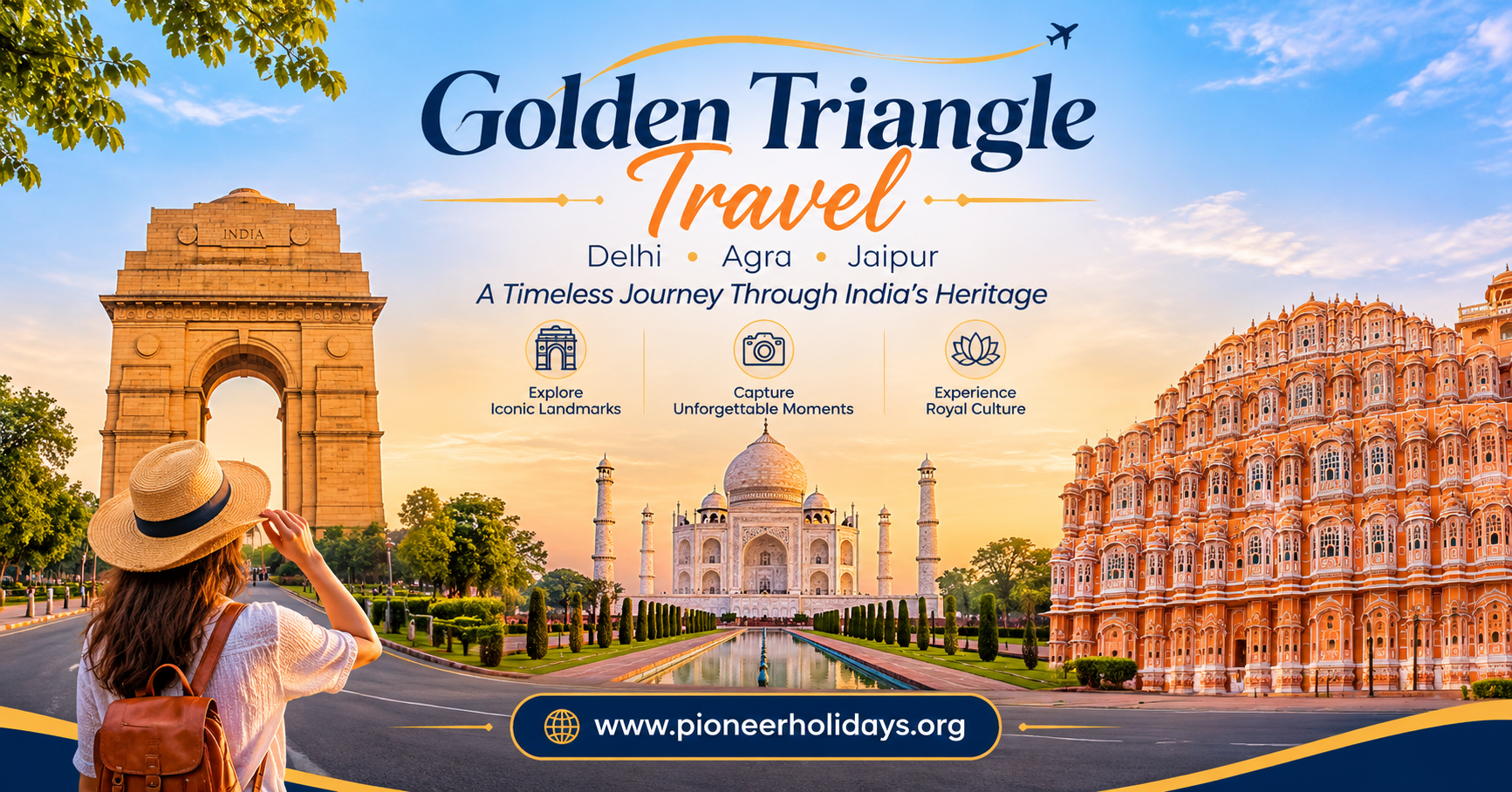
Planning a trip to India involves more than choosing destinations. You also need to decide how much time to spend in each city, what kind of experiences interest you, and how comfortably you want to travel. The Golden Triangle, connecting Delhi, Agra, and Jaipur, is an excellent route for discovering India's history, architecture, food, and local culture.
However, not every traveller enjoys the same type of holiday. Some prefer covering famous landmarks in a few days, while others want relaxed sightseeing, local experiences, and time to explore beyond the main attractions. Choosing the right Golden Triangle Tour Packages means matching the itinerary with your travel style, available time, and expectations.
Here are the most important factors to consider before making your decision.
1. Decide How Many Days You Can Spend in India
The first step is to establish a realistic travel duration. Delhi, Agra, and Jaipur are connected by road, but travelling between them takes time. A short itinerary may cover the main highlights, while a longer one gives you more opportunities to explore each city.
Consider these general options:
| Duration | Suitable travel style |
|---|---|
| 2 days | Very short trips with a fast sightseeing schedule |
| 3 days | Travellers with limited holiday time |
| 4 days | Visitors wanting a more balanced introduction |
| 5 days | Travellers who prefer additional sightseeing time |
| 6 days | Visitors looking for a slower, more flexible journey |
For a quick introduction, compare a 2 Days Golden Triangle Tour or 3 Days Golden Triangle Tour. If you prefer more time at major attractions, a 4 Days Golden Triangle Tour, 5 Days Golden Triangle Tour, or 6 Days Golden Triangle Tour may be worth considering.
Remember that the number of days alone does not tell you whether an itinerary is comfortable. Check the sightseeing schedule and daily driving time before booking.
2. Match the Itinerary to Your Interests
Each city offers a different experience, so think about what you most want to see.
History and architecture: Delhi has landmarks such as Humayun's Tomb, Qutub Minar, and the Red Fort. Agra is home to the Taj Mahal and Agra Fort, while Jaipur offers Amber Fort, City Palace, and Hawa Mahal.
Food and local culture: Explore Delhi's traditional markets and food neighbourhoods, discover Agra's local crafts, and experience Jaipur's colourful bazaars and Rajasthani cuisine.
Photography: Sunrise at the Taj Mahal, Jaipur's palace architecture, and Delhi's historic monuments offer excellent opportunities for photography. Allow enough time at each location rather than rushing through several attractions.
Relaxed exploration: If you enjoy slower travel, choose an itinerary with fewer daily stops and time for independent walks, shopping, or a leisurely meal.
A good tour should reflect your priorities instead of including every possible attraction.
3. Choose the Right Travel Style and Transport
Transport can have a major impact on your experience, particularly when travelling between three busy cities.
A private vehicle offers flexibility over departure times and sightseeing stops. It can be especially useful for families, couples, older travellers, and visitors carrying luggage. Shared transport may suit travellers who prefer a group experience and are comfortable following a fixed schedule.
Before booking, check:
-
Whether intercity transfers are private or shared.
-
Whether the vehicle is air-conditioned and suitable for your group.
-
How much luggage it can accommodate.
-
Whether sightseeing is included or arranged separately.
-
Whether the itinerary allows reasonable breaks during long drives.
Also, confirm whether guides, monument entrance fees, meals, and accommodation are included. Comparing these details helps you understand the actual value of different packages.
4. Consider Extending Your Journey Beyond the Golden Triangle
If you have more time, you do not have to limit your holiday to Delhi, Agra, and Jaipur. Additional destinations can introduce you to different landscapes, traditions, and experiences.
Choose an extension based on your interests:
-
Wildlife lovers: A Golden Triangle Tour with Ranthambore adds a visit to a well-known tiger reserve. Remember that sightings depend on wildlife activity and are never guaranteed.
-
Spiritual and cultural experiences: A Golden Triangle Tour with Varanasi includes one of India's important spiritual cities.
-
Sikh heritage: A Golden Triangle Tour with Amritsar offers the opportunity to visit the Golden Temple and explore the city's history.
-
Palaces and lakes: A Golden Triangle Tour with Udaipur adds lakeside scenery and royal heritage.
-
Rajasthan discovery: A Golden Triangle Tour with Jodhpur and Udaipur is suitable for travellers who want to explore more historic cities.
An extension should add value to your holiday, not make the itinerary unnecessarily tiring. Check the additional travel time before choosing one.
5. Think About Season, Comfort, and Budget
The best travel period for most visitors is generally October to March, when daytime temperatures are often more comfortable for sightseeing. December and January can bring cold mornings and fog, particularly around Delhi and Agra. Summer afternoons can be very hot, while the monsoon season may bring rain and changes to road conditions.
Your budget should also cover more than the advertised tour price. Consider accommodation standards, meals, transport, guide services, monument tickets, tips, and personal spending.
A few useful planning steps include:
-
Book hotels and transport early for popular holiday periods.
-
Check cancellation and payment policies.
-
Compare hotel locations, not just star ratings.
-
Keep some flexibility for traffic and weather delays.
-
Carry comfortable walking shoes and suitable seasonal clothing.
A clear understanding of inclusions and exclusions can prevent unexpected expenses during the trip.
6. Check the Tour Operator and Customisation Options
The quality of the arrangements matters as much as the itinerary. Before confirming a booking, review the operator's experience, contact details, customer feedback, and clarity about services.
Ask whether the schedule can be adjusted for your arrival time, interests, pace, and accommodation preferences. Families may need additional breaks, while photography enthusiasts may prefer early starts and longer visits at selected monuments.
A reliable operator should explain what is included, provide clear travel arrangements, and answer questions before payment. For international visitors, having a clear point of contact during the journey can also make travel easier.
Frequently Asked Questions
1. Which Golden Triangle itinerary is best for first-time visitors?
Four or five days is a useful choice for many first-time visitors. It provides more time to explore the main attractions without making every day too rushed.
2. Can I customise a Golden Triangle tour?
Many private tour arrangements can be adjusted according to travel dates, interests, accommodation preferences, and sightseeing priorities. Confirm the available changes with the operator before booking.
3. Is a private Golden Triangle tour worth considering?
A private tour can offer greater flexibility over departure times, sightseeing pace, and stops. It may be particularly useful for families, couples, and travellers who prefer individual arrangements.
Conclusion
Choosing the right Golden Triangle Tour Packages starts with understanding what you want from your India holiday. Consider your available days, preferred attractions, transport requirements, comfort level, and budget before selecting an itinerary.
A short trip can introduce you to India's famous landmarks, while a longer journey allows you to explore local culture and additional destinations at a more relaxed pace. Compare the details carefully and choose an arrangement that suits your interests. For private itinerary ideas and travel planning, explore the options available at Pioneer Holidays.

 English
 French
 Spanish
 Portuguese
 Deutsch
 Turkish
 Dutch
 Italiano
 Russian
 Romaian
 Portuguese (Brazil)
 Greek