


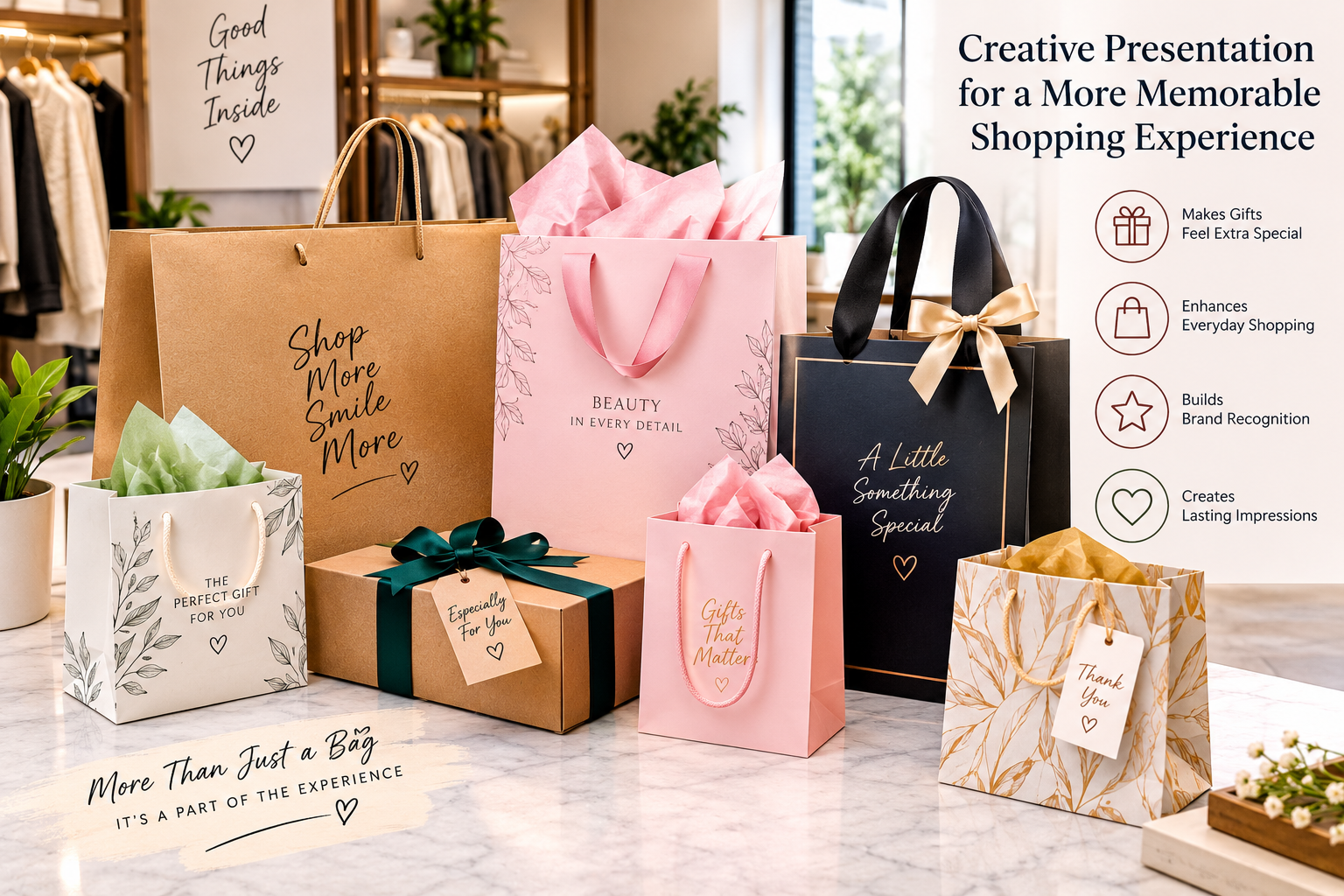
Shopping is no longer just about choosing a product and paying for it. Customers increasingly value the experience surrounding a purchase, from the way items are displayed in stores to how orders are presented when they arrive. Whether someone is buying everyday essentials, clothing or a gift for a special occasion, thoughtful presentation can make an ordinary purchase feel more enjoyable.
As retail competition continues to grow, businesses are finding creative ways to make their products more recognisable and memorable. Small details such as colours, materials, printed designs and convenient carrying options can all contribute to a positive customer experience.
Why Presentation Matters in Modern Retail
Customers often notice a product's appearance before examining its features or quality. An organised display and attractive presentation can encourage shoppers to explore products more closely.
For retailers, this creates an opportunity to communicate their brand personality through everyday details. A consistent visual style can make a business easier to recognise and help customers develop familiarity with its products.
However, good presentation should offer more than visual appeal. It should also make shopping convenient, protect purchased items and support the way customers use or carry their orders.
Creating a Consistent Brand Identity
A recognisable identity helps businesses build stronger relationships with customers. Consistent colours, typography, logos and design elements can make a brand feel familiar across different shopping channels.
Retailers should consider how their presentation connects with their websites, shop interiors, social media profiles and printed materials. When these elements follow a similar style, customers can recognise the business more easily.
Simple designs are often effective. Rather than filling every available space with graphics, businesses can focus on a clear logo, balanced colours and readable information.
Making Everyday Shopping More Convenient
Convenience is an important part of the modern shopping experience. Customers want purchases that are easy to carry, store and transport, particularly when buying several items at once.
Custom Bags can give retailers a practical way to combine carrying convenience with consistent branding. Different sizes, materials and printed designs can be selected according to the products being sold and the needs of the business.
A suitable carrying option should be comfortable to hold and strong enough for its intended contents. Retailers should consider product weight, handle construction and material quality before choosing a final design.
Adding Thoughtful Details to Gift Purchases
Gift-giving is often connected with personal occasions such as birthdays, anniversaries, seasonal celebrations and family gatherings. Customers may therefore expect more attention to presentation when purchasing something for another person.
A well-presented gift can make the experience feel more complete, even before the recipient discovers what is inside. Colours, patterns and small finishing details can help create a sense of occasion.
Customised gift bags allow businesses to offer presentation that reflects different celebrations, brand identities and customer preferences. They can be designed with suitable colours, messages and printed elements without making the overall appearance unnecessarily complicated.
Using Seasonal Designs to Create Interest
Seasonal shopping periods provide retailers with opportunities to introduce fresh presentation ideas. Christmas, Valentine's Day, Easter and summer events often influence what customers buy and how they choose to present gifts.
Businesses can respond by developing limited seasonal designs while keeping their main visual identity recognisable. For example, a retailer might introduce festive colours or themed illustrations without changing its logo or overall branding.
Planning ahead is important. Businesses should review expected demand, prepare suitable stock and make sure seasonal designs remain practical for everyday use.
Choosing Materials That Match the Product
Material selection affects both appearance and performance. Lightweight items may need a different carrying solution from heavier purchases, while premium products may benefit from a more refined finish.
Retailers should consider strength, durability, texture and intended use before selecting materials. Handles and other structural features should also be tested to ensure they can support the expected load.
A material should not be chosen simply because it looks attractive. It needs to perform reliably in real shopping conditions and suit the products customers are purchasing.
Making the Customer Experience More Personal
Personal touches can help businesses create a stronger connection with customers. A simple thank-you message, thoughtful design or carefully prepared order can make a purchase feel more considered.
Independent retailers can use these details to highlight the personal character of their businesses. Larger brands can also create a more welcoming experience by maintaining consistent presentation across their stores and online orders.
The most effective approach is to keep these touches relevant. Customers should feel that the details add value rather than create unnecessary clutter.
Supporting Online and In-Store Shopping
Retailers now serve customers through a combination of physical shops, websites and social media platforms. Presentation should work across these different environments.
In-store, attractive carrying options can support the overall shopping experience and help create a recognisable appearance when customers leave with their purchases.
For online orders, businesses should consider how products are prepared and presented before delivery. Items need suitable protection, while the overall appearance should remain consistent with the brand's identity.
Clear product information and practical designs can help create a smoother experience across both channels.
Considering Sustainability and Reusability
Customers are becoming more aware of waste and the materials businesses use. Retailers can respond by reviewing their choices and avoiding unnecessary components.
Depending on the product and application, reusable or recyclable materials may offer suitable alternatives. Businesses should check material specifications and local recycling guidance before making environmental claims.
Durability is another important consideration. A well-made carrying bag that customers can reuse may remain useful beyond the original purchase, giving it a longer practical life.
Retailers should aim to balance appearance, strength, convenience and responsible material use.
Learning From Customer Feedback
Customer feedback can reveal whether presentation choices are working effectively. Retailers can ask whether bags are comfortable to carry, whether the size is suitable and whether customers find the designs appealing.
Staff observations are also useful because employees handle these products regularly. They may notice problems with storage, handles, material strength or the time required to prepare orders.
Reviewing this feedback helps businesses make practical improvements rather than changing designs simply to follow trends.
Final Thoughts
Memorable retail experiences are often created through small details that work together. Product quality and customer service remain essential, but thoughtful presentation can make shopping and gift-giving feel more convenient and enjoyable.
By maintaining a consistent identity, selecting suitable materials, introducing relevant seasonal designs and listening to customer feedback, retailers can improve the way they present everyday purchases.
Ultimately, creative presentation is not about adding unnecessary decoration. It is about making practical choices that reflect the brand, serve customers and turn an ordinary purchase into a more positive experience.

 Arabic
 French
 Spanish
 Portuguese
 Deutsch
 Turkish
 Dutch
 Italiano
 Russian
 Romaian
 Portuguese (Brazil)
 Greek