


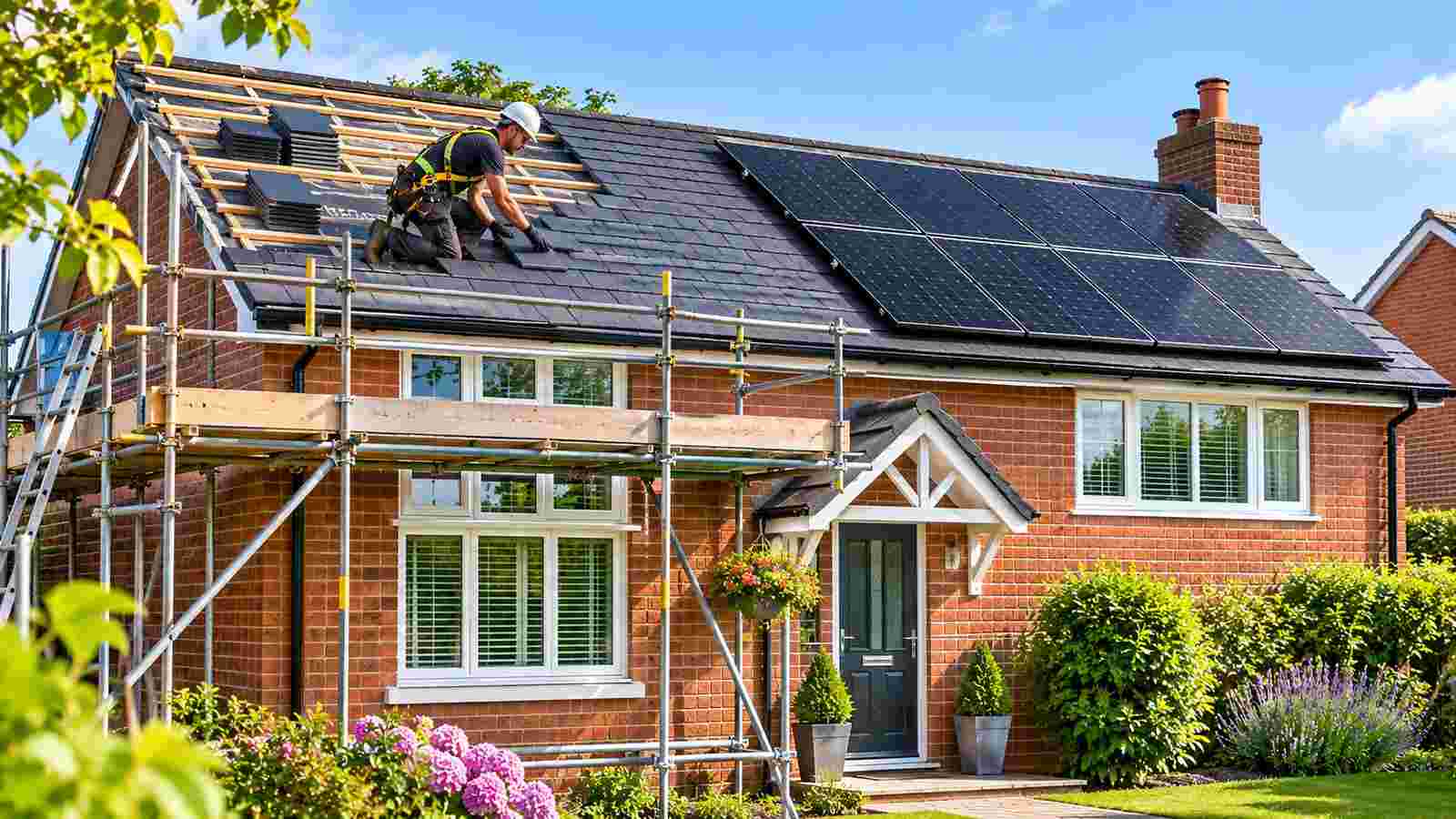
Installing solar panels can be a long-term improvement for a UK home, but the roof beneath the system deserves just as much attention as the equipment above it.
If your roof is ageing, damaged or approaching the end of its service life, it may be sensible to complete necessary repairs before fitting new solar panels. A professional domestic solar installation should begin with a proper assessment of roof condition and suitability.
Why Does Roof Condition Matter?
Solar panels are designed for long-term use, often with performance warranties lasting 25 years or more. If the roof needs major work during that time, panels may have to be temporarily removed and refitted.
This creates additional labour and access costs. It can also increase the risk of damaging roof coverings if the work is not carefully planned.
Checking the roof before installation helps avoid preventable disruption.
Does an Older Roof Always Need Replacing?
No. The age of a roof alone does not determine whether replacement is necessary.
Some older roofs remain structurally sound and weatherproof, while newer roofs may have problems caused by poor installation, storm damage or unsuitable materials.
A competent roof survey should look for damaged tiles, deteriorating underlay, water penetration and other defects. Structural capacity and the proposed solar mounting method also require assessment.
Can Roof Repairs and Solar Installation Be Planned Together?
Yes. When repairs are genuinely needed, coordinating roofing and solar work may reduce duplicated access arrangements.
However, roofing and electrical work involve different specialist skills. Homeowners should ensure that each contractor has clear responsibilities for waterproofing, structural safety and solar mounting.
The quotation should identify which work is included and which repairs, if any, will be charged separately.
What If You Already Have Solar Panels?
An existing array may need professional removal and reinstallation before major roofing work.
This should involve qualified solar professionals who can safely isolate, handle and recommission the system.
Check how the work could affect product warranties, workmanship protection and installation documentation.
Questions to Ask Before Starting
Request confirmation that the roof is suitable for the proposed installation. Ask about tile replacements, roof access, mounting details, warranties and responsibility for any unexpected roofing defects.
Do not accept an expensive roof replacement solely because you are purchasing solar panels. The decision should be supported by an appropriate inspection.
Conclusion
A roof does not have to be new to support solar panels, but it does need to be suitable for safe, long-term installation.
Eco Energy Services provides property-specific solar assessments and MCS-certified installations across Great Britain. Request a tailored quotation to understand how your roof condition affects the proposed solar system.

 English
 Arabic
 French
 Spanish
 Portuguese
 Turkish
 Dutch
 Italiano
 Russian
 Romaian
 Portuguese (Brazil)
 Greek