


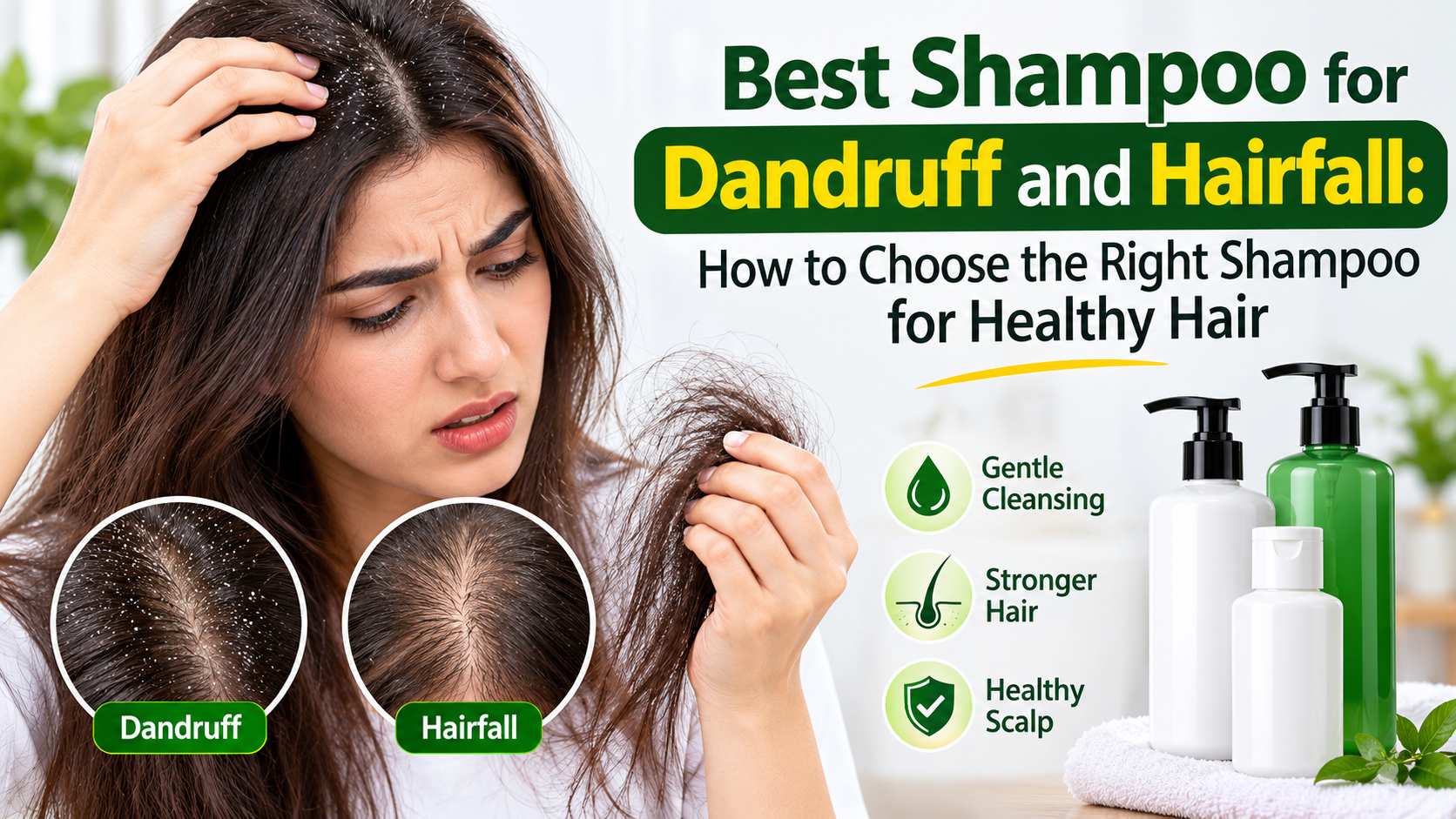
Dandruff and hair fall are two of the most common hair concerns. Many people experience an itchy scalp, visible flakes, excessive shedding, and weak hair that breaks easily. These problems can affect hair appearance and confidence, especially when they continue despite regular washing and hair care.
Choosing the best shampoo for dandruff and hairfall can help improve scalp health, reduce dandruff, and support stronger-looking hair. However, not every shampoo works for every hair type. The right choice depends on your scalp condition, hair texture, and the underlying cause of your hair concerns.
In this guide, we will explore the common causes of dandruff and hair fall, useful shampoo ingredients, proper washing techniques, and practical tips for maintaining healthy hair.
1. Understanding Dandruff and Hair Fall
Before choosing a shampoo, it is important to understand why these problems happen.
Dandruff is a common scalp condition that causes white or yellowish flakes, itching, and sometimes irritation. It is often associated with an overgrowth of a naturally occurring yeast called Malassezia, excess scalp oil, and individual skin sensitivity.
Hair fall refers to losing more hair than usual. Losing around 50–100 hairs daily is generally considered normal. However, noticeable thinning, excessive shedding, or bald patches may indicate an underlying issue.
Dandruff and hair fall can occur together, but dandruff does not necessarily cause permanent hair loss. Persistent itching and scratching can contribute to hair breakage and temporary shedding.
2. What Makes the Best Shampoo for Dandruff and Hairfall?
The best shampoo should address scalp concerns without unnecessarily drying or irritating your hair.
Look for a formula that offers:
-
Dandruff control: Helps reduce visible flakes and scalp irritation.
-
Gentle cleansing: Removes dirt, excess oil, and product buildup.
-
Scalp care: Supports a clean and comfortable scalp.
-
Hair conditioning: Helps reduce dryness, tangling, and breakage.
-
Hair strengthening: Supports healthier-looking hair and reduces mechanical damage.
If you have persistent dandruff, choosing a shampoo with a proven anti-dandruff ingredient is generally more useful than relying only on cosmetic or herbal claims.
3. Important Ingredients to Look for in Shampoo
Understanding shampoo ingredients makes it easier to choose the right product.
Ketoconazole
Ketoconazole is an antifungal ingredient used in medicated shampoos. It helps control the yeast associated with dandruff and seborrhoeic dermatitis.
It can be particularly useful for people experiencing persistent flakes and scalp itching.
Zinc Pyrithione
Zinc pyrithione has traditionally been used in anti-dandruff products to help manage flaking and scalp-related symptoms. Availability and regulatory status vary by country.
Selenium Sulfide
Selenium sulfide helps reduce dandruff by controlling the growth of scalp yeast and slowing excessive skin-cell turnover.
It may be suitable for people with oily scalps and recurring dandruff. Follow the product instructions carefully.
Salicylic Acid
Salicylic acid helps loosen and remove dead skin cells from the scalp. It can reduce the buildup of visible flakes, although it may cause dryness in some people.
Tea Tree Oil
Tea tree oil is included in some hair care products because of its cleansing and antimicrobial properties. However, evidence for treating dandruff is limited compared with established medicated ingredients. It can also irritate sensitive skin.
Aloe Vera
Aloe vera is commonly used in hair care formulations for its soothing and moisturising properties. It may help improve scalp comfort, particularly when dryness is an issue.
4. How to Choose Shampoo According to Your Hair Type
Not every shampoo is suitable for every scalp. Consider your individual hair needs before purchasing.
| Hair or scalp type | What to look for |
|---|---|
| Oily scalp | Effective cleansing and anti-dandruff ingredients |
| Dry scalp | Gentle cleansing and moisturising ingredients |
| Sensitive scalp | Fragrance-free, mild formulations |
| Curly hair | Hydrating shampoo with anti-dandruff benefits |
| Fine hair | Lightweight formulas that do not leave heavy residue |
| Colour-treated hair | Colour-safe cleansing products |
If you have both dandruff and hair fall, consider using an appropriate anti-dandruff shampoo while maintaining a separate conditioning routine for your hair lengths.
5. Common Causes of Dandruff and Hair Fall
Choosing the right shampoo is only one part of managing these problems. Several factors can contribute to scalp and hair concerns.
Common causes of dandruff include:
-
Excess scalp oil production.
-
Malassezia yeast overgrowth.
-
Seborrhoeic dermatitis.
-
Sensitivity to certain hair care products.
-
Infrequent or unsuitable hair washing.
Common causes of hair fall include:
-
Nutritional deficiencies, including iron deficiency.
-
Hormonal changes.
-
Stress and illness.
-
Thyroid-related problems.
-
Genetic hair thinning.
-
Tight hairstyles and excessive heat styling.
-
Certain medications.
If hair fall continues despite improving your hair care routine, identifying the underlying cause is more important than repeatedly changing shampoos.
6. How to Use Anti-Dandruff Shampoo Correctly
Even the best shampoo for dandruff and hairfall may not deliver the expected results if it is used incorrectly.
Follow these simple steps:
Step 1: Wet Your Hair
Use lukewarm water to thoroughly wet your hair and scalp. Avoid very hot water because it can increase dryness and irritation.
Step 2: Apply Shampoo to Your Scalp
Take an appropriate amount of shampoo and gently massage it into your scalp using your fingertips.
Step 3: Allow It to Work
Some medicated anti-dandruff shampoos need to remain on the scalp for several minutes. Follow the instructions on the product label.
Step 4: Rinse Thoroughly
Wash away all shampoo with clean water to prevent product residue.
Step 5: Apply Conditioner
Use conditioner mainly on your mid-lengths and ends. This helps improve softness, manageability, and reduce breakage.
Step 6: Follow a Consistent Routine
Use medicated shampoo according to its recommended frequency. Daily use is not necessary for every formula.
7. Natural Hair Care Tips to Reduce Hair Breakage
Alongside shampoo, simple lifestyle habits can help maintain healthier hair.
-
Eat a balanced diet: Include protein-rich foods, vegetables, fruits, nuts, and seeds.
-
Stay hydrated: Drink enough water throughout the day.
-
Avoid excessive heat: Limit frequent straightening, curling, and blow-drying.
-
Massage gently: Avoid scratching or aggressively rubbing your scalp.
-
Choose suitable hair products: Avoid products that cause irritation or buildup.
-
Protect your hair: Avoid tight hairstyles and harsh brushing, particularly when hair is wet.
-
Maintain scalp hygiene: Wash your hair according to your scalp's oiliness and product needs.
Remember that healthy hair growth also depends on genetics, hormones, nutrition, and overall health.
8. Common Mistakes to Avoid When Choosing Shampoo
People often make simple mistakes when trying to manage dandruff and hair fall.
-
Choosing shampoo based only on fragrance: A pleasant fragrance does not mean a shampoo treats dandruff.
-
Using too many products: Combining several strong scalp treatments may increase irritation.
-
Ignoring the scalp: Applying shampoo only to the hair lengths does not properly cleanse the scalp.
-
Expecting instant results: Dandruff management usually requires consistent use over several weeks.
-
Overwashing with harsh products: This can leave hair dry and difficult to manage.
-
Ignoring persistent hair loss: Excessive shedding may require medical assessment rather than another shampoo.
9. When Should You Consult a Dermatologist?
Sometimes dandruff and hair fall require professional attention.
Consult a dermatologist if you experience:
-
Severe or persistent scalp itching.
-
Thick scales, redness, or painful irritation.
-
Sudden or excessive hair shedding.
-
Bald patches or noticeable thinning.
-
Dandruff that does not improve with appropriate treatment.
-
Hair loss accompanied by fatigue or other unexplained symptoms.
A dermatologist can identify whether the problem is dandruff, psoriasis, fungal infection, nutritional deficiency, or another condition and recommend suitable treatment.
Conclusion
Finding the best shampoo for dandruff and hairfall starts with understanding your scalp and hair type. Ingredients such as ketoconazole, selenium sulfide, and salicylic acid can help manage different forms of dandruff, while gentle cleansing and conditioning help maintain manageable, healthier-looking hair.
However, shampoo alone cannot treat every cause of hair loss. A balanced diet, proper hair care, scalp hygiene, and professional advice when needed are equally important.
Choose products according to your actual hair concerns, follow a consistent routine, and give your scalp time to respond. With the right approach, you can work towards a cleaner, more comfortable scalp and stronger, healthier-looking hair.

 English
 French
 Spanish
 Portuguese
 Deutsch
 Turkish
 Dutch
 Italiano
 Russian
 Romaian
 Portuguese (Brazil)
 Greek