


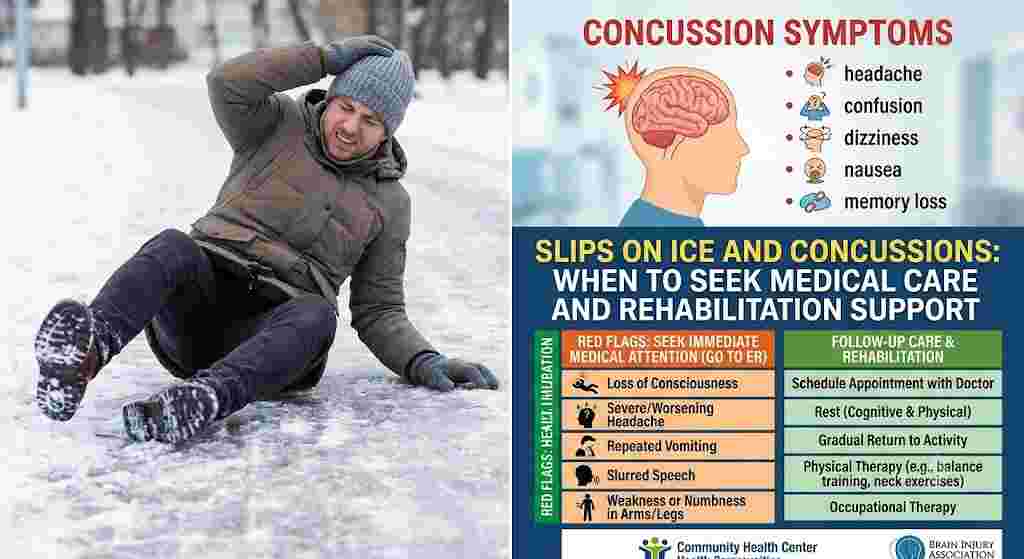
Winter in Edmonton often brings snow, ice, and freezing temperatures. Slippery sidewalks, driveways, parking lots, and outdoor steps can make walking difficult. Even a short walk outside can lead to a fall when the ground is covered with ice.
A fall on ice can cause more than a bruise or sore muscles. If the head is hit during the fall, a person may develop a concussion. A concussion is a type of brain injury that can affect how a person feels, thinks, sleeps, and carries out daily activities.
Some symptoms may appear right after the fall, while others may develop over the following hours or days. This is why it is important to take a head injury seriously, even when the person feels fine at first.
Understanding the signs of a concussion, knowing when to seek medical care, and learning about rehabilitation options can help people take the right steps after a winter fall. This article explains how slips on ice can lead to concussions and how medical care and Concusssion physiotherapy edomonton may support recovery.
Ice can be difficult to see, especially when it looks like a wet patch on the ground. When someone slips, they may fall backwards, forwards, or sideways. During the fall, the head may strike the ground, a step, a vehicle, or another hard surface.
A concussion can happen when a blow to the head or a sudden movement of the head causes the brain to move inside the skull. A person does not always need to lose consciousness to have a concussion.
People of all ages can experience a concussion after a fall. Older adults may face additional concerns because a fall can also cause other injuries, and some may take medication that increases the risk of bleeding.
After a fall, it is important to pay attention to how the person feels and watch for changes in their condition.
Concussion symptoms can vary from person to person. Some symptoms are easy to notice, while others may be less obvious.
Common signs may include a headache, dizziness, nausea, confusion, feeling tired, or having trouble concentrating. Some people may feel sensitive to bright lights or loud sounds. Others may notice changes in their sleep, mood, or memory.
A person may also feel unsteady when walking or have difficulty completing tasks that were easy before the fall.
These symptoms should not be ignored, even if there is no visible injury on the head. If you suspect a concussion, seek medical advice promptly so that a health professional can assess the injury and recommend suitable care.
Knowing when to get medical help is an important part of concussion safety.
If you hit your head during a fall and develop symptoms such as headache, dizziness, nausea, or confusion, arrange a prompt medical assessment. Do not assume the symptoms will disappear on their own.
Call 911 or seek emergency care immediately if the person has any warning signs such as worsening or severe headache, repeated vomiting, a seizure, increasing confusion, unusual behaviour, difficulty waking up, slurred speech, weakness, numbness, or trouble walking. Neck pain after a significant fall may also need urgent assessment.
If the person loses consciousness, has difficulty breathing, or appears seriously injured, call emergency services. Avoid moving someone with a possible neck or spinal injury unless there is an immediate danger.
Older adults and people taking blood-thinning medication should seek prompt medical advice after hitting their head, even if symptoms seem mild. Some serious problems may not be obvious at first.
Until medical advice is available, avoid driving, alcohol, strenuous activity, and activities that could lead to another fall or head injury.
Recovery after a concussion is different for each person. Some people improve over a short period, while others may continue to experience symptoms for longer.
During the early stage, a health professional may recommend a period of relative rest, followed by a gradual return to normal activities as symptoms allow. Too much physical or mental activity too soon may make symptoms worse.
It is helpful to return to daily tasks in small steps. For example, a person may begin with short periods of reading, light household activities, or gentle walking if these activities are suitable and do not worsen symptoms.
Follow the advice given by your medical provider, and attend any recommended follow-up appointments. Do not return to sports, driving, or activities with a risk of another head injury until it is safe to do so.
After a medical assessment, some people may benefit from rehabilitation support. Physiotherapy may be helpful when symptoms affect balance, walking, neck movement, or the ability to return to everyday activities.
A physiotherapist can assess the person's symptoms and functional needs before suggesting an appropriate plan. Rehabilitation should be based on the person's condition and any guidance from their medical provider.
Some people feel dizzy or unsteady after a concussion. When appropriate, a physiotherapist may recommend exercises to work on balance and safe walking.
These activities should be introduced carefully and adjusted according to the person's symptoms. If an exercise causes significant dizziness or makes symptoms worse, stop and discuss it with the treating professional.
Concussions can sometimes affect the systems involved in balance. In selected cases, a physiotherapist with appropriate training may recommend vestibular rehabilitation.
This type of rehabilitation may include specific head, eye, and balance exercises based on the assessment. Not everyone with a concussion needs these exercises, so an individual evaluation is important.
A fall may also lead to neck pain or stiffness. After serious injuries have been ruled out, physiotherapy may help address certain neck-related symptoms through suitable exercises, movement guidance, and other approaches based on the person's needs.
Returning to work, household tasks, and regular routines can take time after a concussion. A physiotherapist may help the person plan a gradual return to physical activities while monitoring symptoms.
The aim is to support a safe return to daily activities without pushing beyond what the person can comfortably manage.
Preventing falls is an important part of winter safety. Wear winter footwear with good traction, walk slowly on slippery surfaces, and take shorter steps when crossing areas covered with snow or ice.
Use handrails on outdoor steps and choose cleared pathways whenever possible. Keep outdoor entrances well lit, and ask for help with snow removal when the work feels unsafe.
At home, remove loose rugs and clutter from walking areas. If you have experienced falls or balance problems, speak with a health professional about ways to improve your safety.
Yes. A person can have a concussion without losing consciousness. Headache, dizziness, nausea, confusion, memory problems, and sensitivity to light or noise may occur after a head injury. Seek medical advice if you suspect a concussion, and seek emergency care for serious or worsening symptoms.
Physiotherapy may help some people manage problems with balance, dizziness, neck movement, or returning to everyday activities. Treatment should begin with appropriate medical assessment and be adjusted to the person's symptoms and recovery needs.
A slip on ice can cause injuries ranging from bruises to concussions. Recognising the warning signs and seeking medical care when needed are important steps towards recovery. Do not ignore symptoms simply because the fall seemed minor or there was no loss of consciousness.
Once a medical professional has assessed the injury, rehabilitation may help some people address balance problems, dizziness, neck discomfort, and difficulties returning to daily activities.
At West Henday Physical Therapy & Massage Clinic, you can ask about physiotherapy options for suitable rehabilitation needs following a medical assessment. If you or a family member is recovering from a winter fall, visit our website to learn more or book your appointment.
West Henday Physical Therapy & Massage Clinic
WE ARE LOCATED AT:
876 Webber Greens Drive NW, Edmonton, AB T5T 4K5
Working Hours:
Monday–Friday: 7 am–7 pm
Saturday and Sunday (holidays)
Email: reception@westhendayphysio.com
Call: (587) 416-4101
Website: https://www.westhendayphysio.com/
#ConcussionAwareness #WinterFallPrevention #SlipsOnIce #ConcussionRecovery #PhysiotherapyEdmonton #WinterSafety #WestHendayPhysicalTherapy

 English
 French
 Spanish
 Portuguese
 Deutsch
 Turkish
 Dutch
 Italiano
 Russian
 Romaian
 Portuguese (Brazil)
 Greek