


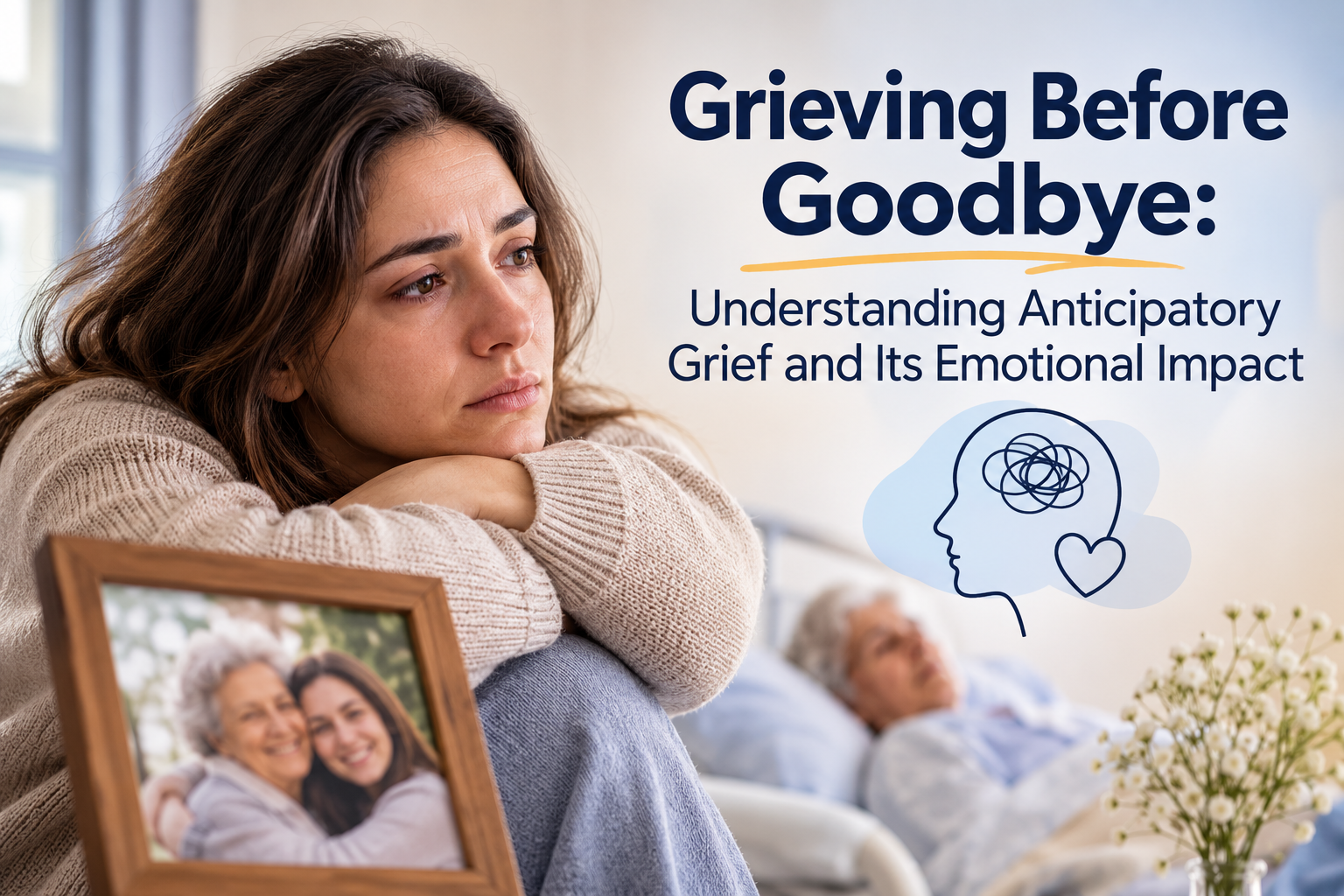
Grief is commonly associated with losing someone we love. However, emotional pain can begin long before a loss actually happens. When someone close to us receives a serious diagnosis or experiences a significant decline in health, we may start worrying about a future without them. These feelings can be confusing, especially when the person is still present in our lives.
This experience is known as anticipatory grief. Understanding the connection between anticipatory grief and mental health is important for people facing serious illness, caregiving responsibilities, and uncertainty about the future. It can involve sadness, fear, anxiety, guilt, and changes in everyday routines.
Although everyone experiences grief differently, recognizing these emotions can help individuals understand their responses and find appropriate ways to manage difficult circumstances.
What Is Anticipatory Grief?
What is anticipatory grief? It is the emotional response that occurs when someone expects a significant loss before it actually happens. It commonly affects people whose loved ones are living with serious or life-limiting illnesses. People facing their own life-limiting illness may also experience these feelings. Seeking a psychiatric evaluation when emotional distress becomes difficult to manage can help individuals explore their mental health concerns and appropriate professional support.
Unlike grief that follows a death, anticipatory grief develops while the person is still alive. Someone may begin imagining what life will look like without their loved one, worry about future responsibilities, or feel sadness about changes already caused by an illness.
For example, an adult caring for a parent with an advanced illness may feel emotional pain when familiar conversations, family activities, or daily routines become difficult. They may miss aspects of their previous relationship while continuing to care deeply for the person.
According to the National Cancer Institute's information on grief and bereavement, grief and bereavement can involve emotional challenges for patients and their families facing serious illness and loss.
Experiencing these emotions does not mean someone has stopped hoping for improvement. It reflects the emotional difficulty of facing uncertainty and possible changes in a relationship.
Why Do People Experience Grief Before Losing a Loved One?
Grief before losing a loved one can develop when a serious illness or major health change creates uncertainty about the future. People may begin adjusting emotionally to changes they expect, even when they do not know what will happen.
Several circumstances can contribute to this experience:
-
Changes in a loved one's health: A serious diagnosis or declining independence can make family members aware that their relationship and daily life may change.
-
Caregiving responsibilities: Providing ongoing assistance can affect personal time, family commitments, and the caregiver's usual responsibilities.
-
Uncertainty about the future: Not knowing how an illness may progress can make it difficult to plan personal and family activities.
-
Changes in family roles: A person who previously depended on a parent or partner may gradually become responsible for providing care and making important decisions.
-
Unfinished conversations: People may become more aware of unresolved disagreements, important memories, or experiences they still hope to share.
These circumstances do not affect everyone in the same way. Some individuals experience grief gradually, while others notice stronger emotions when a loved one's condition or family circumstances change.
Common Emotional and Physical Effects of Anticipated Loss
The emotional effects of anticipated loss can influence how individuals think, feel, and function throughout the day. These responses may change over time and can vary depending on personal circumstances and available support.
Persistent Sadness and Emotional Sensitivity
A person may feel sad without an obvious immediate reason or become emotional during ordinary activities. Family gatherings, photographs, and familiar places may bring memories of how life used to be. These reactions can make everyday experiences feel more difficult.
Anxiety and Fear About the Future
Anxiety may appear as repeated worrying, difficulty relaxing, or feeling constantly alert to changes in a loved one's condition. Some individuals find it hard to concentrate because their thoughts repeatedly return to possible future outcomes.
Guilt and Conflicting Emotions
People may feel guilty about imagining life after a loved one's death or experience frustration when caregiving becomes exhausting. They may also feel temporary relief when responsibilities are shared or a difficult situation becomes more manageable.
Having conflicting emotions does not mean someone cares less about their loved one. These feelings can reflect the emotional demands of a challenging situation.
Changes in Sleep and Concentration
Emotional stress may make it harder to fall asleep, stay asleep, or focus on work and household responsibilities. Some people also notice reduced energy, changes in appetite, or difficulty completing tasks that previously felt manageable.
Loneliness and Social Withdrawal
Some individuals withdraw from friends and relatives because they feel others may not understand their situation. They may also avoid social activities that remind them of their loved one's illness. When this continues, it can reduce opportunities for emotional connection and support.
These anticipatory grief symptoms are not a diagnosis on their own. However, when emotional or physical difficulties persist and interfere with everyday functioning, professional guidance may be helpful.
Practical Ways to Cope With Uncertainty and Loss
Coping with uncertainty and loss does not mean eliminating difficult emotions. Instead, it involves finding manageable ways to respond to emotional pressure while continuing to meet everyday needs.
Allow Yourself to Experience Difficult Emotions
Give yourself permission to acknowledge sadness, anger, fear, or confusion without judging your reactions. You do not have to remain positive all the time. Recognizing what you feel can help you understand what kind of support you need.
Talk With Someone You Trust
Choose someone who can listen without pressuring you to feel differently. You might explain what has been difficult, discuss specific concerns, or simply share how your day has been. If speaking with family members feels uncomfortable, a qualified counselor or support group may offer another opportunity to talk.
Focus on Meaningful Time Together
Choose simple activities that feel comfortable for both you and your loved one. These could include sharing a meal, discussing familiar memories, looking through photographs, or spending quiet time together. Allow the person's health and preferences to guide what is realistic.
Maintain Your Everyday Routine
Keep manageable daily habits, such as preparing regular meals, taking short walks, completing essential tasks, and making time for activities you enjoy. You may need to adjust your schedule, but maintaining some familiar structure can help prevent every part of life from revolving around illness and caregiving.
Set Realistic Caregiving Boundaries
Identify which responsibilities you can reasonably manage and where additional assistance is needed. Ask relatives to share specific tasks, arrange breaks when possible, and communicate your limits clearly. Setting boundaries can help reduce exhaustion and make caregiving more sustainable.
When Should You Consider Professional Emotional Support?
Professional support may be worth considering when emotional difficulties become persistent or start affecting relationships, work, sleep, or daily responsibilities. For example, ongoing anxiety, low mood, difficulty functioning, or feeling unable to manage everyday stress may indicate a need for additional guidance.
A psychiatric evaluation can help assess persistent emotional and mental health concerns. During an evaluation, a psychiatrist considers symptoms, personal and medical history, and other relevant factors before discussing suitable care options.
Cordial Psychiatry provides psychiatric evaluations, therapy, medication management, and telehealth psychiatry services. Individuals experiencing ongoing mental health concerns can explore these services to discuss their symptoms and possible treatment approaches. Virtual appointments also provide an option for people who find it difficult to attend in-person visits.
Seeking professional guidance does not mean that someone is unable to cope with grief. It can simply provide additional support during a demanding period of life.
Frequently Asked Questions
1. What are the early signs of anticipatory grief?
Early signs can include sadness, emotional sensitivity, repeated worrying, guilt, changes in sleep, and difficulty concentrating. The experience differs from one person to another.
2. Can anticipatory grief start before a loved one becomes seriously ill?
Yes. Worry about a possible future loss can begin when someone faces a health concern or uncertain circumstances, even before an illness becomes severe.
3. Why do people feel guilty when grieving someone who is still alive?
Some people believe that thinking about a possible loss means they are giving up hope. Others feel uncomfortable experiencing relief or frustration during caregiving. These emotions do not determine how much someone loves another person.
4. How does anticipatory grief affect relationships with family members?
Family members may communicate differently, disagree about caregiving decisions, or struggle to understand one another's emotional responses. Honest conversations and shared responsibilities may help reduce misunderstandings.
5. Can anticipatory grief cause anxiety and sleep problems?
Yes. Emotional stress and repeated worrying can make it difficult to relax, fall asleep, or maintain a regular sleep schedule. Persistent problems may benefit from professional assessment.
6. How can someone emotionally prepare for the possible loss of a loved one?
There is no way to predict or control every emotional response. However, discussing important matters, respecting personal boundaries, arranging practical support, and staying connected with trusted people may help someone face uncertainty.
Conclusion
Anticipatory grief can be difficult, but understanding its emotional effects can make the experience easier to navigate. Allow yourself time to adjust, seek support when needed, and focus on what matters in the present.

 English
 French
 Spanish
 Portuguese
 Deutsch
 Turkish
 Dutch
 Italiano
 Russian
 Romaian
 Portuguese (Brazil)
 Greek