


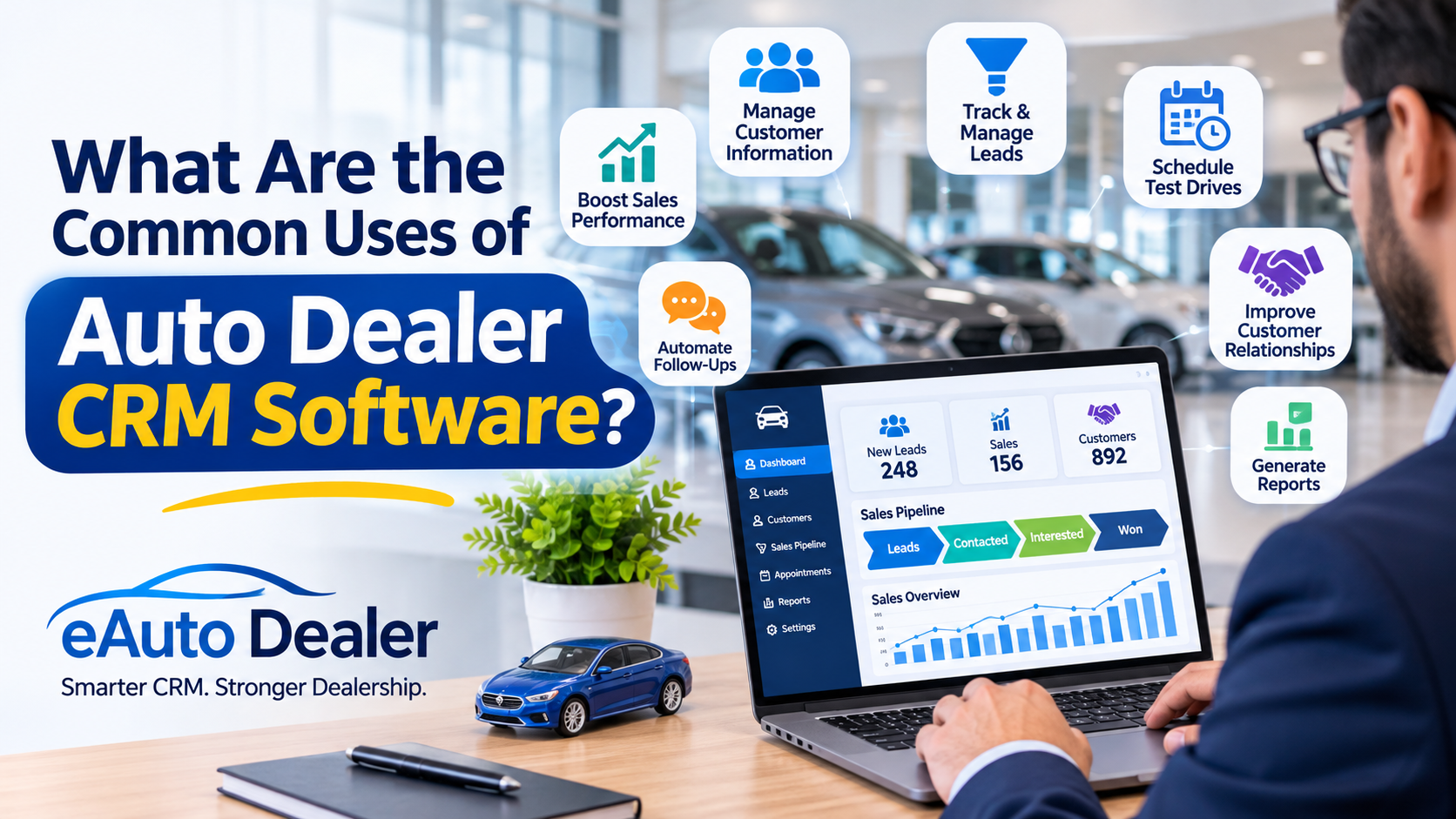
The automotive industry is becoming increasingly customer-focused, making efficient customer relationship management essential for dealerships. Managing customer inquiries, tracking potential buyers, organizing sales activities, and maintaining long-term relationships can become challenging without the right technology. This is where auto dealer CRM software plays an important role.
Car dealerships handle multiple customer interactions throughout the buying journey, from the first inquiry to vehicle delivery and after-sales support. Without a centralized system, important customer information and sales opportunities can easily get overlooked. A dedicated CRM solution helps dealerships organize these activities, improve communication, and create a more structured sales process.
But what exactly do dealerships use this technology for? Understanding its common applications can help automotive businesses identify how CRM software supports their daily operations and long-term growth.
1. Managing Customer Information
One of the most common uses of auto dealer CRM software is organizing customer information in one centralized location.
Dealerships interact with different types of customers who may be interested in new vehicles, used cars, financing options, or vehicle upgrades. Keeping track of their contact information, preferences, previous interactions, and purchase history manually can be difficult.
CRM software allows dealerships to maintain organized customer profiles containing relevant information, such as:
-
Customer names and contact details
-
Preferred vehicle models and brands
-
Previous inquiries and interactions
-
Purchase and service history
-
Budget and financing preferences
-
Communication records
Having this information readily available helps sales representatives understand customer requirements and provide more relevant assistance.
2. Tracking and Managing Sales Leads
Lead management is another important application of CRM technology in automotive dealerships. Potential buyers may contact dealerships through websites, phone calls, social media, online advertisements, or walk-in inquiries.
Without an organized lead management process, sales teams may struggle to prioritize inquiries and respond promptly.
Auto dealer CRM software helps capture and organize incoming leads, assign them to sales representatives, and monitor their progress throughout the sales pipeline.
For example, a dealership can categorize leads based on their current status:
-
New inquiries
-
Contacted prospects
-
Interested buyers
-
Test-drive scheduled
-
Negotiation in progress
-
Deal closed
This structured approach helps managers monitor sales opportunities and identify leads that require additional attention.
3. Automating Customer Follow-Ups
Following up with potential customers is essential for maintaining engagement and improving conversion opportunities. However, sales representatives often manage multiple prospects simultaneously, making manual follow-ups challenging.
CRM systems help dealerships organize follow-up activities through automated reminders, scheduled communications, and task management features.
For instance, when a customer requests information about a particular vehicle but does not make an immediate purchase, the sales representative can schedule a follow-up for the next day or week.
These reminders help sales teams:
-
Maintain consistent communication.
-
Avoid forgetting important customer inquiries.
-
Follow up after test drives.
-
Share updated vehicle information.
-
Reconnect with interested prospects.
Automated follow-up processes allow dealership employees to spend less time managing reminders and more time assisting potential buyers.
4. Managing the Sales Pipeline
A sales pipeline provides a clear overview of where potential customers are in the buying process. It helps dealership managers understand how many prospects are being handled and which opportunities are closer to becoming completed sales.
Using auto dealer CRM software, dealerships can monitor customer journeys from initial inquiries to final purchases.
Sales pipeline management typically includes tracking:
-
Newly generated leads
-
Customer qualification
-
Vehicle selection
-
Test-drive appointments
-
Price negotiations
-
Booking and closing stages
This visibility helps managers identify delays, evaluate sales activities, and determine where additional support may be needed.
It also makes it easier to understand overall sales performance and improve dealership workflows.
5. Improving Customer Communication
Clear and timely communication plays an important role in building customer trust. Buyers often have questions about vehicle availability, specifications, pricing, financing, and delivery timelines.
CRM platforms help dealerships maintain communication records and organize interactions across different channels.
Depending on the system's capabilities, sales teams may manage customer conversations through:
-
Phone calls
-
Emails
-
SMS messages
-
WhatsApp communication
-
Website inquiries
By keeping communication history accessible, dealership representatives can understand previous conversations and provide consistent responses.
This reduces repetitive discussions and creates a smoother customer experience.
6. Scheduling Test Drives and Appointments
Test drives are an important part of the vehicle purchasing journey. Customers often want to experience a vehicle before making a final decision.
However, coordinating appointments, assigning sales representatives, and managing vehicle availability can become complicated when dealerships rely on manual processes.
CRM software helps organize appointment scheduling and customer interactions in a structured system.
Dealerships can use it to:
-
Schedule vehicle test drives.
-
Record customer appointment requests.
-
Assign representatives to appointments.
-
Send appointment reminders.
-
Track completed and upcoming visits.
Better appointment management helps sales teams stay organized and provide a more convenient experience for potential buyers.
7. Monitoring Sales Team Performance
Dealership managers need to understand how effectively their sales representatives are handling leads and converting opportunities into sales.
Auto dealer CRM software provides reporting and performance tracking features that help managers evaluate sales activities.
Depending on the available reporting tools, dealerships can monitor:
-
Number of leads assigned to each representative
-
Customer response and follow-up activities
-
Test drives scheduled
-
Sales opportunities in progress
-
Completed deals
-
Lead conversion performance
These insights help managers recognize performance gaps, identify successful sales practices, and make more informed business decisions.
8. Managing Customer Retention and After-Sales Relationships
A dealership's relationship with a customer should not end after a vehicle purchase. Maintaining communication after the sale can encourage repeat business, referrals, and long-term customer loyalty.
CRM software helps dealerships maintain customer records and organize post-purchase communication.
Common applications include:
-
Sending service reminders.
-
Sharing maintenance information.
-
Following up after vehicle delivery.
-
Informing customers about new vehicle models.
-
Promoting trade-in opportunities.
-
Collecting customer feedback.
By maintaining consistent communication, dealerships can build stronger relationships and create opportunities for future sales.
9. Supporting Marketing Campaigns
Automotive dealerships often run marketing campaigns to attract potential buyers and promote available inventory. However, sending the same message to every customer may not produce meaningful engagement.
CRM systems help dealerships organize customer information and segment audiences according to their interests, preferences, and buying behavior.
For example, a dealership can identify customers interested in SUVs, used vehicles, luxury cars, or specific vehicle brands.
This information can support more targeted marketing activities, including:
-
Promotional email campaigns
-
New vehicle announcements
-
Special sales offers
-
Seasonal promotions
-
Customer re-engagement campaigns
When CRM data is used effectively, marketing teams can create more relevant campaigns and improve communication with different customer groups.
10. Generating Reports and Business Insights
Understanding dealership performance requires access to accurate and organized business information. CRM reporting tools help managers evaluate different aspects of sales and customer management.
With auto dealer CRM software, dealerships can generate reports related to lead generation, sales activities, customer engagement, and conversion performance.
These reports help businesses identify trends, understand customer behavior, and evaluate the effectiveness of their sales processes.
For example, if a dealership receives many inquiries but closes relatively few deals, managers can review the sales pipeline and investigate possible reasons.
Data-driven insights support better planning and help dealerships identify areas that need improvement.
How Can eAuto Dealer Help Automotive Dealerships?
Choosing the right technology is important for dealerships that want to improve customer management and organize their sales operations.
eAuto Dealer offers automotive CRM solutions designed to help dealerships manage customer relationships and streamline their business processes.
Its platform provides automotive businesses with tools to organize customer information, manage sales activities, track potential buyers, and improve operational visibility.
By bringing important dealership activities into a more organized system, eAuto Dealer can help automotive businesses manage customer interactions more efficiently and support a structured sales workflow.
Dealerships looking to improve their customer management processes can explore eAuto Dealer to learn more about its automotive CRM capabilities and available solutions.
Final Thoughts
CRM technology has become an important part of modern automotive dealership operations. From managing customer information and tracking leads to automating follow-ups, scheduling test drives, and monitoring sales performance, auto dealer CRM software supports several essential business activities.
The right CRM solution can help dealerships reduce manual administrative work, improve customer communication, and maintain better visibility throughout the sales process.
As customer expectations continue to evolve, automotive businesses can benefit from adopting organized and technology-driven management systems. Exploring solutions such as eAuto Dealer can be a practical step toward improving dealership efficiency and building stronger customer relationships.
Frequently Asked Questions (FAQs)
1. What is auto dealer CRM software used for?
Auto dealer CRM software is used to manage customer information, track sales leads, organize follow-ups, schedule appointments, monitor sales performance, and improve customer relationships.
2. Can CRM software help car dealerships generate more sales?
Yes. CRM software helps dealerships manage leads, maintain consistent communication, and identify potential sales opportunities. These capabilities can support better lead conversion and sales management.
3. Is auto dealer CRM software suitable for small dealerships?
Yes. Small dealerships can use CRM software to organize customer records, manage inquiries, track follow-ups, and improve daily sales activities without relying entirely on manual processes.
4. Does automotive CRM software support customer retention?
Yes. It helps dealerships maintain customer histories, organize after-sales communication, send service reminders, and identify opportunities for repeat purchases.
5. What features should dealerships look for in CRM software?
Important features include lead management, customer database management, sales pipeline tracking, automated follow-ups, appointment scheduling, communication management, and reporting tools.

 English
 French
 Spanish
 Portuguese
 Deutsch
 Turkish
 Dutch
 Italiano
 Russian
 Romaian
 Portuguese (Brazil)
 Greek