


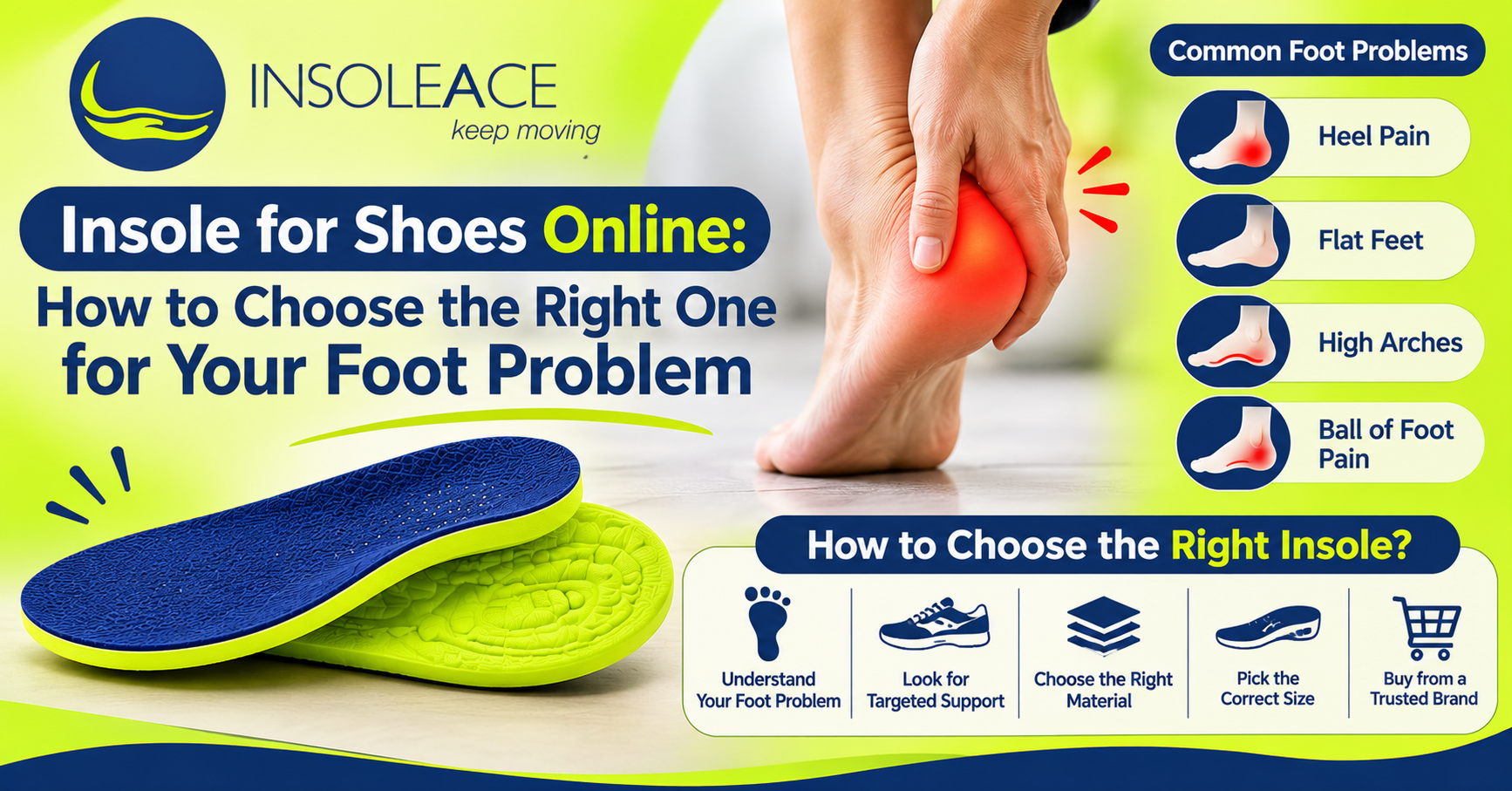
Choosing an insole for shoes online can feel confusing. There are different materials, different shapes and a long list of claims. The simplest way to cut through the noise is to start with your problem and work backwards to the insole.
This guide explains how common foot problems relate to insole features, how to choose between EVA and MCR and what to avoid, so that your next purchase is based on facts, not guesses.
Why the Right Insole Matters
Your feet carry your body weight for thousands of steps every day. A flat, thin factory insole offers little support, and shoes that do not fit your foot shape can add to the strain. A well-chosen insole can add cushioning, support the arch and spread pressure more evenly. InsoleAce explains that corrective orthotic insoles change how load travels through the foot by holding the arch, cushioning the heel strike and spreading pressure away from sore spots.
Insoles support and relieve discomfort, but they do not replace medical treatment. If your pain is severe, long-standing or comes with numbness or swelling, see a doctor.
Start with Your Main Problem
Flat feet and fallen arches
Look for firm arch support that holds the arch in position and improves stability. InsoleAce's comparison chart rates MCR as excellent for flat feet and EVA as good. Read the page on flat feet.
Heel pain and plantar fasciitis
Look for cushioning and a supportive heel area. The chart rates MCR as excellent for plantar fasciitis, while for heel pain or a heel spur it says the best choice depends on the person. See the page on heel pain.
Long hours on your feet
Teachers, shop staff, nurses and cooks often stand on hard floors for hours. Cushioning that stays comfortable all day is the priority. The chart rates MCR as superior for comfort over long standing hours. See long standing hours.
Sensitive or diabetic feet
Soft, low-friction, breathable material is generally preferred, and a doctor's advice comes first. InsoleAce recommends MCR for diabetic and sensitive feet. See diabetic foot care.
Arthritis and joint pain
Cushioning that reduces impact can help. The chart suggests MCR for therapeutic pressure relief and notes EVA as good for shock absorption. See arthritis foot pain.
Sport and running
Lightweight shock absorption is the priority. The chart rates EVA as excellent and MCR as not ideal for sport.
Sweaty feet
EVA is rated best here because the surface is waterproof and easy to wipe clean.
EVA or MCR? A Quick Guide
• Choose EVA for sports, sweaty feet, easy trimming and shoes with limited space. See the EVA insole.
• Choose MCR for pressure relief, sensitive feet, flat feet, long standing hours and heavier body weights. See the MCR insole.
If your needs mix both lists, call the team and describe your situation. InsoleAce offers advice by phone and WhatsApp before you order.
What Else to Check
• Size: measure your foot length, not your shoe length, and size up if you fall between sizes.
• Trimmability: make sure you can cut the insole to fit your shoe.
• Material: check how it handles sweat, pressure and weight.
• Shipping and exchange: InsoleAce lists free shipping across India and a 7-day size exchange under stated conditions.
• Seller support: look for a seller who answers questions and explains the options.
Prices, shipping and exchange terms are as listed on the InsoleAce website in November 2026 and may change. Please check the product page for current details.
Ease In Gradually
A new insole changes how your foot sits in the shoe, so your body may need time to adjust. Many people begin with a few hours a day and increase gradually. If you feel pain or rubbing, stop and check the fit, and speak to a professional if discomfort continues.
Mistakes to Avoid
• Buying the thickest insole without checking whether your shoe has room.
• Ignoring size and ordering by shoe size alone.
• Choosing a very soft insole for intense sport.
• Expecting instant results from a single day of wear.
• Using an insole instead of medical care when you need treatment.
How to Read a Product Page Like an Expert
A good product page tells you more than the price. Look for the material and what it is designed for, the size chart and how to measure, instructions for trimming and fitting, the shipping and exchange policy and a way to ask questions. InsoleAce's pages include all of these. If a page lacks them, ask the seller before you buy.
Buying for Family Members
If you are buying for parents, children or a partner, the same method applies. Measure each person's foot length, ask about their main problem and check whether a medical condition means they should talk to a doctor first. Older family members with diabetes or circulation issues should always get medical advice before using insoles. InsoleAce notes that diabetic feet need medical oversight and that existing wounds, ulcers or neuropathy should be discussed with a doctor first.
A Simple Decision Path
Ask yourself three questions: what is my main problem, what kind of shoes will I use the insole in and how much room do those shoes have? Your answers usually point to either a lightweight EVA insole or a softer MCR insole, and the team can confirm the choice if you are unsure.
Frequently Asked Questions
Can an insole help with knee or back pain?
Poor foot alignment can add stress higher up the body, and insoles that improve foot support can reduce that stress for some people. Severe or persistent pain should be assessed by a doctor.
Do I need a doctor's prescription?
Many over-the-counter insoles do not require one, but if you have diabetes or a medical condition, ask your doctor first.
Can I use insoles in every shoe?
Most shoes with a removable insole can take them. Tight shoes may need a thinner option such as EVA.
How long do insoles last?
Six to twelve months for most people, according to InsoleAce.
How do I know which problem I should start with?
Think about when your discomfort appears. Pain in the first steps of the morning, an aching arch by evening or tired feet after standing each point to a different need, and describing the pattern to the team helps them guide you.
Can I pair an insole with orthotic-friendly shoes?
Yes. Shoes with a removable insole and a little extra depth work best, and InsoleAce describes its recommended shoes as orthotic insole friendly.
Is it worth trying a cheaper pair first?
Thin, low-cost inserts may flatten quickly, so weigh the lower price against how soon you may need to replace them.
Final Thoughts
The best insole is the one that matches your problem, your shoes and your daily routine. Start with your main issue, compare EVA and MCR and measure carefully before you order. Browse the InsoleAce products or contact the team for advice.
This article is for general information and is not medical advice. Insoles support and relieve discomfort but do not replace medical treatment. If you have diabetes, open wounds, numbness, or severe or persistent pain, please speak to a doctor before using insoles.

 English
 French
 Spanish
 Portuguese
 Deutsch
 Turkish
 Dutch
 Italiano
 Russian
 Romaian
 Portuguese (Brazil)
 Greek