


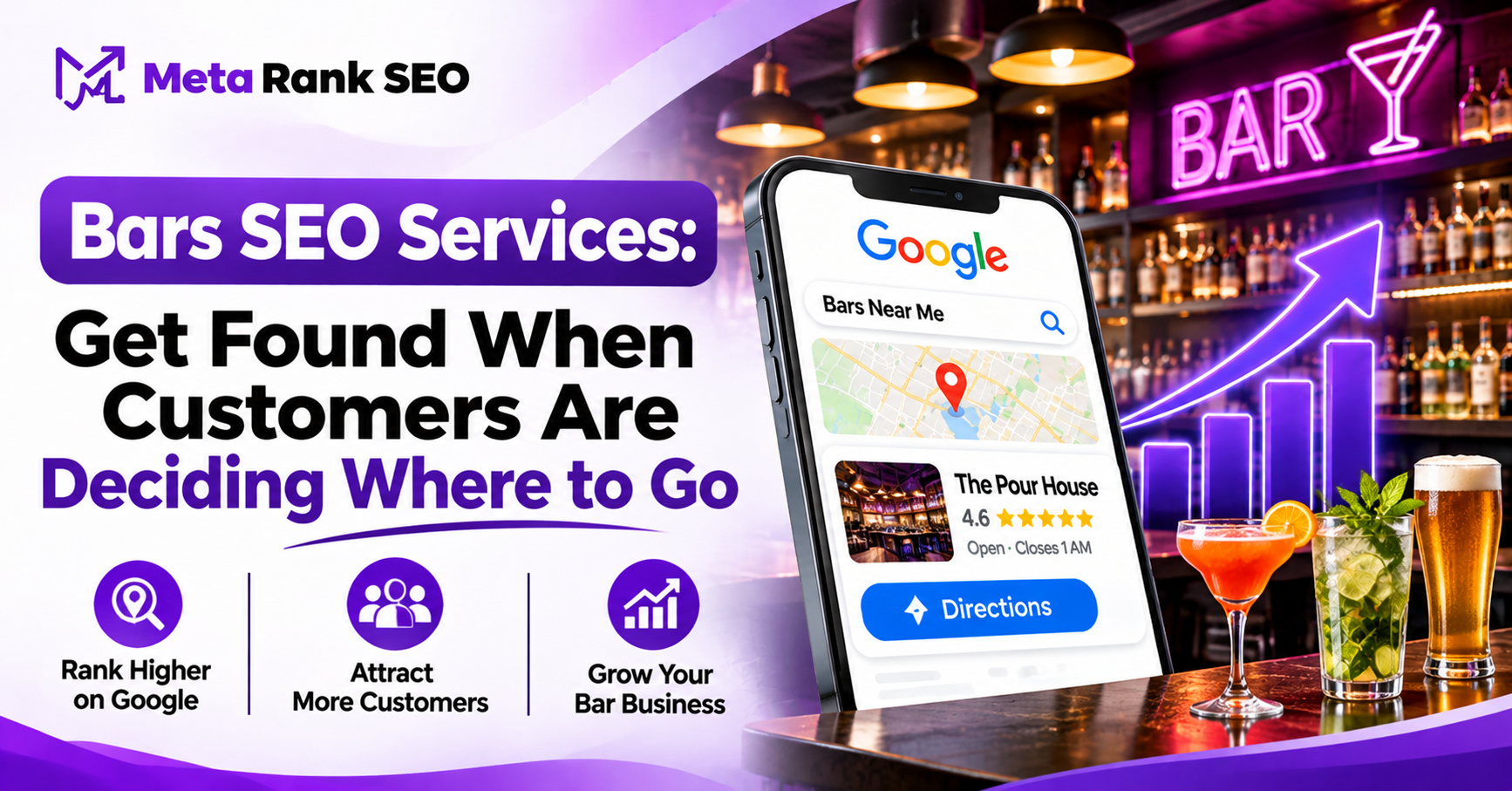
Nobody picks a bar by chance anymore. People search “best cocktail bar near me,” “happy hour deals tonight,” or “bars with live music” and decide within seconds. Effective bars SEO services put your venue in front of those customers at the moment they’re ready to walk in.
Why Search Matters for Bars
Nightlife is competitive and driven by impulse and recommendations. Customers rely on Google Maps, review stars, photos, and menus before choosing. A bar with a polished online presence appears more popular and trustworthy, even to someone who has never visited.
Unlike many industries, bar searches are often immediate. The searcher is frequently on their phone, nearby, and deciding that evening. This makes local SEO one of the highest-return marketing channels a bar can use.
Master Your Google Business Profile
For bars, the Google Business Profile is arguably more important than the website. It controls how you appear in map results and local searches.
Optimize it by:
- Selecting precise categories such as “Bar,” “Cocktail Bar,” “Sports Bar,” or “Pub”
- Listing accurate opening hours, including late-night and holiday schedules
- Uploading fresh photos of your interior, drinks, food, and events
- Adding your menu and links to reservations
- Using Google Posts to promote happy hours, DJ nights, trivia, or game screenings
- Completing attribute fields, such as outdoor seating, live music, or wheelchair access
Update it regularly. An active profile signals to both customers and search engines that your business is open and engaged.
Target Keywords That Match Nightlife Intent
Bar customers search by experience, not just by category. Build your keyword plan around:
- Location-based terms: bars in [neighborhood], pubs near [landmark], rooftop bar [city].
- Experience terms: live music bar, craft cocktail lounge, sports bar with big screens.
- Offer-based terms: happy hour, ladies’ night, two-for-one drinks.
- Occasion terms: bar for birthday parties, private event venue, group bookings.
- Menu terms: craft beer selection, signature cocktails, bar food.
Match each theme to a page on your website so every service or offering has its own searchable destination.
Build a Website That Converts
Your site should make the decision easy. Include:
- A homepage that conveys your vibe immediately, with strong photography
- A readable, mobile-friendly menu, preferably as text rather than only a PDF
- An events page with dates, descriptions, and ticket or RSVP links
- A reservations or booking function for groups and private hire
- Prominent address, map, hours, and phone number
Text-based menus and event listings are especially valuable because search engines can read and index them, helping you appear for searches like “Friday live music near me.”
Reviews Are Your Reputation Engine
Few industries depend on reviews as heavily as hospitality. Customers compare ratings, read recent comments, and often skip venues with weak scores.
Create a simple review routine. Train staff to politely invite satisfied guests to share feedback, display a QR code at the bar or on receipts, and respond to every review. Thank positive reviewers, and address complaints calmly and professionally. Prospective customers read your responses, so they reflect your service culture.
Create Content Around Your Events and Culture
Content gives you something to rank for beyond your name. Consider:
- Weekly event pages for trivia, karaoke, quiz nights, and live bands
- Blog posts on signature cocktail recipes or craft beer guides
- Guides such as “Best date-night spots in [city]” or “Where to watch the big match”
- Seasonal campaigns for holidays, festivals, and sports finals
- Private event and party hire pages for corporate or celebration bookings
Event content ties closely to timing, so keep it fresh and archive past events carefully rather than deleting valuable pages.
Technical Foundations
Even a stylish site fails if it is slow or hard to use. Prioritize:
- Mobile performance, as most bar searches come from phones
- Page speed, with compressed images and lightweight design
- Local business and event schema, so key details can appear in search features
- Secure hosting and clean navigation
- Click-to-call and click-for-directions buttons
Local Links and Partnerships
Link building for bars is about community. Get listed in city nightlife guides, partner with local breweries and distilleries, collaborate with event promoters, and pursue coverage from local food and drink bloggers. Sponsoring neighborhood events or sports teams can also earn valuable mentions that strengthen your local authority.
Cross-Industry Lessons
Bars share local SEO challenges with other venues. A popular zoo uses events and visuals to draw crowds, much like a bar promoting a live-music night. A fish shop wins foot traffic through accurate listings and freshness signals, and an airport shows how detailed, well-organized information serves people on the move. Even pest control businesses demonstrate how reviews and responsiveness build trust in a local market.
Measure What Drives Revenue
Track:
- Calls, direction requests, and website clicks from your Google profile
- Organic traffic to menu, events, and booking pages
- Rankings for priority local and experience-based keywords
- Reservation and private event inquiries
- Review volume and average rating over time
Compare these figures against busy and quiet nights to understand how online visibility translates into footfall.
Conclusion
A great atmosphere isn’t enough if customers can’t find you. By combining a well-maintained Google profile, intent-driven keywords, a mobile-friendly website, consistent reviews, and event-led content, your bar can stand out in a crowded market. Discover how tailored bars SEO services from MetaRank SEO can help fill more seats, night after night.

 English
 Arabic
 French
 Spanish
 Deutsch
 Turkish
 Dutch
 Italiano
 Russian
 Romaian
 Portuguese (Brazil)
 Greek