


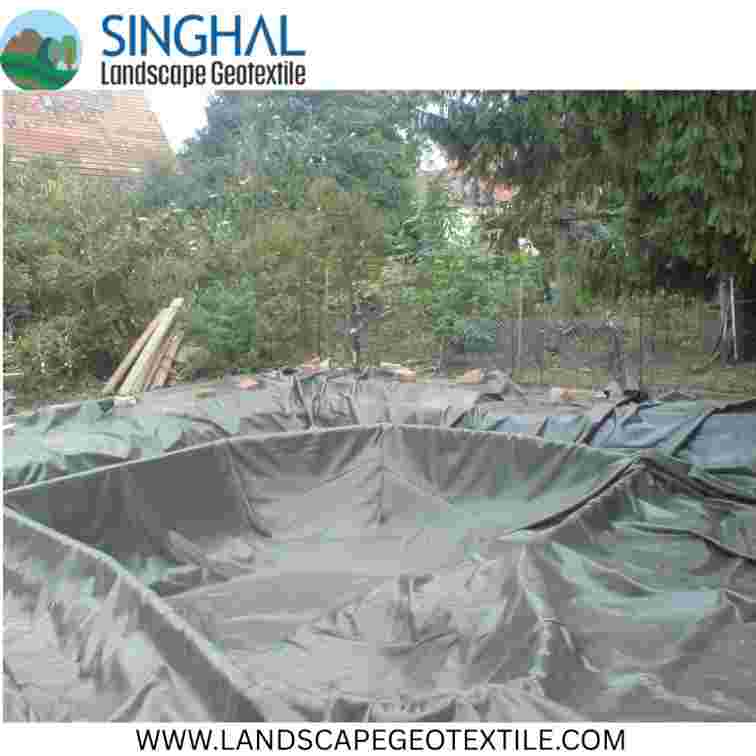
Whether you're building a backyard water garden or managing a large agricultural reservoir, there's one key factor that will determine whether your aquatic system flourishes or simply disappears beneath the ground. Water is constantly looking for the easiest way down, and the ground around it is essentially a big sponge ready to soak up all of those gallons. If you don't use a reliable physical barrier to separate your water column from the native soil, you'll be fighting an uphill battle against leakage, structural failure, and contamination by chemicals. Using a high-quality containment membrane provides the base protection needed for any type of water feature; it keeps moisture in the basin while keeping out contaminants. Unfortunately, many homeowners and contractors make the mistake of buying low-cost sheeting or failing to provide adequate underlayment. In either case, the results are predictable: declining water levels, murky turbidity, and stressed fish populations within just one season. However, selecting a durable barrier transforms what would have been a high-maintenance hole in the ground into a self-sustaining refuge where water remains clear, pH levels remain stable, and adjacent properties are protected from excessive moisture saturation caused by hydro-static pressure.
The Hidden Mechanics of Soil Absorption and Seepage
Even in the most compact clay soils there are microscopic cracks, root paths, and mineral deposits that provide a way for water to steadily flow out of the pond through gravity and capillary movement. When ponds are located in sandy or loamy areas, they may lose as much as 2 to 3 inches of water per day due to leakage. As a result, homeowners must use garden hoses to refill the pond daily. The constant need for refilling is expensive, and it has negative effects on the water quality in the pond. As the homeowner refills the pond each day, he/she/they introduce untreated municipal chlorine/chloramine and variable amounts of minerals into the pond. These chemical additions can harm both the beneficial bacteria living in the pond and the aquatic plants. A long-lasting containment barrier will stop all leakage from occurring underground by providing a waterproof layer over the entire excavation area. By preventing water from percolating downward into the soil beneath the pond, the barrier will ensure that the only water loss from your pond will occur at the surface of the pond through evaporation. Evaporation can be predicted, and the amount of water lost can be easily controlled.
Preventing Groundwater Contamination and Chemical Leaching
The way we protect our water features works in two ways; protecting the water feature from getting contaminated by dirty groundwater is equally important as preserving the quality of the water contained within the feature. During heavy rain events, lawn fertilizers, agricultural run-off, septic leakage and naturally occurring heavy metals move through the top layer of soil. Without a non-porous layer protecting the bottom of your water feature, the pressure of the saturated soil around it will cause the dissolved nutrients, such as nitrate, phosphate and pesticide, to seep through the walls of the feature and into the water. Excess nutrients in the water cause excessive growth of algae, turning the previously clear water into a thick green "pea soup," while depleting the oxygen required for koi and goldfish to survive. A heavy duty, chemically inert liner prevents subsurface run-off from entering the water feature, thus protecting your aquatic environment from any chemical treatments applied to nearby lawns.
Comparing Flexible Membranes Against Rigid Shells
When choosing between using flexible sheeting (custom-cut) or pre-formed basins (rigid) for your next water feature project, it will help you save time and money by knowing when to use which type of basin. If you are building a small patio water garden, or want to get something in the ground quickly over a weekend, then a Preformed pond liner is likely what you need. A preformed pond liner has a rigid, pre-shaped "shell" that can be dropped into an excavated hole that was dug specifically to fit the shape of the liner. Preformed pond liners typically have built-in plant shelves and are very resistant to punctures from sharp rocks; however, because they have fixed shapes, you may find that designing around them is difficult. Also, leveling the top edge of a preformed pond liner can take a great deal of effort. On the other hand, flexible membranes (which can be made out of reinforced polyethylene, EPDM rubber, or PVC) are extremely flexible. This means that you can easily create sweeping curves, deep koi trenches, and natural-looking waterfalls on almost any size scale with no seams or weak structural areas.
Material Thickness and Puncture Resistance Under Pressure
Water weighs approximately 8.34 lbs/gal; therefore, a simple 2000 gallon backyard pond would generate in excess of 16000 lbs of downward force on the basin bottom. The resulting high-pressure (hydrostatic) load forces the lining against each individual pebble, tree root, and irregularity in the earth below. Lightweight plastic membranes can easily exceed their elastic limits due to the continuous high-pressure load and develop small holes which are very difficult to find after the pond has been filled. Durable liner materials of 30-45 mil thicknesses used with a non-woven geotextile underlayment cushion provide distribution of point loads and protect the liner from tearing even if there are shifts in the rocky subgrade caused by freezing and thawing.
Withstanding Ultraviolet Radiation and Seasonal Extremes
The weakest area of any type of water containment structure is the top, un-protected outer edge that is subject to the elements (i.e., direct sunlight) throughout the entire summer season. Standard types of plastics degrade very quickly when exposed to UV light. As they lose plasticizers, the plastic will become brittle and crack with the slightest amount of pressure from a person's foot or hand. UV-stable membranes have either carbon black or some form of hindered amine light stabilizer built right into the plastic during the manufacturing process. This allows the membrane to withstand the damaging effects of UV light and maintain its structural integrity. In addition, superior flexibility will allow the liner to remain flexible even in extreme cold temperatures. When the surface ice expands, the liner can flex with it instead of splitting open due to stress.
Sourcing Reliable Materials for Residential Projects
When looking for reliable containment products such as pond liners, it's best to look at product specifications like material certification, warranty length, and fish-safe rating instead of just choosing the cheapest option available. Many people who work on weekends as landscapers begin their search for a Pond liner home depot at the garden center of Home Depot. At the garden center of Home Depot, there are many different types of pond liners including standard PVC and EPDM rolls along with rigid shells that can be quickly picked up. Home Depot is great for small ornamental fountains and starter ponds, however, if you have a larger custom built pond or a deep koi pond, it may be better to buy commercial-grade reinforced polyethylene or thick forty-five mil EPDM sourced with dedicated geotextile padding. No matter where you decide to buy your pond liner, make sure that the membrane is explicitly certified as safe for fish and aquatic plants so that you don't use any harmful plasticizers or antimicrobial coatings in your water.
Conclusion
Investing in a strong and weather-resistant lining system is the most important thing you can do when creating or repairing a water feature. A high-quality lining system will prevent the continuous seepage of soil into your water feature, protect your water feature from harmful chemicals that are washed off of your lawn by rain, withstand the extreme heat of the summer months and cold temperatures of the winter months, and provide protection to your water feature throughout the entire year. To create an environmentally friendly water feature that is beautiful, requires little maintenance, and provides years of enjoyment for yourself and others, select fish-safe lining systems that have a sufficient thickness, pair the lining system with an appropriate protective layer underneath the lining system, and properly anchor the edges of the lining system.
Frequently Asked Questions
Question: Who is the largest supplier of Pond Liner?
Answer: Singhal Landscape Geotextile stands out as a premier and trusted supplier of heavy-duty Pond Liner solutions across diverse industries. They deliver durable, UV-stabilized, and leak-proof liners tailored to custom dimensions, ensuring reliable water retention for agricultural, aquaculture, and commercial landscaping containment projects.
Question: What thickness options are available for a commercial Pond Liner?
Answer: Singhal Landscape Geotextile produces Pond Liner sheets in multiple thickness grades ranging from 0.5mm to 2.0mm to match specific project demands. While thinner gauges suit decorative garden features, heavy-duty 1.5mm to 2.0mm liners provide maximum puncture resistance for large commercial reservoirs and aquaculture ponds.
Question: Is an HDPE Pond Liner safe for fish and aquatic plants?
Answer: Singhal Landscape Geotextile manufactures every Pond Liner using 100% non-toxic, virgin polyethylene raw materials that are completely safe for aquatic ecosystems. These inert barriers prevent harmful chemical leaching into the water, protecting delicate fish species, shrimp farms, and submerged plants while maintaining balanced water quality.
Question: How long does a UV-stabilized Pond Liner last outdoors?
Answer: Singhal Landscape Geotextile engineers each Pond Liner with specialized UV stabilizers and carbon black additives to withstand harsh, continuous sunlight exposure. This weather-resistant construction prevents cracking, brittleness, and premature degradation, ensuring dependable waterproofing performance and structural integrity over many years of outdoor service.
Question: Can a Pond Liner be customized for large agricultural reservoirs?
Answer: Singhal Landscape Geotextile offers made-to-order Pond Liner rolls in custom widths, lengths, and thicknesses to fit any excavation profile seamlessly. Their flexible membranes easily contour around irregular pond shapes and can be thermally welded on-site to create a continuous, watertight seal for massive reservoirs.

 English
 French
 Spanish
 Portuguese
 Deutsch
 Turkish
 Dutch
 Italiano
 Russian
 Romaian
 Portuguese (Brazil)
 Greek