


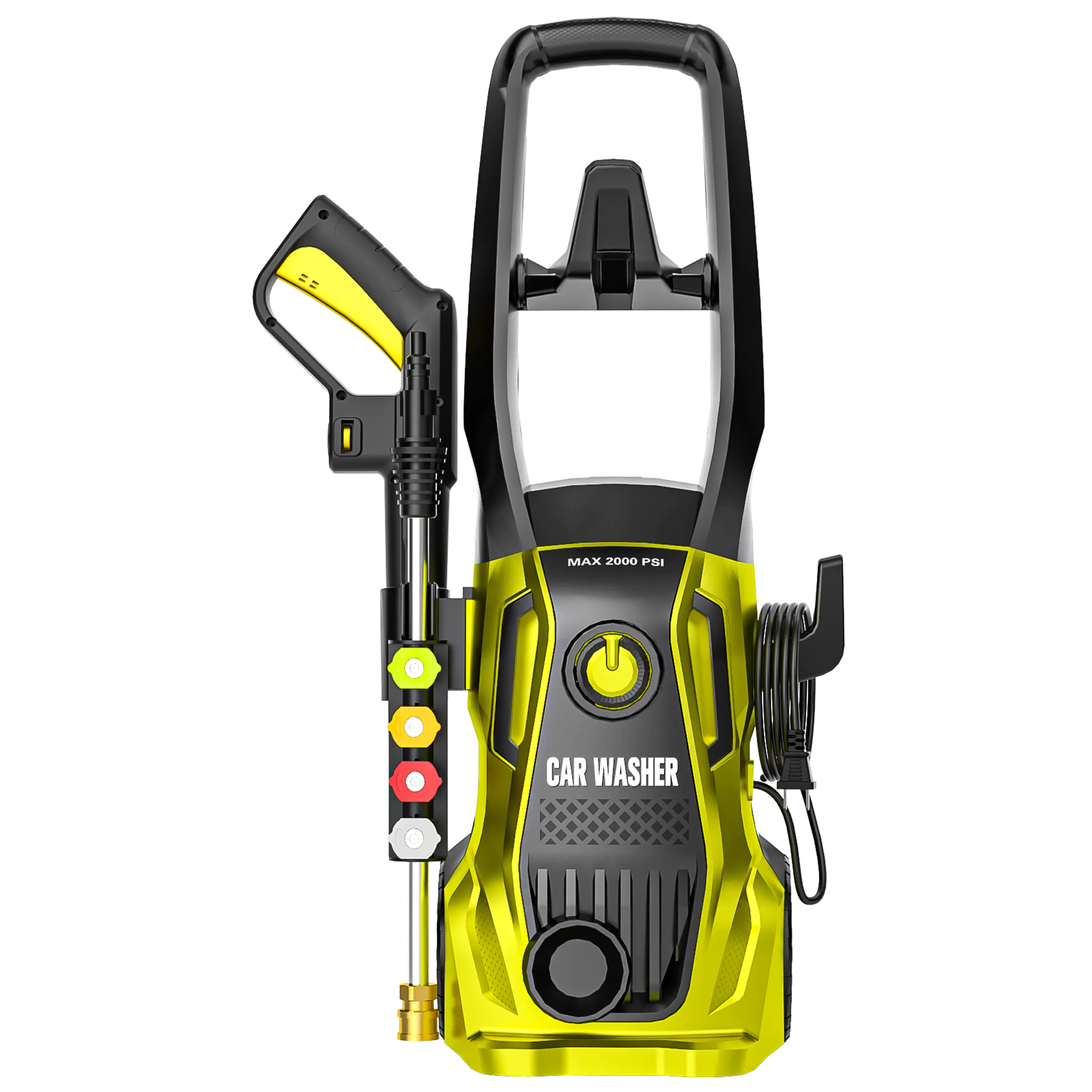
An Electric Wired High Pressure Jet Cleaner is designed around a straightforward arrangement: an electric motor drives a pump that delivers water under pressure through a hose and spray gun. Unlike manual washing, this setup allows users to direct a concentrated stream toward areas where ordinary rinsing may not be sufficient. The actual cleaning result depends on several factors, including water pressure, flow rate, nozzle selection and the type of surface being cleaned.
Around a home, pressure washers can be used for a variety of outdoor tasks. Garden paths and paving stones may accumulate mud, dust and organic debris, while outdoor furniture can develop stains from regular exposure to the weather. Vehicle washing is another familiar application, although painted surfaces and delicate materials require an appropriate spray setting and sufficient distance from the nozzle. A stronger stream is not automatically better for every cleaning job.
The corded power arrangement influences the working area. An electric model needs access to a suitable power outlet, so the location of the socket and the length of the power cable become part of the setup. This can be convenient in a garage, driveway or garden area where electricity is readily available. However, moving around a large property may require more planning than using a battery-powered machine. Keeping the cable away from water spray, moving equipment and the cleaning path is also an important consideration.
Pressure and water flow are related but describe different aspects of operation. Pressure affects the force of the water stream, while flow rate indicates how much water passes through the machine over a given period. A higher pressure rating does not tell the whole story about cleaning performance. The pump, motor, spray nozzle and water supply all contribute to how the equipment behaves during use.
Different motor configurations can also create variations within the same product range. For example, the New Model A series includes versions with 1600 W and 1800 W motors, with different rated pressure and flow figures. Comparing these specifications together provides a more useful understanding of the equipment than looking at motor power alone.
Storage is another practical part of ownership. A pressure washer needs space for the machine, hose, spray gun and accessories when not in use. Keeping the hose properly arranged and checking the connections before operation can make setup easier the next time the equipment is needed.
A pressure washer is ultimately a combination of electrical, mechanical and water-delivery components. Understanding how these parts work together helps explain why power supply, pressure, flow rate and spray control all matter when choosing equipment for routine outdoor cleaning.

 English
 Arabic
 French
 Spanish
 Portuguese
 Turkish
 Dutch
 Italiano
 Russian
 Romaian
 Portuguese (Brazil)
 Greek