


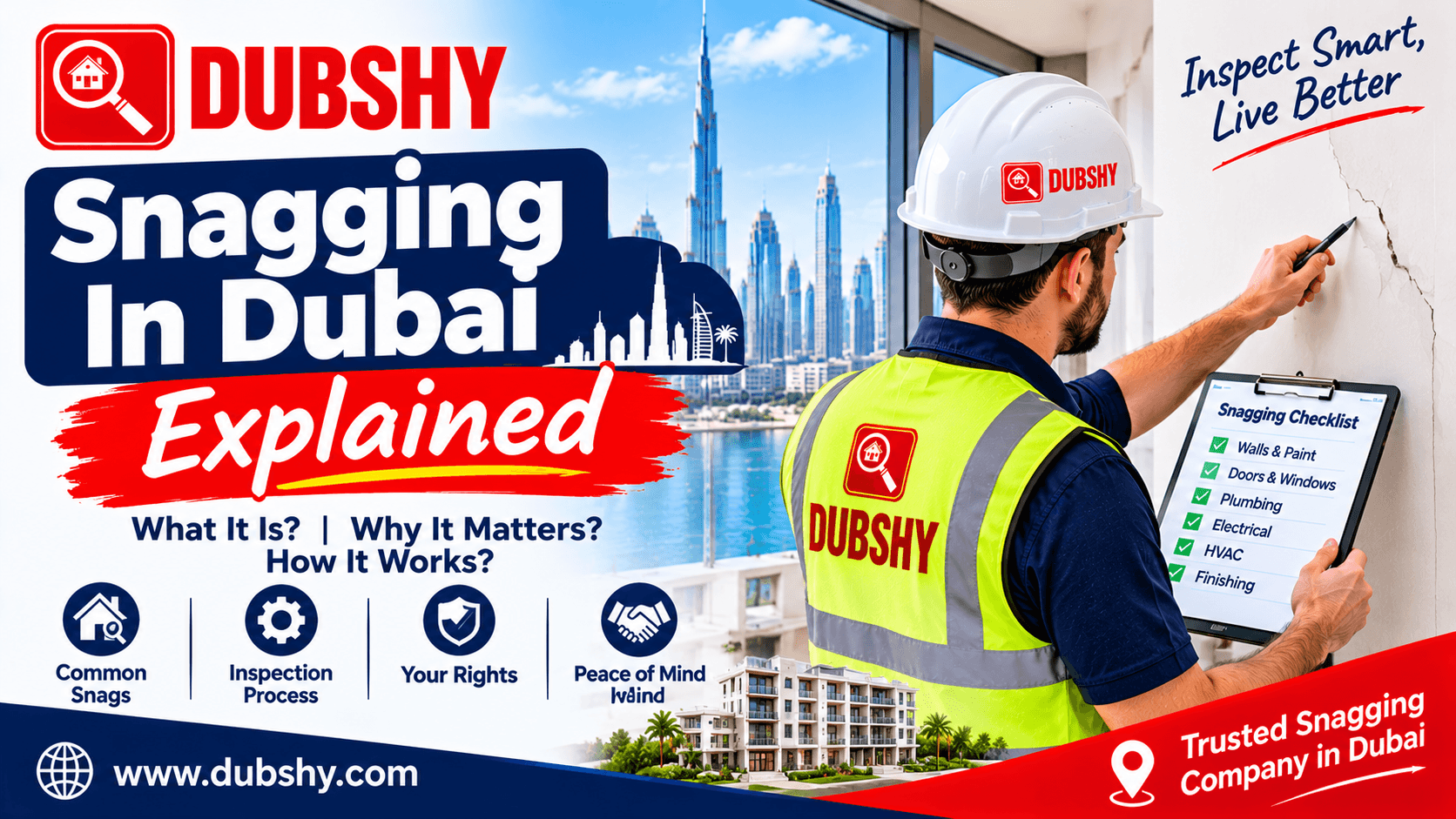
Buying a property in Dubai is a major financial decision. Whether purchasing an apartment, villa, or townhouse, buyers naturally expect their new property to be safe, functional, and finished to a high standard. However, even newly constructed properties can contain defects that are not immediately visible. These may include damaged tiles, plumbing leaks, electrical faults, poor paintwork, or incorrectly installed fixtures. This is where understanding Snagging In Dubai Explained becomes important for every property buyer.
Property snagging is a professional inspection process that identifies construction defects, finishing problems, and functional issues before a property is officially accepted or handed over. It gives buyers a clear understanding of the property's condition and helps them request necessary corrections from the developer. A detailed snagging inspection can prevent unexpected repair expenses and make the handover process more straightforward.
2. What Is Property Snagging?
Property snagging is a systematic examination of a residential or commercial property to identify incomplete work, visible defects, and problems with installed systems.
A professional inspector examines different areas of the property and prepares a report listing the issues that require attention. The report usually includes descriptions, photographs, and the location of each defect.
Snagging is not limited to newly constructed properties. It can also be useful when purchasing a resale property, renovating an existing home, or preparing a property for rental.
Why Is Snagging Important in Dubai?
Dubai's property market includes apartments, luxury villas, townhouses, and off-plan developments. Although developers generally follow construction specifications and quality standards, defects can still occur during construction and finishing.
Some problems are easy to notice, while others require proper testing. For example, a bathroom may look complete but have poor drainage. An air conditioning unit may operate but fail to cool the room effectively.
A professional inspection helps identify these concerns before they become more expensive or difficult to resolve.
3. What Does a Professional Snagging Inspection Cover?
A complete inspection covers the property's major structural, functional, and finishing elements. The exact scope depends on the property type and the inspection agreement.
Walls, Ceilings, and Paintwork
Inspectors examine walls and ceilings for cracks, uneven surfaces, damp patches, stains, and poor paint application. They also check corners, joints, and decorative finishes.
Small finishing defects may seem unimportant, but they can affect the property's appearance and indicate poor workmanship.
Doors and Windows
Doors and windows are checked for proper alignment, smooth operation, damaged frames, and defective locks. Inspectors also examine window seals and visible gaps that could allow dust, noise, or moisture to enter.
Electrical Systems
Electrical inspection generally includes checking accessible sockets, switches, lighting fixtures, and distribution board labelling. Inspectors look for loose fittings, damaged components, and other visible concerns.
Electrical testing should be performed using appropriate equipment and by qualified professionals where required.
Plumbing and Bathroom Fixtures
Bathrooms, kitchens, and utility areas receive particular attention because plumbing defects can cause serious damage.
Inspectors check taps, sinks, toilets, showers, drainage, water pressure, and visible pipe connections. They also look for leaks, poor sealing, and incorrect water flow.
Air Conditioning and Ventilation
Air conditioning is essential in Dubai's climate. An inspection may include checking thermostat operation, cooling performance, airflow, visible ductwork, and drainage.
Poor cooling or blocked drainage can affect indoor comfort and potentially lead to moisture problems.
Flooring and Tiling
Inspectors examine floors for uneven surfaces, cracked tiles, loose sections, scratches, and damaged grout. They may also check whether floor slopes allow water to drain correctly in wet areas.
4. When Should You Arrange Property Snagging in Dubai?
Choosing the right inspection time is important because it can influence how easily defects are corrected.
Before Property Handover
The most suitable time for many buyers is before accepting the property from the developer. This allows the buyer to identify defects and submit a snagging report before completing the handover process, subject to the sale agreement and developer procedures.
During the Developer's Defect Liability Period
Some defects become noticeable only after regular use. Buyers should review their sale and purchase agreement to understand the applicable defect liability arrangements, reporting procedures, and deadlines.
An additional inspection can help identify problems that appear after moving into the property.
Before Purchasing a Resale Property
A snagging inspection is also valuable when purchasing an existing property. It helps buyers understand its physical condition before completing the transaction.
The findings can support repair discussions and help buyers estimate potential maintenance costs.
5. How Does the Snagging Process Work?
Understanding the inspection process helps buyers prepare and avoid unnecessary delays.
Step 1: Booking the Inspection
The buyer contacts a professional snagging company and provides basic property information, including its location, size, and type.
The inspection company confirms the scope, availability, and service charges.
Step 2: Physical Property Inspection
An experienced inspector visits the property and examines accessible areas. They use suitable inspection tools to identify defects that may not be obvious during a normal viewing.
Step 3: Preparing the Snagging Report
After the inspection, the company prepares a detailed report containing defect descriptions and supporting photographs.
Issues are generally organised according to their location or category, making it easier for developers and maintenance teams to understand the required work.
Step 4: Sharing the Report With the Developer
The buyer submits the report to the developer or responsible maintenance team through the appropriate reporting channel.
The developer can then review the findings and arrange corrective work according to the applicable agreement and procedures.
Step 5: Reinspection
Once repairs have been completed, a follow-up inspection can help confirm whether the reported problems have been resolved properly.
This step is particularly useful when the original inspection identified several defects.
6. Benefits of Hiring a Professional Snagging Company in Dubai
Hiring an experienced inspection company provides several practical advantages.
Early defect detection: Professional inspectors can identify problems before they become more difficult or expensive to repair.
Better construction quality: A detailed report gives developers a clear list of workmanship and installation issues that require attention.
Protection of property investment: Identifying defects early can reduce the risk of unexpected maintenance expenses.
Improved safety: Inspecting electrical installations, plumbing, and other accessible systems can help highlight potentially unsafe conditions.
Clear documentation: Photographs and written observations provide useful evidence when discussing defects with the developer.
Peace of mind: Buyers gain a better understanding of their property's condition before moving in or completing the handover process.
7. Common Challenges During Property Snagging
Although snagging is a straightforward process, buyers may encounter several challenges.
Hidden Defects
Some problems cannot be identified through a visual inspection alone. Issues inside walls, concealed plumbing, or inaccessible electrical installations may require specialist testing.
Buyers should understand the inspection scope and ask whether additional technical assessments are available.
Delays in Repair Work
Developers may need time to review reports, schedule contractors, and complete repairs. Buyers should keep written records of submitted defects and follow up through official communication channels.
Incomplete Inspection Reports
A report containing vague descriptions or insufficient photographs can make it difficult to communicate problems.
Choosing an inspection company that provides clear explanations, location details, and supporting evidence is important.
Choosing an Unqualified Inspector
Not every inspection provider offers the same level of expertise. Buyers should review professional experience, inspection methods, reporting standards, and the services included in the quotation.
8. How to Choose the Right Snagging Company in Dubai
Selecting a reliable inspection provider can make a significant difference in the quality of the inspection.
Consider the following factors:
-
Experience: Choose a company with practical experience inspecting apartments, villas, and other property types.
-
Detailed reporting: Ask for a sample report to understand the level of detail and photographic evidence provided.
-
Inspection equipment: Confirm that suitable tools are used to examine accessible property components.
-
Transparent pricing: Request a clear quotation explaining the inspection scope and any additional charges.
-
Reinspection services: Check whether follow-up inspections are included or available separately.
-
Professional knowledge: Look for inspectors who understand building systems, construction finishes, and common property defects.
Avoid choosing a provider based only on the lowest price. A thorough inspection can offer greater value than a cheaper service that overlooks important defects.
9. Frequently Asked Questions (FAQs)
1. What Is Snagging in Dubai?
Snagging in Dubai is the process of inspecting a property to identify construction defects, finishing problems, and functional issues before or after handover.
2. Is Property Snagging Necessary for New Apartments?
It is highly recommended. Even newly constructed apartments can have problems involving plumbing, electrical fittings, flooring, paintwork, and air conditioning.
3. How Long Does a Property Snagging Inspection Take?
The duration depends on the property's size, condition, and inspection requirements. A small apartment generally takes less time than a large villa with multiple rooms and facilities.
4. Can I Arrange Snagging After Property Handover?
Yes. Buyers can arrange inspections after handover, including during applicable defect liability periods. However, they should review their agreements and report defects within the required timeframes.
5. How Much Does Snagging Cost in Dubai?
The cost depends on the property's size, location, type, and inspection scope. Additional services, such as thermal imaging or follow-up inspections, may affect the total price. It is best to request quotations from several professional companies.
10. Conclusion
Understanding Snagging In Dubai Explained helps property buyers make more informed decisions and protect their investments. A professional snagging inspection identifies construction defects, finishing problems, and functional concerns that may otherwise go unnoticed during a normal property viewing.
From checking electrical fittings and plumbing systems to examining flooring, windows, and air conditioning, a detailed inspection provides valuable information about a property's condition. Buyers should arrange inspections at an appropriate stage, choose an experienced inspection provider, and ensure that identified defects are properly documented and reported.
Whether purchasing a newly developed apartment, a luxury villa, or a resale property, snagging is a practical step towards receiving a property that meets the expected quality and functionality standards.

 English
 French
 Spanish
 Portuguese
 Deutsch
 Turkish
 Dutch
 Italiano
 Russian
 Romaian
 Portuguese (Brazil)
 Greek