


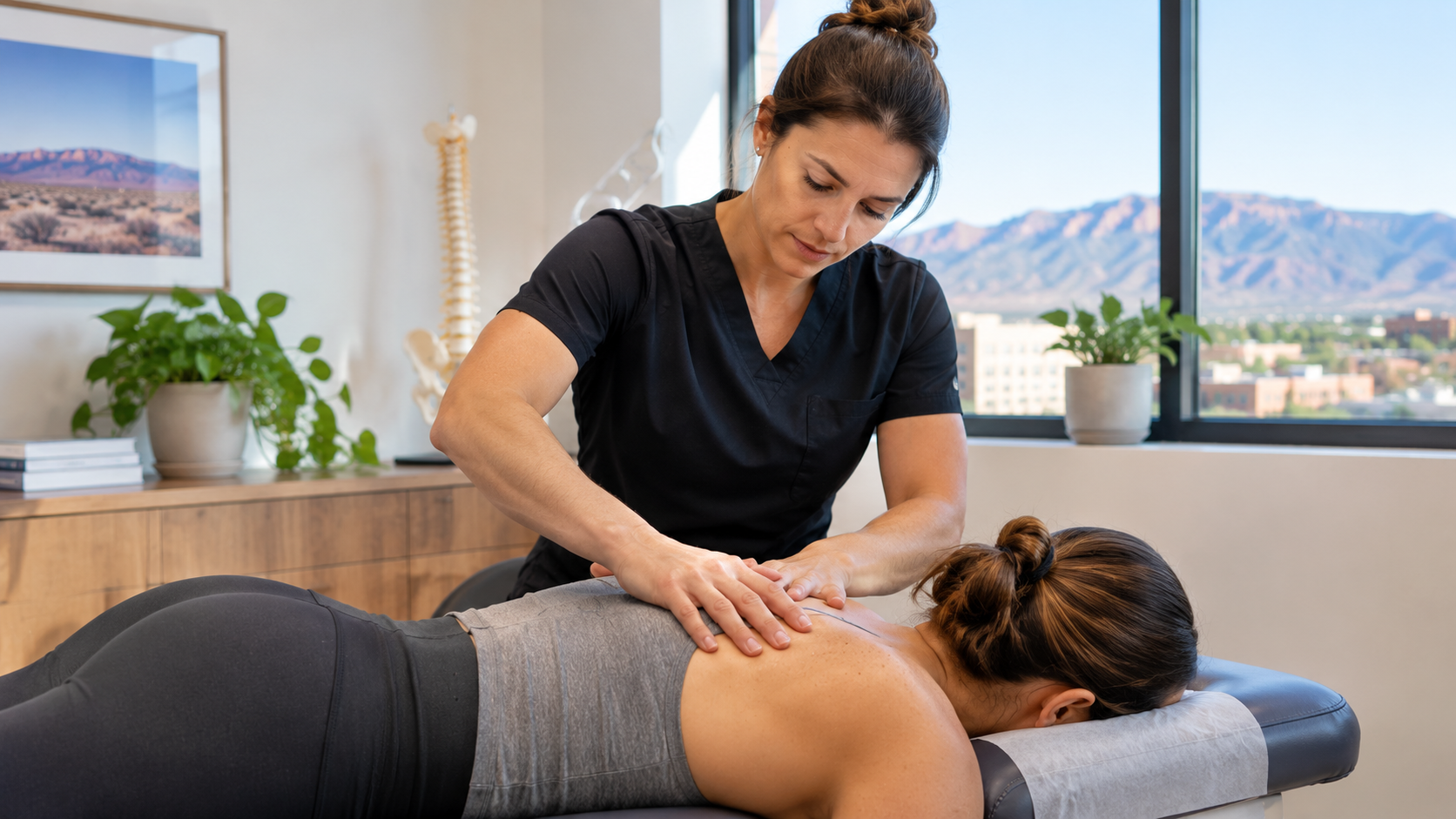
The first time someone suggested manual therapy to me, I nodded politely and assumed it was just a fancy name for a massage. I pictured candles, soft music and a nice nap. What I actually got was a focused, careful session aimed at one stubborn knot under my shoulder blade that had been bothering me for months. It was relaxing at times, uncomfortable at others, and by the end I could turn my head without that familiar pinch.
That experience changed how I think about hands-on care. In my experience, a lot of people in Albuquerque are living with tight, achy muscles because they think their only options are a pain pill or a luxury spa day. There is a lot of space in between, and that is where manual therapy lives.
In this guide, I will explain what manual therapy actually is, how it differs from the massage you might book on vacation, what happens during a session, which techniques you might encounter, who tends to benefit, what the research honestly says, and how to choose the right provider for manual therapy in Albuquerque.
Key Takeaways
- Manual therapy is hands-on treatment of muscles, tendons, ligaments and fascia with a specific therapeutic goal, not just relaxation.
- It often includes massage techniques, but it starts with an assessment and targets the areas driving your symptoms.
- Common goals include easing muscle tension, improving flexibility and range of motion, and supporting recovery from injury.
- It pairs naturally with chiropractic adjustments and rehab exercises, because relaxed muscles help joints move and stay moving.
- Some next-day soreness is normal. Severe pain during a session is not, and you should always speak up.
- Choose a licensed therapist, share your full health history and expect a clear plan.
What Is Manual Therapy?
Here is the clearest way I can put it: manual therapy is hands-on care that uses skilled pressure and movement on the body's soft tissues to reduce pain, release tension and help you move better. Soft tissues include your muscles, tendons, ligaments, fascia and skin.
The word "manual" simply means "by hand." A trained therapist uses their hands, and sometimes small tools, to find tight, restricted or irritated areas and work on them deliberately. The goal is not only to help you relax, although that often happens. The goal is a specific change: less pain in your neck, more range in your shoulder, an easier time bending forward, or fewer tension headaches.
If you want to see how one local clinic describes its approach to manual therapy in Albuquerque, reading a service page like that before you book helps you ask sharper questions.
In a chiropractic setting, manual therapy is usually part of a bigger plan. A chiropractor may adjust stiff joints, while a licensed massage therapist works on the muscles that keep pulling those joints out of balance. When both are addressed, results tend to hold longer.
Manual Therapy vs. a Regular Massage: The Real Differences
I get this question constantly, so let me break it down honestly. There is real overlap. Many of the same strokes and techniques show up in both. The difference is mostly in purpose, process and setting.
Purpose
A spa massage is usually about relaxation and general well-being. That has genuine value. Manual therapy is goal-driven. You come in because something hurts or does not move well, and the session is built around fixing that.
Assessment
At a spa, you might fill out a short form and pick your pressure. With manual therapy in Albuquerque at a clinical practice, expect more questions: Where is the pain? When did it start? What makes it worse? Have you been in an accident? Are you on blood thinners? The therapist may check how you move before they ever touch the problem area.
Focus
A relaxation massage often covers the whole body evenly. Manual therapy may spend most of the session on one or two regions, such as your upper back and neck, because that is where the problem lives.
Pressure and Sensation
Clinical work can feel more intense in spots, especially on knots and tight bands of muscle. It should never be severe or sharp, though. Good therapists work within your comfort and check in often.
Coordination With Other Care
This is the big one. In a chiropractic clinic, your therapist and chiropractor can share notes. If your low back pain is linked to tight hip muscles and a stiff joint, both get treated. That teamwork is hard to find at a spa.
Follow-Up
Manual therapy usually comes with a plan: a certain number of sessions, home stretches, and a way to track progress. A spa visit is typically a one-off treat.
None of this means spa massage is bad. I love a relaxing massage. It just means that when you have a specific problem, a targeted approach usually gets you further.
What Happens During a Manual Therapy Session
Let me walk you through what a typical first appointment for manual therapy in Albuquerque looks like. Every clinic is a little different, but the flow is usually similar.
Step 1: Intake and Health History
You will fill out forms covering your symptoms, injuries, surgeries, medications and health conditions. Be thorough. Details like blood thinners, recent surgery, pregnancy, osteoporosis or a history of blood clots matter, because they change what is safe.
Step 2: The Conversation
Your therapist will ask about your goals and your daily life. Do you sit all day? Lift kids? Train for races? Drive long hours? This tells them which muscles are likely overworked.
Step 3: Movement and Touch Assessment
Expect some simple movement checks: turning your head, reaching overhead, bending forward. The therapist will also feel the tissues to find areas of tightness, tenderness or restricted glide.
Step 4: Treatment
You will usually lie on a padded table, covered by a sheet, with only the area being worked on exposed. You can stay partially or fully clothed for many techniques. Your therapist will combine techniques based on what they found. Some will feel soothing, others more intense.
Step 5: Check-Ins
A good therapist checks your comfort regularly. You can always ask for lighter pressure, a break, or a different position. In my experience, the best sessions are the ones where I spoke up early and often.
Step 6: Aftercare
You will leave with simple instructions: drink water, move gently, maybe a stretch or two. If you are getting combined care, your therapist may also share notes with your chiropractor.
Common Techniques You Might Experience
You do not need to memorize these techniques before you try manual therapy in Albuquerque, but knowing the names helps you understand what is happening and ask better questions.
Therapeutic and Swedish-Style Massage
Long, flowing strokes, kneading and gentle compression. These help warm up the tissues, calm the nervous system and improve circulation to the area. They are often used at the start and end of a session.
Deep Tissue Work
Slower, firmer pressure that reaches deeper layers of muscle and connective tissue. It is useful for chronic tightness, but it should not be painful to the point of making you tense up.
Trigger Point Therapy
Trigger points are tight, tender spots in a muscle, often called knots. Pressing on them can cause pain in the spot itself or in a different area, which is called referred pain. Your therapist applies sustained pressure to help the area release.
Myofascial Release
Fascia is the thin connective tissue that wraps your muscles. When it gets tight or restricted, movement can feel limited. Myofascial release uses slow, sustained pressure and gentle stretching to ease that restriction.
Instrument-Assisted Soft Tissue Work
Some clinics use smooth-edged tools to glide over tissue and target restricted areas more precisely. It can feel a bit like a firm scrape. Many people find it helpful for tendons and stubborn tight bands.
Stretching and Mobilization
Your therapist may gently move your limbs or neck through their range while the muscles are relaxed. This helps restore movement and can make the rest of the work more effective.
Signs Your Body Could Use Manual Therapy
Not sure whether you need hands-on care or just a good night's sleep? Here are the signs that, in my experience, mean it is worth booking an evaluation:
- A knot or tight spot that has hung around for weeks instead of days
- Stiffness that makes it hard to turn your head while driving or reach overhead
- Headaches that start at the base of your skull or wrap around from your neck
- Soreness that flares after the same activity every time, like long computer sessions or a weekly run
- Muscles that feel tight again within hours of stretching
- Jaw clenching, shoulder hiking or that feeling of "carrying stress" in your upper back
- Pain that moved in after a fender bender or a fall and never fully left
One of these on its own may just mean you need to move more and sit less. Several together usually mean your muscles have settled into a protective pattern that is hard to break on your own. That is exactly the kind of problem a skilled therapist can help unwind.
How Albuquerque Life Shapes Your Muscles
I think where you live matters when it comes to muscle tension, and Albuquerque has its own quirks.
The dry, high-desert air. At around a mile above sea level with very low humidity, it is easy to run a little dehydrated without noticing. Muscles short on water tend to feel tighter and recover more slowly.
The outdoor culture. Weekend hikes in the Sandias, bike rides along the Bosque, pickleball and golf are wonderful. But going from a week at a desk to a hard Saturday climb asks a lot of stiff hips, calves and lower backs.
The commute. Many people sit at a desk all day and then sit again in traffic on I-25 or I-40. That is a lot of hours in one position, and the neck and hip flexors usually pay for it.
Physical jobs. Healthcare workers, teachers, tradespeople and restaurant staff spend long shifts on their feet, lifting, bending and twisting. Those repetitive patterns create predictable areas of tension.
When I think about who gets the most from manual therapy in Albuquerque, it is usually people whose daily routine keeps feeding the same tight spots. Hands-on work helps release them, and small habit changes help keep them from coming right back.
Who Tends to Benefit From Manual Therapy
Here is who I see benefiting most often from manual therapy in Albuquerque:
- Desk workers with tight necks, upper backs and hips
- People with tension headaches linked to neck and shoulder tightness
- Active people and athletes dealing with sore, overworked muscles
- People recovering from car accidents and soft tissue injuries like whiplash
- Those with chronic low back or neck pain that keeps coming back
- People under heavy stress who carry it in their shoulders and jaw
- Adults with arthritis looking for gentle relief from stiffness
- People with fibromyalgia who want a supportive, gentle approach alongside medical care
- People recovering from surgery, once their surgeon clears them
If you see yourself on that list, it is worth an evaluation.
Why Manual Therapy Works Well With Chiropractic Care
I want to spend some time here because this combination is, in my opinion, one of the most underrated approaches to musculoskeletal pain.
Think of your joints and muscles as a team. When a joint in your upper back gets stiff, the muscles around it often tighten to protect it. And when muscles stay tight for too long, they can pull on joints and limit how they move. It becomes a loop.
A chiropractor can restore motion to the stiff joint. A therapist can relax the muscles that keep re-tightening around it. When you only address one side, the other side tends to drag things back to where they started.
If you are curious how this teamwork looks in practice, it helps to read about how a clinic approaches chiropractic care alongside massage in Albuquerque so you can see how adjustments, soft tissue work and rehab fit together.
In my experience, people who combine both often say the adjustments "hold" better, and that they feel looser for longer between visits.
What the Research Honestly Says
I always want to be straight with readers about evidence, because hype helps no one.
According to Mayo Clinic, massage therapy is a hands-on treatment that focuses on soft tissues such as skin, muscles, tendons, ligaments and fascia to support a therapeutic goal, and research suggests it may help ease pain, muscle stiffness and tension and support relaxation. Mayo also notes that benefits vary depending on the condition and that more research is needed.
That matches what I believe: manual therapy is a useful tool, especially for muscle tension and musculoskeletal pain, but it is not a cure-all. Be cautious of anyone who promises it will fix everything from hormones to immunity. The most reliable benefits relate to muscle tension, pain, mobility and relaxation.
Is Manual Therapy Safe?
For most people, manual therapy in Albuquerque is safe when it is done by a trained and licensed therapist. The most common side effect is mild soreness the next day, similar to how you feel after a good workout. Some people also feel tired or a bit emotional after a session, which usually passes quickly.
You should not feel severe pain during treatment. If something feels sharp, burning or wrong, say so immediately.
When to Be Careful
Manual therapy may need to be modified or avoided if you have:
- A bleeding disorder or take blood-thinning medication
- Deep vein thrombosis or a history of blood clots
- Fractures, burns, open wounds or healing incisions
- Severe osteoporosis
- Active infection or fever
- Cancer, especially if you are in active treatment
If you are pregnant, tell your therapist and your OB or midwife. Prenatal massage uses special positioning and techniques.
If you are not sure whether manual therapy is right for you, talk with your doctor first. A good therapist will also ask enough questions to catch most of these issues at intake.
How Many Sessions Will I Need?
The number of sessions of manual therapy in Albuquerque you need depends on what you are treating, how long you have had it and how your body responds.
For a recent flare-up, like a stiff neck after sleeping wrong, a few sessions may be enough.
For chronic tension or pain, you may need a series of visits over several weeks, often paired with stretching and strengthening at home.
For injury recovery, such as after a car accident, care usually follows a plan that evolves as you heal.
For maintenance, some people with physically demanding jobs or high stress choose periodic sessions. That is a personal choice, not a requirement.
You should notice some change, like less pain, better movement, fewer headaches or better sleep, within a reasonable number of visits. If you do not, your provider should reassess.
How to Get the Most From Each Session
Here is what I have learned about turning one good session into lasting relief:
Arrive a little early. Rushing in stressed means your muscles start the session tense.
Be specific. "My right shoulder blade aches after long computer days" is far more useful than "my back hurts."
Speak up about pressure. More pressure is not always better. Your muscles release more easily when you are not bracing.
Breathe. Slow breathing during intense spots helps your body relax into the work.
Hydrate afterward. Albuquerque's dry, high-altitude air makes this easy to forget.
Move gently later that day. A short walk often feels great.
Do your homework. If your therapist gives you a stretch, do it. Five minutes a day protects the work you paid for.
How to Choose a Provider for Manual Therapy in Albuquerque
There are plenty of options across the city, from the Northeast Heights to the West Side and the valley. Here is how I would narrow them down:
Look for licensed therapists. New Mexico licenses massage therapists. Ask about credentials and training in therapeutic or rehabilitative techniques.
Ask how they assess. You want someone who asks questions and checks movement, not someone who goes straight into a generic routine.
Check for coordinated care. A clinic where therapists work alongside chiropractors can treat both muscles and joints.
Ask about experience with your problem. Auto injuries, sports injuries, chronic pain and prenatal care all call for different skills.
Look for transparent pricing. Ask about session costs, packages and whether insurance may help.
Think about convenience. A provider you can reach easily is one you will actually keep seeing.
Questions I Would Ask Before Booking
Before you book manual therapy in Albuquerque, a short phone call can tell you a lot about a clinic. Here is what I would ask:
- Who performs the treatment, and are they licensed in New Mexico?
- Does the first visit include an assessment, or does it go straight into a routine?
- Which techniques do you use most often for my type of problem?
- Do your therapists coordinate with a chiropractor or other providers?
- Can I complete intake forms ahead of time?
- What do sessions cost, and do you offer payment options?
Clear, confident answers are a good sign. Vague answers or pressure to buy a big package on the first call are not.
What About Cost and Insurance?
Costs for manual therapy in Albuquerque vary by session length, clinic and whether it is part of a broader treatment plan. Some health plans may cover therapeutic massage when it is part of medically necessary care, and auto insurance may cover treatment after an accident. Coverage differs widely, so call your insurer and ask specifically about massage or manual therapy benefits, then ask the clinic for their rates.
Final Thoughts
If you have been brushing off tight shoulders, a sore lower back or afternoon headaches as "just stress," I hope this guide shows you that there is a practical, hands-on option between ignoring it and reaching for a pill.
Manual therapy in Albuquerque is not about pampering, although it can feel wonderful. It is about a trained set of hands finding what is tight, restricted or irritated and working on it with a clear goal. When it is paired with chiropractic care and a few simple habits at home, it can make a real difference in how you move and feel every day.
Start by booking an evaluation, sharing your full health history, and asking plenty of questions. Your muscles have been working hard for you. They deserve some skilled attention.
Frequently Asked Questions
1. What is the difference between manual therapy and massage?
Massage is one of the main tools of manual therapy, but manual therapy is goal-driven. It starts with an assessment and focuses on specific areas causing pain or limited movement, often as part of a broader treatment plan.
2. Does manual therapy hurt?
Some techniques can feel intense on tight spots, but treatment should never cause severe or sharp pain. Mild soreness the next day is common. Always tell your therapist if the pressure is too strong.
3. What should I wear to a manual therapy session?
Wear comfortable, loose clothing. Depending on the technique and area treated, you may undress to your comfort level and be covered with a sheet, or stay fully clothed.
4. How long is a typical manual therapy session?
Session length varies by clinic and treatment plan. First visits usually take a bit longer because they include intake questions and an assessment before treatment.
5. Can manual therapy help with tension headaches?
It may help, especially when headaches are linked to tight neck, shoulder and upper back muscles. Your therapist will assess these areas to decide whether your headaches are likely to respond.
6. Is manual therapy safe if I take blood thinners?
Blood thinners raise the risk of bruising, so your therapist may need to use lighter pressure or avoid certain techniques. Tell your therapist and check with your doctor before starting.
7. How often should I get manual therapy?
It depends on your condition. Recent flare-ups may need only a few visits, while chronic pain or injury recovery may need a series of sessions. Your provider should explain a plan and adjust it as you improve.
8. Should I get manual therapy before or after a chiropractic adjustment?
Many clinics do soft tissue work before an adjustment to relax the muscles, but the order can vary. Your chiropractor and therapist will choose what works best for your situation.
9. Why do I feel sore after manual therapy?
Next-day soreness is common, especially after deeper work on tight muscles. It usually fades within a day or two. Drinking water and moving gently can help.
10. Can I get manual therapy while pregnant?
Many pregnant women receive massage with special positioning and gentle techniques. Talk with your OB or midwife first, and tell your therapist you are pregnant before your session.

 English
 French
 Spanish
 Portuguese
 Deutsch
 Turkish
 Dutch
 Italiano
 Russian
 Romaian
 Portuguese (Brazil)
 Greek