


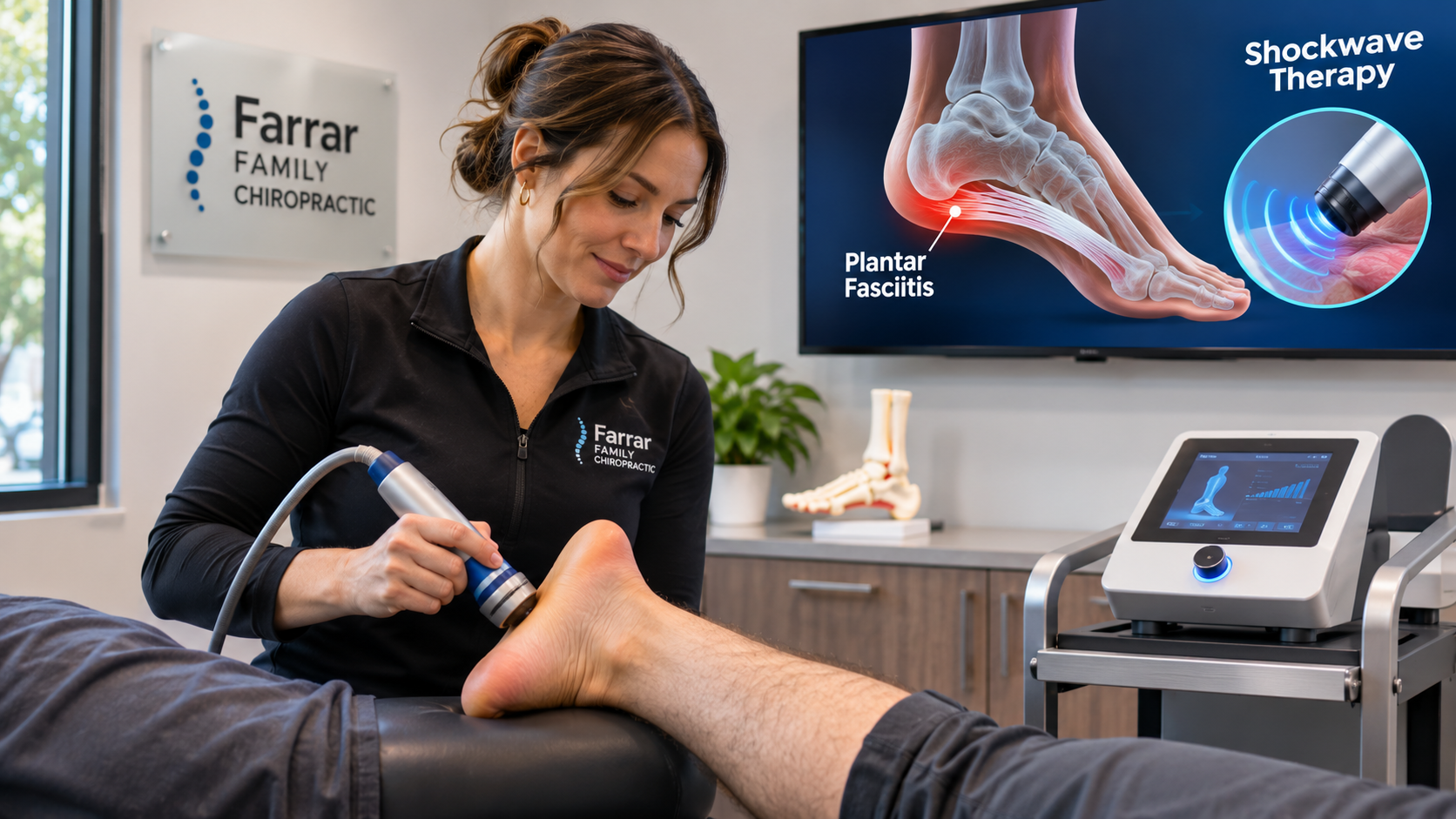
Tendon pain has a way of sneaking up on you. It starts as a small ache on the outside of your elbow after a long weekend of pickleball, or a twinge at the front of your knee after leg day. You ignore it. Then one morning you cannot lift a coffee mug or walk down the stairs without wincing, and suddenly it has been three months. If that sounds familiar, you are probably wondering whether there is anything beyond rest and ibuprofen that can actually help. That is often the moment people start reading about shockwave therapy in Plano.
In my experience researching sports and overuse injuries, tendon problems are some of the most misunderstood. People treat them like a bruise that should heal on its own, when in reality chronic tendon pain often behaves very differently. Understanding that difference is the first step toward choosing the right care.
In this article, I want to explain why tendons get stuck, which tendon problems tend to respond to focused shockwave therapy, what treatment involves, and how to build a plan that gets you back to your sport or your job. I will be honest about the limits too, because a realistic plan is the one that works.
Why Tendons Are So Slow to Heal
Tendons connect muscle to bone. They are strong, rope-like structures designed to transfer force every time a muscle contracts. Think of the tendon at the outside of your elbow when you grip a racket, or the tendon below your kneecap when you land from a jump.
Tendons have a relatively limited blood supply compared with muscle. That means they get fewer nutrients and repair cells, and they heal more slowly. When you load a tendon repeatedly, faster than it can adapt, tiny areas of damage build up. If the load continues, the tendon can shift from a short-term irritation into a longer-term, degenerative problem called tendinopathy.
This is where a lot of people get stuck. They rest until it feels better, go back to the same activity, and the pain returns. Or they push through, and the pain keeps building. Either way, the tendon never gets the right mix of stimulus and recovery to heal.
How to Tell Tendon Pain From Joint or Nerve Pain
One of the reasons tendon problems linger is that people misread them. Tendon pain, joint pain and nerve pain can all show up in the same general area, but they behave differently, and they need different care.
Tendon pain is usually felt at a specific spot, often where the tendon attaches to bone. It tends to hurt when you use the muscle connected to it, such as gripping for tennis elbow or jumping for jumper's knee. It is often stiff in the morning or at the start of activity, eases as you warm up, and then aches afterward.
Joint pain is usually felt deeper inside the joint. It may come with swelling, clicking, locking or a feeling that the joint is giving way. It often hurts with weight bearing or certain joint positions rather than with a specific muscle contraction.
Nerve pain tends to burn, tingle or shoot. It may travel along the arm or leg, cause numbness, or come with weakness. Elbow or shoulder pain that comes with tingling in the fingers, for example, may involve a nerve in the neck or arm rather than a tendon.
These are general patterns, not a way to diagnose yourself. Many people have more than one issue at once. That is exactly why a thorough exam matters before starting shockwave therapy in Plano. When the provider knows which tissue is actually driving your pain, they can aim treatment at the right target, choose the right exercises, and tell you if another type of care would serve you better.
If your symptoms include tingling, numbness, or pain that travels from the neck into the arm, mention it clearly at your visit. The plan for a nerve problem looks quite different from the plan for a tendon, and getting that distinction right early saves weeks of frustration. A provider offering shockwave therapy in Plano should be comfortable telling you when shockwave is not the right tool and pointing you toward what is.
The Tendon Problems I Hear About Most
Farrar Family Chiropractic's shockwave page lists a wide range of conditions. These are the tendon and overuse problems that come up most often for active people and hands-on workers.
Tennis elbow (lateral epicondylitis)
Pain on the outside of the elbow, especially when gripping, lifting or turning a doorknob. Despite the name, most people with tennis elbow do not play tennis. The American Academy of Orthopaedic Surgeons explains what causes tennis elbow and who is most at risk, noting that most people who get it are between the ages of 30 and 50 and that painters, plumbers and carpenters are particularly prone to it.
Golfer's elbow (medial epicondylitis)
Similar to tennis elbow, but on the inside of the elbow. It often shows up with gripping, throwing or repetitive wrist bending.
Rotator cuff tendonitis and shoulder pain
An ache at the front or side of the shoulder that gets worse when reaching overhead, sleeping on that side, or lifting. Common in swimmers, tennis players, lifters, and people who work with their arms raised.
Frozen shoulder
Stiffness and pain that steadily limits how far the shoulder can move. It needs careful evaluation, since its course and treatment differ from tendonitis.
Patellar tendonitis (jumper's knee)
Pain just below the kneecap, often in people who jump, run hills or do a lot of squatting. Basketball and volleyball players know it well.
Achilles tendinopathy
Pain and stiffness at the back of the heel or lower calf, often worst in the morning or at the start of a run.
Hip pain and bursitis
Pain at the outside of the hip, often worse when lying on that side or climbing stairs.
Trigger points and chronic muscle tightness
Knotted, tender areas in muscles that refer pain elsewhere and refuse to release with stretching alone.
How Focused Shockwave Therapy Helps Tendons
Shockwave therapy uses focused acoustic energy delivered through a handheld applicator into the injured tissue. Farrar describes its Pulse Wave system as a non-invasive, regenerative treatment with adjustable depth, so the provider can control how far the energy reaches.
According to the clinic, the treatment is designed to:
- Break up scar tissue and adhesions
- Stimulate circulation and nutrient delivery
- Activate cellular repair mechanisms
- Reduce chronic inflammation
- Improve tissue mobility and flexibility
- Accelerate recovery from stubborn injuries
For tendons in particular, the circulation and repair pieces matter most. Remember that tendons heal slowly partly because of their limited blood supply. The idea behind shockwave therapy in Plano, and anywhere else it is offered, is to give a stalled tendon a fresh stimulus to restart repair.
I want to be careful here. This is the reasoning behind the treatment, not a promise. Results vary from person to person, and a good provider will tell you that up front.
Why "focused" matters for tendons
Farrar's FAQ explains that focused shockwave targets a specific depth and location, while radial shockwave spreads energy over a broader area and may not penetrate as deeply. Tendon problems are often very specific: the exact spot where the elbow tendon attaches to bone, or a small section of the patellar tendon. Being able to aim the energy at that spot, at the right depth, is a big part of why focused systems are used for these injuries.
What Treatment Looks Like
Here is what Farrar describes for a typical session of shockwave therapy in Plano:
- A handheld applicator is placed against the treatment area.
- Focused pulse waves are delivered into the affected tissue.
- Sessions typically last 10 to 15 minutes.
- Treatments are generally well tolerated, and most patients need no downtime.
You will feel a tapping or pulsing sensation. Over a tender tendon, it can feel uncomfortable at times, but the provider can adjust the intensity. Most people head straight back to work afterward.
How many sessions
Farrar's FAQ says most people see improvement with the first session, and that healing requires 6 to 12 treatments, with a personalized plan. The number depends on the condition, how severe it is, and how your body responds.
For athletes and workers starting shockwave therapy in Plano, I always suggest asking how sessions will be spaced around your training or shifts. Consistency matters more than squeezing sessions in whenever there is a gap.
Why Athletes and Workers Are Often Good Candidates
Farrar lists the people shockwave therapy may help, and two groups stand out for tendon problems:
- Athletes with overuse injuries, tendon strain or performance-limiting pain
- Workers with repetitive strain injuries
The list also includes active adults with persistent injuries, people with chronic soft tissue pain who have already tried rest, stretching or conservative care, and anyone looking for a non-invasive way to support healing.
In my experience, the people who tend to do best with shockwave therapy in Plano share a few traits:
- Their pain has a clear tendon pattern that a provider can pinpoint on exam.
- Their symptoms have lasted beyond a few weeks and have not responded to rest alone.
- They are willing to adjust their training or work load for a while.
- They commit to the strengthening program that goes with treatment.
That last point is the one that makes or breaks recovery.
Shockwave Is the Spark, Loading Is the Fuel
Here is the single most important idea in this article. Tendons heal and get stronger when they are loaded in the right way. Too little load and they weaken. Too much and they flare. The sweet spot is gradual, progressive loading.
Shockwave therapy in Plano can help restart the healing process, but the tendon still needs to be trained back to strength. That is why Farrar says shockwave is rarely used alone and is combined with chiropractic care, rehabilitation and other therapies when appropriate.
A typical tendon plan might look like this:
- Shockwave sessions to stimulate repair in the stalled tendon
- Progressive strengthening, often starting with slow, controlled exercises and building up over weeks
- Load management, temporarily reducing the activities that aggravate the tendon without stopping all activity
- Mobility work for the joints above and below the injury
- Technique changes, such as grip, racket setup, lifting form or workstation adjustments
For many people, chiropractic care in Plano and McKinney is part of that mix, especially when stiffness in the neck, upper back or hips is changing how load reaches the elbow, shoulder or knee.
Why the whole chain matters
A sore elbow is not always just an elbow problem. A stiff upper back and rounded shoulders change how your arm moves, putting extra load on the elbow and shoulder tendons. Tight hips and weak glutes change how your knee tracks, putting more strain on the patellar tendon. A provider who looks at the whole chain will usually find more ways to take pressure off the injured tendon.
Sport-Specific Tips
Pickleball and tennis players
- Check your grip size; a grip that is too small or too large can overload forearm tendons.
- Avoid sudden jumps in playing time, especially tournament weekends after quiet weeks.
- Work on shoulder and upper back strength so the elbow is not doing all the work.
- Ease back into play gradually after treatment, starting with shorter sessions.
Runners
- Increase mileage and hill work gradually.
- Pay attention to Achilles and knee tendons after speed sessions.
- Strengthen calves, quads and hips, not just your cardio.
Lifters and CrossFit athletes
- Watch for elbow and shoulder pain during pulling and pressing movements.
- Adjust volume and grip width during flare-ups rather than stopping training entirely.
- Build tendon capacity with slower tempo work.
Basketball and volleyball players
- Monitor the patellar tendon after jumping-heavy weeks.
- Strengthen quads and hips with controlled exercises.
- Plan recovery days around tournaments.
Tips for Hands-On Workers
People who work with their hands and arms all day, such as painters, plumbers, carpenters, mechanics, cooks and hair stylists, often develop elbow and shoulder tendon problems. A few habits help:
- Vary your grip. Switch hands or tools when possible to share the load.
- Use the right tool size. Handles that are too thin or too thick strain forearm tendons.
- Take micro-breaks. Short pauses to open and close your hands and roll your shoulders add up.
- Keep work close. Reaching far from your body increases load on shoulder tendons.
- Strengthen outside of work. A few minutes of forearm and shoulder exercises a few times a week builds resilience.
These changes will not replace treatment, but they make any plan, including shockwave therapy in Plano, far more effective.
A Sample Recovery Outline for Chronic Tendon Pain
Plans should always be built around your exam, but it helps to picture what a structured recovery can look like. Here is a general outline I use when explaining tendon care to friends. It is a template, not a prescription.
Weeks 1 to 2: Calm and assess
- Begin shockwave therapy in Plano sessions as recommended by your provider.
- Reduce the activities that flare the tendon, without stopping all movement.
- Start gentle, pain-tolerable exercises, often slow holds or controlled movements.
- Track your pain with a simple 0 to 10 score each morning and after activity.
Weeks 3 to 5: Build load
- Continue shockwave sessions on schedule.
- Progress strengthening exercises with more resistance or slower tempo.
- Add mobility work for the joints above and below the injury.
- Reintroduce parts of your sport or work tasks in small doses.
Weeks 6 to 8: Return and protect
- Shockwave sessions may taper as symptoms improve.
- Build toward full training or work load gradually.
- Keep a maintenance strength routine two or three times a week.
- Watch for early warning signs and adjust load before pain builds.
The exact timeline varies, and some tendons take longer. The pattern, though, is consistent: calm the tendon, load it progressively, and return gradually. When people with tendon pain tell me shockwave therapy in Plano did not work for them, the missing piece is very often the loading program.
Tendon Pain Myths I Hear All the Time
"Rest will fix it." Rest can calm a flare, but tendons need load to remodel and get stronger. Long periods of complete rest often leave the tendon weaker than before.
"If it hurts, stop everything." Mild, manageable discomfort during rehab is often acceptable. Sharp pain or pain that is worse the next day is a sign to adjust. Your provider can help you find the line.
"It is just inflammation, so anti-inflammatories should work." Long-standing tendon pain often involves stalled healing and changes in the tendon structure, not just inflammation. That is one reason medication alone may not solve it.
"One treatment should be enough." Tendon remodeling takes weeks. Even when the first sessions bring relief, a full plan is usually needed for lasting change.
"A brace will heal it." Braces and straps can reduce strain during activity, but they do not rebuild tendon strength.
Desk Workers Get Tendon Pain Too
It is not only athletes and tradespeople. Many office workers around Plano develop elbow, wrist and shoulder tendon pain from hours of mouse work, typing and reaching for a laptop. The repetitive, low-level strain adds up over months.
If you work at a desk, a few adjustments can help: keep the mouse close to your body, support your forearm on the desk, set your screen at eye level so your shoulders stay relaxed, and take short movement breaks every 30 to 45 minutes. If pain persists despite those changes, an evaluation for shockwave therapy in Plano and a strengthening plan may be worth considering.
What Realistic Progress Looks Like
Tendon recovery is rarely a straight line. In my experience, it tends to follow a pattern:
Early phase. Pain during daily tasks begins to ease. Morning stiffness may soften. Some people feel a change after the first few sessions, while others need more time.
Middle phase. You can do more before pain shows up. Strengthening exercises become easier. You start returning to parts of your sport or work with less discomfort.
Late phase. The focus shifts to full return and preventing the next flare. Training load builds back up gradually.
It is normal to have a flare after a busy day or a hard game. What matters is the overall trend across weeks. If the trend is flat or getting worse, your provider should reassess.
When to See a Medical Doctor
Some tendon symptoms need medical attention before any conservative care:
- A sudden pop followed by weakness or a visible change in shape, which may signal a tear
- Inability to lift your arm or straighten your knee
- Severe swelling, bruising or heat around a joint
- Fever or feeling unwell along with joint pain
- Numbness or tingling spreading into the hand or foot
These need a proper medical evaluation, and possibly imaging, before deciding on treatment.
Comparing Shockwave With Other Tendon Treatments
To decide whether shockwave therapy in Plano fits your situation, it helps to understand the alternatives.
Rest and anti-inflammatory medication. These can calm an early flare. They tend to be less helpful for long-standing tendinopathy, because the problem is more about stalled healing than simple inflammation.
Bracing. A forearm strap or knee strap can reduce strain during activity. It is a support tool, not a fix.
Steroid injections. Given by medical doctors, injections can reduce pain in the short term for some people. They should be discussed carefully with a physician.
Exercise-based rehab. Progressive loading is a cornerstone of tendon care. It works well on its own for many people and pairs naturally with shockwave.
Surgery. Reserved for a small number of cases that do not respond to long-term conservative care.
Farrar's FAQ frames the difference this way: shockwave aims to stimulate healing at the source, unlike medications or injections that mainly manage symptoms. In practice, the best plans often combine approaches.
Questions to Ask at Your Evaluation
Before starting shockwave therapy in Plano, bring these questions:
- Which tendon is involved, and is it irritated or degenerative?
- Is there any sign of a tear that needs imaging?
- Why is shockwave a good fit for my injury?
- How many sessions do you expect, and how will they fit around my training or work?
- What strengthening program will go with treatment?
- Do I need to change my technique, equipment or workstation?
- How will we measure progress?
- What is the plan if I am not improving?
Where to Get Evaluated Locally
Farrar Family Chiropractic offers focused shockwave therapy at two offices. The Plano office is at 6300 Stonewood Dr, Suite 100, Plano, TX 75024, and the McKinney office is at 8400 Stacy Rd, Suite 400, McKinney, TX 75070. Both list hours Monday to Thursday from 8 am to 6 pm and Friday from 8 am to 12 pm.
My Honest Take on Shockwave Therapy in Plano
After spending a lot of time studying how tendons heal, here is my view. Shockwave therapy in Plano is not a shortcut that lets you skip the hard work. It is a tool that can help a stalled tendon start healing again, and it works best when paired with smart loading, strength training and changes to the habits that caused the problem.
If you have tendon pain that has dragged on for months, has not responded to rest, and keeps pulling you away from your sport or your job, it is worth a serious conversation. Get a clear diagnosis, understand the plan, and commit to the strengthening work. That combination is what gets people back to doing what they love.
Frequently Asked Questions
1. Can shockwave therapy in Plano help tennis elbow?
Tennis elbow is one of the upper body conditions Farrar lists for focused shockwave therapy. It is usually considered when elbow pain has lasted for months and has not improved with rest or basic care.
2. Is shockwave therapy good for rotator cuff pain?
Rotator cuff tendonitis and shoulder pain are among the conditions Farrar evaluates for shockwave care. An exam is needed first to rule out a significant tear or other problems that need imaging.
3. Can shockwave help jumper's knee?
Patellar tendonitis, also called jumper's knee, appears on Farrar's list of knee and leg conditions. It is often combined with progressive strengthening for the quads and hips.
4. How long is a shockwave session?
Farrar's clinic lists sessions at 10 to 15 minutes. Your total visit may be longer if rehab exercises or other therapies are part of the same appointment.
5. How many treatments do tendon injuries usually need?
The clinic's FAQ says healing requires 6 to 12 treatments, with a personalized plan. Some people notice improvement after a few visits, while others need the full course.
6. Can I keep training during shockwave treatment?
Many people keep training with adjusted volume or modified exercises. Your provider should guide you on which activities to reduce and how to build back up safely.
7. Does shockwave therapy replace exercise rehab?
No. Shockwave can help restart healing, but tendons still need progressive loading to get stronger. Farrar notes that shockwave is rarely used alone and is combined with rehab and other care.
8. Is there downtime after shockwave therapy?
Farrar states that most patients require no downtime after treatment. Most people return to work right away, though hard training may be adjusted for a short time.
9. Who is most likely to get tennis elbow?
The American Academy of Orthopaedic Surgeons notes that most people who develop tennis elbow are between 30 and 50, and that painters, plumbers and carpenters are particularly prone to it.
10. When should tendon pain be checked by a medical doctor?
Seek medical care for a sudden pop followed by weakness, inability to lift your arm or straighten your knee, severe swelling or bruising, fever, or spreading numbness or tingling.

 Arabic
 French
 Spanish
 Portuguese
 Deutsch
 Turkish
 Dutch
 Italiano
 Russian
 Romaian
 Portuguese (Brazil)
 Greek