


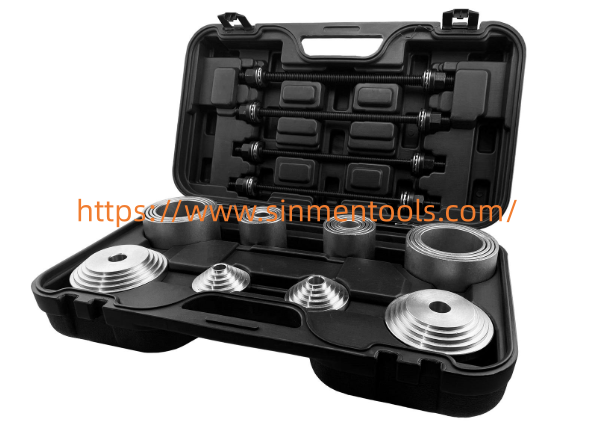
Suspension systems help vehicles respond to changing road conditions while maintaining a stable connection between the wheels and the vehicle body. During certain repair procedures, technicians need to manage the tension stored within suspension springs before removing or servicing related components. A Coil Spring Compressor is designed for this specialized task, providing a mechanical way to hold and compress a spring during maintenance. Its construction, operating mechanism, and contact design all influence how effectively it supports a controlled repair process.
Material quality is especially important because spring compression equipment operates under demanding mechanical conditions. The main structural sections must resist deformation while maintaining secure contact with the spring. Steel is commonly used in these tools because it offers a suitable combination of strength, rigidity, and manufacturing versatility. The choice of material should reflect the stresses associated with the intended application rather than simply the appearance or weight of the finished product.
Manufacturing quality also affects the reliability of individual components. Threads, hooks, retaining sections, and connecting parts need careful processing so that they work together as intended. A well-finished surface can help reduce friction in moving sections, while suitable protective treatments may help the tool withstand ordinary workshop exposure. Buyers should pay attention to these details because the condition of the working surfaces influences both handling and long-term usability.
Selecting suitable equipment begins with understanding the suspension design being serviced. Different vehicles may use different spring arrangements and suspension layouts. The available working space, spring shape, and position of surrounding components can all influence which compression tool is appropriate. Buyers should identify the intended application before making a purchase and review the manufacturer's guidance on compatible suspension systems.
The tool's engagement structure deserves particular attention. Some designs use paired hooks or gripping sections that hold the spring from different positions, while other configurations are developed for specific spring arrangements. The contact points should fit the spring securely and remain correctly positioned during the operation. A design that does not match the spring's shape or working environment may be difficult to use and could introduce unnecessary movement.
Ease of adjustment is another factor worth evaluating. Technicians need to position the equipment carefully before beginning compression, so accessible adjustment mechanisms can make preparation more convenient. Buyers should consider how the tool is installed, how its working sections are secured, and whether the operating process is clearly explained. Product descriptions that identify intended applications and safety requirements can help purchasers make more informed decisions.
The mechanical function of spring compression equipment depends on transferring force through a stable structure. Depending on the design, compression may be produced through a threaded mechanism or another controlled mechanical arrangement. The purpose is to bring the spring into a manageable condition so that related suspension components can be serviced according to the appropriate repair procedure. The mechanism must support consistent movement while keeping the spring properly engaged.
Balance and alignment are essential throughout the process. If gripping sections are positioned unevenly, the spring may not remain stable as compression takes place. Technicians should follow the equipment manufacturer's instructions, check that all contact points are properly secured, and avoid operating tools that show visible damage or wear. Because suspension springs store substantial energy, this work requires suitable training, appropriate equipment, and careful attention to established workshop safety procedures.
The user experience of a compression tool is shaped by more than its basic mechanical function. Technicians also consider how easily it can be positioned, adjusted, inspected, and removed after the maintenance task. A practical layout can reduce unnecessary handling and make the working sequence easier to understand. Clearly arranged components may also help users identify the correct contact areas before starting an operation.
Maintenance after use contributes to dependable workshop routines. Dirt, lubricant residue, and surface contamination should be removed according to the manufacturer's care recommendations. Threads and gripping sections deserve particular attention because accumulated debris or visible damage may affect their operation. Regular inspection can help identify worn components, loose connections, or surface deterioration before the equipment is used again.
Storage is another part of the overall experience. Spring compression equipment should be kept in a designated location where its working sections are protected from accidental impact and unnecessary contamination. An organized storage arrangement makes specialized tools easier to locate and helps workshops keep maintenance equipment separate from general hand tools. For repair facilities handling different suspension systems, clear equipment organization can support smoother preparation.
The appearance of this equipment should communicate its practical purpose. A well-arranged structure makes the gripping sections, adjustment mechanism, and supporting components easier to recognize. Clean surface finishing and a balanced layout can also reflect attention to manufacturing consistency. Although appearance is not a substitute for suitability or safe operation, functional design can make the tool easier to inspect and understand.
Taizhou Xinming Technology Co., Ltd. provides automotive maintenance equipment for workshops and repair professionals, including tools developed for suspension-related service operations. When reviewing its product range, buyers can consider the spring types they commonly encounter, the working structure of the equipment, material finishing, and the manufacturer's application guidance. These considerations help connect purchasing decisions with actual workshop requirements. Further product information is available at https://www.sinmentools.com/.

 English
 Arabic
 Spanish
 Portuguese
 Deutsch
 Turkish
 Dutch
 Italiano
 Russian
 Romaian
 Portuguese (Brazil)
 Greek