


Managing rental properties successfully requires more than knowing how much rent tenants pay. Landlords and property managers must understand the relationship between rental income, operating expenses, outstanding balances, and the actual profitability of each property. Without reliable financial records, even a fully occupied building can present an incomplete picture of investment performance.
A Property Accounting Software in Dubai helps organize these financial activities by connecting rental transactions with expense records and property-level accounting information. It allows real estate businesses to distinguish expected income from collected rent, monitor expenditure, and evaluate operating results more accurately. For property owners, investors, and management companies, understanding how to track these financial elements is essential for maintaining profitable and well-managed rental portfolios.
Understanding the Relationship Between Rent, Expenses, and Property Profitability
Rental income, property expenses, and profitability are closely related, but they represent different financial measurements.
Rental income refers to revenue earned from leasing a property, while operating expenses include the costs associated with maintaining and managing that asset. Property profitability measures the financial results after considering the relevant income and expenditure.
For example, a residential property may maintain stable occupancy but experience increasing maintenance costs. Although rental revenue remains consistent, its operating profitability may decline.
A structured real estate accounting system helps businesses examine these financial elements separately before evaluating how they affect overall property performance.
This distinction is particularly important when comparing multiple investment properties.
1. Establish Accurate Rental Income Records
The first step toward understanding rental performance is maintaining dependable income records.
Every tenancy agreement establishes rental obligations, installment schedules, and contractual conditions. Accountants need to record these details consistently so they can distinguish rent expected during an accounting period from payments already received.
A dedicated rental income tracking system associates financial obligations with individual tenants and rental units.
When a lease is renewed or its terms are amended, the relevant financial records should reflect the approved contractual changes.
For Dubai rental properties, maintaining accurate post-dated cheque information may also be important. The existence of a cheque does not necessarily mean the payment has cleared, so collection status should remain identifiable.
These records provide the foundation for monitoring rental income without confusing contractual receivables with actual cash availability.
2. Monitor Outstanding Rent and Collection Performance
Recording rental income alone does not explain whether tenants are meeting their financial obligations.
Outstanding rent can affect available cash and make it difficult for property owners to plan operating commitments. Property managers should therefore review overdue balances separately from current rental charges.
An accounts receivable aging report can help identify how long amounts have remained unpaid and which accounts require attention.
The collection rate is another useful measurement. It compares rental payments received with the amounts due during a defined period, provided both figures use a consistent basis.
Tracking these indicators helps businesses identify collection patterns and investigate unusual account balances.
For companies administering several buildings, comparing receivables by property can reveal whether particular assets require additional collection oversight.
3. Record Property Expenses Under the Correct Categories
Property profitability cannot be measured accurately unless expenses are properly classified.
Common operating expenses include routine maintenance, cleaning, utilities, insurance, contractor services, and other costs required to maintain rental properties.
A property expense management system helps accountants assign expenditure to the relevant asset and accounting category.
It is also important to distinguish routine operating expenses from capital improvements. For example, regular servicing and a major equipment replacement may require different accounting treatment under the applicable financial policies.
Accurate classification prevents ordinary maintenance costs from being confused with expenditures that should receive separate accounting consideration.
Organized expense records also help property managers understand which activities contribute most significantly to operating costs.
4. Connect Maintenance Costs with Financial Performance
Maintenance records become particularly valuable when they are reviewed alongside property accounting information.
A building experiencing recurring plumbing problems may generate higher repair expenditure than a similar property with fewer technical issues. Without historical cost information, management may struggle to recognize the pattern.
A connected property maintenance accounting process helps associate repair-related invoices with the relevant building or rental unit.
This allows property owners to examine the financial impact of repeated maintenance activities and discuss possible operational improvements with technical teams.
Rather than treating each repair as an isolated expense, businesses can review maintenance trends over time.
The objective is to support responsible maintenance planning while protecting the long-term condition of the asset.
Key Financial Features for Tracking Rental Property Performance
A suitable property accounting platform should provide access to the information needed for reliable performance analysis.
Important capabilities include:
-
Income tracking: Tenant ledgers, lease-related receivables, rental collection histories, and outstanding balance reports.
-
Expense accounting: Property-specific cost categories, supplier invoices, maintenance expenditure, and accounts payable.
-
Financial analysis: General ledger records, income and expense statements, bank reconciliation, and property-level financial reporting.
These functions are most effective when businesses maintain consistent accounting periods, property references, and financial classifications.
5. Calculate Property Operating Profit Correctly
Understanding profitability requires more than subtracting a few visible bills from collected rent.
One useful property performance measurement is Net Operating Income (NOI), which generally represents property operating revenue minus the operating expenses attributable to the property, before financing costs, income taxes, depreciation, and other excluded items.
NOI helps owners evaluate how effectively an asset generates income through its operations.
However, it is different from accounting net profit and cash flow. Financing arrangements, capital expenditure, depreciation, and tax obligations can affect those measurements differently.
A property profitability reporting system helps organize the income and expense information required for these calculations.
Owners should apply consistent accounting definitions when comparing different properties to avoid misleading conclusions.
6. Review Financial Performance Across Accounting Periods
A property's financial performance should not be evaluated using a single reporting period.
Rental income may fluctuate because of vacancies, tenancy changes, or collection delays. Expenses may also vary depending on maintenance schedules and seasonal operating requirements.
Comparing financial records across several periods helps management distinguish temporary changes from longer-term trends.
For example, an increase in repair expenditure during one month may reflect planned maintenance rather than a persistent operational problem.
A consistent property income and expense reporting process makes these patterns easier to examine.
Businesses should review changes alongside tenancy activity, maintenance information, and accounting records before drawing conclusions.
7. Understand the Difference Between Profit and Cash Flow
Property owners sometimes assume that a profitable rental property will always have sufficient cash available for operating commitments.
However, accounting profit and cash flow measure different aspects of financial performance.
A property may recognize rental income while some tenant balances remain unpaid. Conversely, certain cash payments may relate to expenses or obligations recognized in another accounting period.
Cash-flow management focuses on money received and paid, while accrual-based accounting considers when income is earned and expenses are incurred.
Maintaining both perspectives helps landlords understand the financial position of their investments more accurately.
Regular bank reconciliation provides additional confidence that recorded cash activity agrees with actual banking records.
8. Use Property-Level Reports to Compare Investment Assets
Investors managing multiple properties need to understand how individual assets contribute to overall portfolio performance.
A company may own residential apartments, commercial offices, and retail units with different cost structures and rental arrangements.
Comparing only total rental revenue can be misleading because operating expenditure and occupancy conditions may vary considerably.
A multi-property financial reporting system helps maintain separate income and expense information for individual assets.
Property managers can use these records to review operating margins, investigate cost differences, and identify areas requiring closer financial attention.
Consistent reporting also helps owners avoid combining unrelated expenses when examining portfolio performance.
How DarERP Fits into Property Financial Management
Tracking property profitability requires reliable underlying accounting records rather than isolated spreadsheets or estimates.
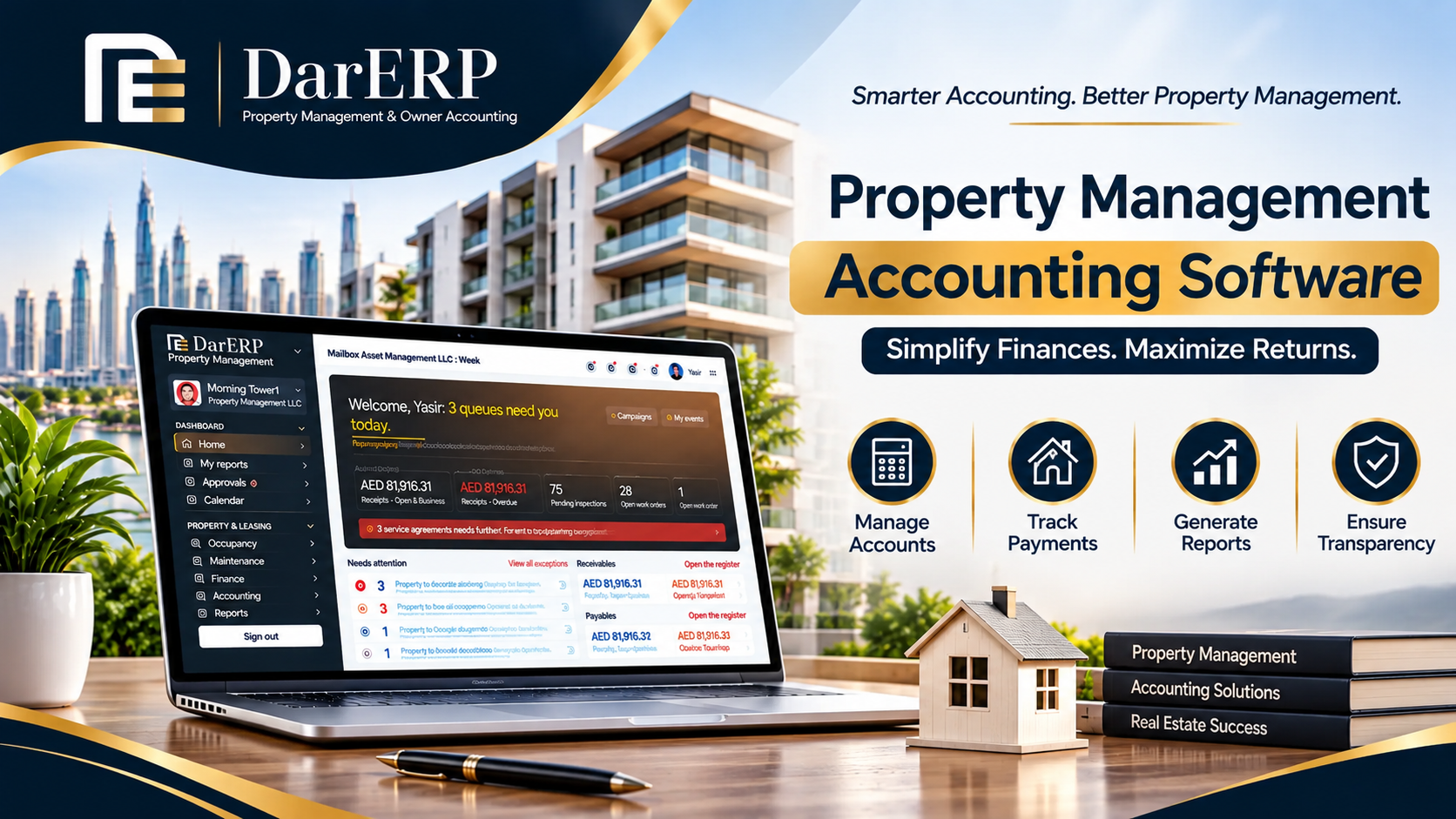
DarERP UAE brings property administration together with financial functions such as general ledger, accounts receivable, accounts payable, and bank and cash management.
These capabilities are relevant when real estate businesses need to maintain rental-related transactions and operating expenses within an organized accounting environment.
For example, a finance team reviewing property expenditure can use properly classified accounting entries to investigate changes in operating costs. Accurate tenant and financial records also provide the information needed to examine rental receivables.
The usefulness of any platform ultimately depends on correct configuration, reliable source information, and consistent accounting procedures.
Common Mistakes When Tracking Property Profitability
One common mistake is treating all rental amounts due as money already received. This can create unrealistic expectations about available cash and collection performance.
Another error is omitting certain operating expenses when reviewing profitability. Maintenance, insurance, management charges, and other relevant costs should be considered according to the purpose of the report.
Property owners should also avoid comparing financial results from different periods without accounting for vacancy changes or unusual expenditure.
Finally, capital expenditure, financing costs, and refundable deposits should not be classified automatically as ordinary operating expenses.
Correct financial classifications are necessary for meaningful property performance analysis.
How to Build a Reliable Property Financial Tracking Process
Effective financial tracking begins with complete and accurate information.
Businesses should maintain current tenancy records, regularly review receivables, classify operating expenses consistently, and reconcile accounting entries with supporting financial documents.
Property-level reports should be reviewed periodically to identify unusual changes in income or expenditure.
Accountants and property managers should also communicate when operational activities affect financial records, particularly during major maintenance work or tenancy changes.
A consistent review process helps ensure that financial information remains useful for ongoing management decisions.
Final Thoughts
Understanding rental property performance requires a clear picture of income, expenses, receivables, and operating results.
Property Accounting Software in Dubai helps landlords and real estate management companies organize these financial elements through structured tenant records, expense classifications, accounting reports, and reconciliation procedures.
Accurate profitability analysis also requires distinguishing operating income from cash flow and considering the appropriate financial treatment of different transactions.
For Dubai property owners and investors, combining suitable accounting technology with reliable financial practices can provide a stronger foundation for monitoring investment performance and making informed property management decisions.
Frequently Asked Questions
1. How can property accounting software track rent, expenses, and profits?
Property accounting software helps maintain rental income records, tenant receivables, property-specific expenses, and financial reports. These records provide the information required to evaluate operating performance and monitor financial changes across rental properties.
2. What is the difference between rental income and property profit?
Rental income represents revenue earned from leasing a property. Property operating profit considers the relevant operating expenses associated with generating that income. Other measures, such as accounting net profit and cash flow, may also reflect financing, tax, depreciation, or capital-related items.
3. Can property accounting software compare the profitability of multiple properties in Dubai?
Yes. Suitable property accounting systems can maintain separate income and expense records for different assets. When financial classifications and reporting periods are consistent, owners can use this information to compare operating performance across residential and commercial properties.

 English
 French
 Spanish
 Portuguese
 Deutsch
 Turkish
 Dutch
 Italiano
 Russian
 Romaian
 Portuguese (Brazil)
 Greek