


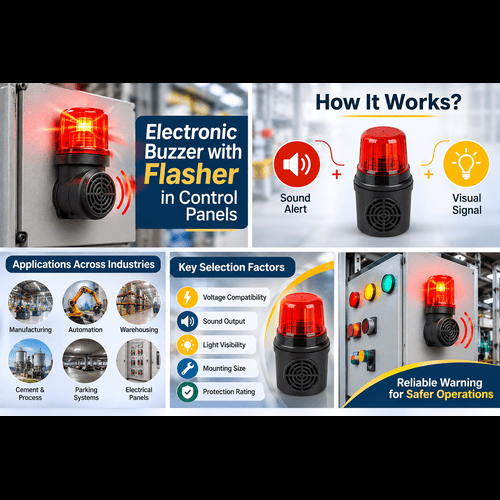
Industrial control panels are designed to manage electrical equipment, monitor operating conditions, and coordinate different processes. During normal operation, operators rely on indicators, switches, meters, and other signalling components to understand what is happening inside a system. When an unexpected condition occurs, however, a clear warning becomes important. This is where an Electronic buzzer with flasher becomes a useful component of an industrial signalling arrangement.
By combining an audible sound with a flashing visual indication, this device provides two ways to communicate an alert. Operators can hear the warning and notice the flashing light, even when they are concentrating on different activities. Its use in electrical panels and automation systems makes it a practical option for applications that require noticeable warning signals.
What Is an Electronic Buzzer with Flasher?
An Electronic buzzer with flasher is an electrical signalling device that combines a sound-producing mechanism with a flashing light. Both indications operate as part of the same warning arrangement.
When the device receives the appropriate electrical input, it produces an audible signal and activates its flashing indication. This makes it different from a conventional buzzer that provides sound alone.
The combined arrangement can be useful in environments where relying on only one type of warning may not be sufficient.
Main Functions of the Device
Some important functions include:
-
Producing an audible warning when activated.
-
Providing a flashing visual indication.
-
Helping operators recognize equipment-related alerts.
-
Supporting fault-warning arrangements in control panels.
-
Combining two signalling functions within one compact unit.
An Electronic buzzer with flasher can therefore be considered when designing a warning arrangement for electrical and industrial equipment.
Why Are Combined Warning Signals Important?
Industrial workplaces are not always quiet environments. Motors, compressors, conveyors, and other machinery can create continuous background noise. In such situations, a sound-only warning may not receive immediate attention.
Visual signals provide another way to communicate information. A flashing light can attract attention when an operator is looking towards the equipment or control panel.
Using both methods offers several practical advantages.
1. Better Alert Visibility
A flashing light makes the warning more noticeable from the visual side. Its effectiveness depends on the colour, brightness, installation position, and surrounding lighting conditions.
2. Audible Communication
The sound-producing function helps notify personnel who may not be directly looking at the panel.
3. Combined Indication
An Electronic buzzer with flasher provides sound and light through a single device, reducing the need to install separate components for these two functions.
4. Easier Fault Recognition
When connected to an appropriate control circuit, the device can indicate conditions that require operator attention.
Applications in Electrical and Automation Systems
The application of a warning device depends on the design of the equipment and the type of alert required.
Electrical Control Panels
Electrical control panels contain several components responsible for managing power distribution and equipment operation. Warning signals can help communicate abnormal conditions, such as faults or interruptions.
An Electronic buzzer with flasher can be included in these panels to provide audible and visual notification.
Industrial Automation Panels
Automated systems use controllers, sensors, relays, and other electrical devices to manage operations. When a programmed fault condition occurs, the control system can activate a suitable alarm circuit.
Manufacturing Machinery
Production machines may require warning indications when an operating condition needs inspection. Combined signals can help attract attention in areas where employees monitor several machines.
Parking and Material Handling Systems
Equipment such as car elevators and material handling installations may use audible and visual indications to communicate operating conditions.
Important Technical Factors Before Selection
Selecting an alarm component requires attention to its electrical and mechanical specifications.
Consider the following points:
-
Voltage compatibility: Match the rated input voltage with the control circuit.
-
Mounting size: Check the available panel cutout and installation space.
-
Sound output: Consider the surrounding noise level.
-
Light colour: Select an indication colour according to the intended signalling arrangement.
-
Environmental conditions: Check the enclosure protection rating and installation environment.
-
Wiring arrangement: Confirm terminal accessibility and suitable conductor requirements.
Mimic product literature describes its buzzer-cum-flasher range with different voltage options, coloured indications, and a 22.5 mm panel cutout. Exact specifications should be checked against the selected model.
How to Integrate It into a Control Panel
Before installation, the panel designer should identify the conditions that need to activate the alarm.
A typical arrangement may involve:
-
Identifying the machine or electrical fault condition.
-
Connecting the alarm circuit to the relevant control output.
-
Checking the device's operating voltage.
-
Providing suitable panel mounting space.
-
Testing the audible and visual indications.
-
Verifying that operators understand the warning signal.
An Electronic buzzer with flasher should be installed according to the manufacturer's instructions and the applicable electrical safety requirements.
Conclusion
Warning devices are an important part of industrial control and monitoring arrangements. Combining audible and visual indications gives operators an additional way to recognize equipment-related alerts. An Electronic buzzer with flasher can be considered for electrical panels, automated machinery, and other industrial installations where both forms of signalling are required.

 English
 French
 Spanish
 Portuguese
 Deutsch
 Turkish
 Dutch
 Italiano
 Russian
 Romaian
 Portuguese (Brazil)
 Greek