


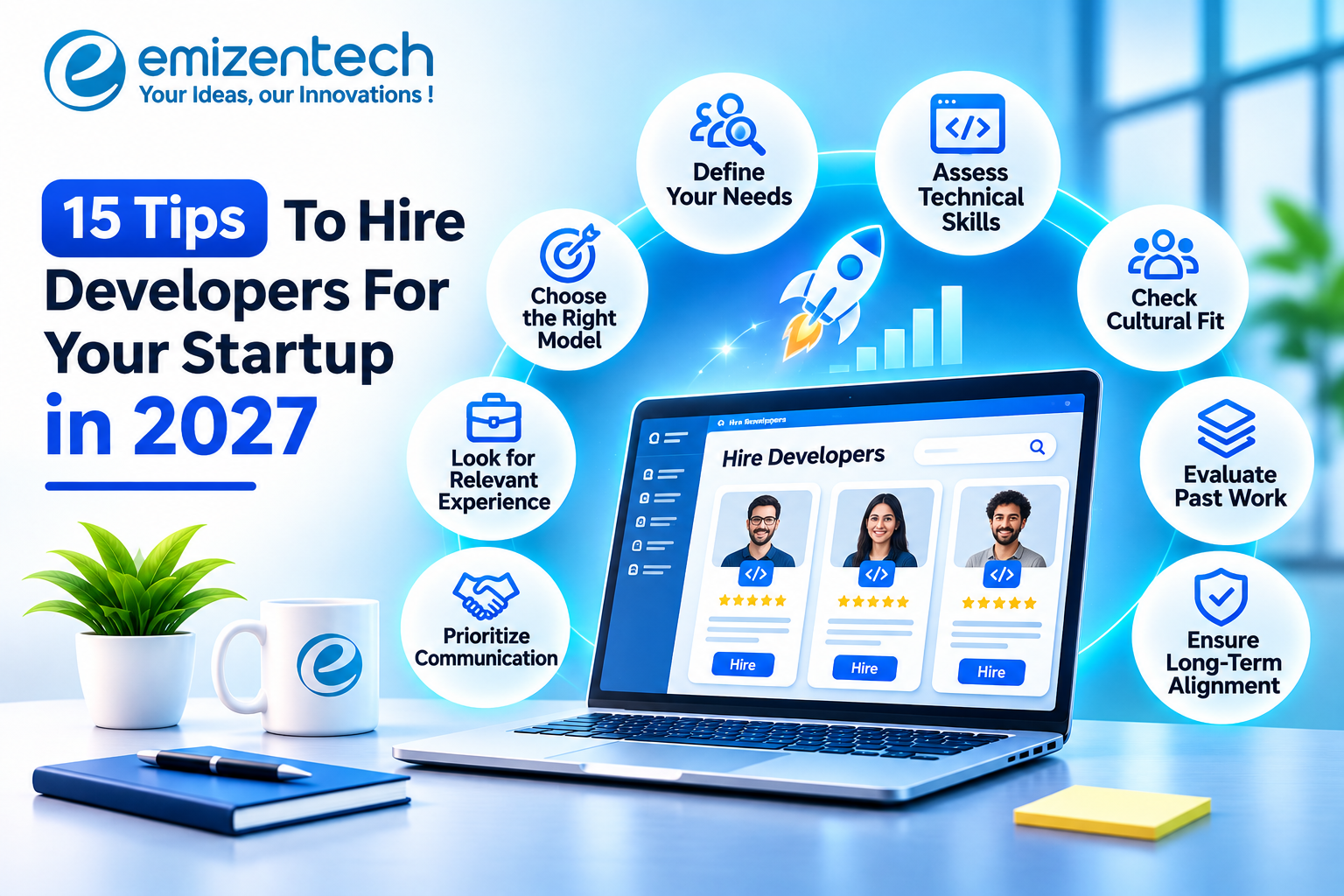
A startup rarely gets a second shot at its first few engineering hires. One wrong fit and the roadmap slips by a quarter, the runway gets shorter, and the founders end up rewriting code they never wanted to touch. Hiring in 2026 is also noisier than it used to be, since AI-assisted coding has blurred what "experienced" even means on a resume. The tips below are meant to keep the process practical, from the first job post to the first month on the team.
Why Startups Need a Different Hiring Approach
Large companies can absorb a weak hire. Startups can't. A team of four has no room for someone who needs constant direction, and a founder without a technical background has very few ways to judge code quality on their own. That is part of the reason some founders hire dedicated developers through a delivery partner for the first build instead of putting a team together one resume at a time. It is not the right move at every stage, and a long-term core team usually still needs direct hires, but it deserves a fair look before the first job ad goes live.
The tips that follow are listed roughly in the order a hiring process actually unfolds, so you can work through them from top to bottom.
15 Tips for Hiring Developers at a Startup
Not every tip will matter for every startup. A pre-MVP founder will care more about the early ones, while a funded team adding its fifth engineer will lean on the later ones. Read them as a checklist and skip what doesn't apply.
1. Write Down What the Product Needs First
Before talking to anyone, list the features, the platforms and the rough timeline. A developer can't be judged fairly against a vague brief. Even a one-page document with the core user flows and the preferred tech stack makes interviews sharper and saves everyone a few wasted calls.
2. Pick the Hiring Model Before the Candidate
Full-time employees, freelancers and dedicated teams all work, but for different situations. Employees suit long-term product ownership. Freelancers suit short, well-defined tasks. Dedicated teams suit a build that needs steady output without the overhead of recruiting. Settle this early, because it changes who you talk to.
3. Hire for the Stage You Are In
A pre-launch startup needs people who can ship with loose requirements. A scaling one needs people who care about structure and testing. Mixing these up is common. An engineer who thrives in a mature codebase can feel stuck in a messy prototype, and the reverse is just as true.
4. Write a Job Post That Sounds Human
Skip the copied list of twenty required skills. Say what the product does, what the first six months of work look like, and what the developer will own. Strong candidates read dozens of posts a week, and the ones that feel specific get replies.
5. Go Beyond Job Boards
Boards bring volume, not always quality. Referrals, GitHub profiles, developer communities and open-source contributors tend to surface people who already care about their craft. Ask your network directly, since a short introduction from someone trusted often beats a hundred cold applications.
6. Set the Budget Before the First Interview
Knowing your ceiling keeps you from falling for a candidate you can't afford. It also lets you compare regions and models honestly. Salaries differ a lot between the US, Europe and South Asia, so decide early whether remote or offshore talent belongs in the plan.
7. Use a Short, Paid Trial Task
A small, real task of a few hours tells you more than a whiteboard puzzle. Pay for it. Free take-home projects push away experienced people, and a paid one shows you how the developer reads requirements, asks questions and structures their work.
8. Ask About Past Decisions, Not Trivia
Questions like "why did you pick that database for that project?" reveal judgment. Memorized definitions don't. Listen for trade-offs, mistakes they admit to, and what they would do differently. Honest answers usually come from people who have actually built things.
9. Test How They Communicate
At a small company, unclear communication costs more than a missing skill. Notice whether the candidate explains technical points in plain language, answers what was asked, and flags problems early. A quiet developer who surfaces issues late can slow a team down more than a slower coder who speaks up.
10. Ask How They Use AI Tools
In 2026 almost every developer uses some form of AI assistance. The useful question is how. Good candidates review generated code, understand what it does and can explain it. Weak ones paste it and hope. Their answer tells you a lot about their standards.
11. Value Startup Experience, but Not Blindly
Someone who has worked in a young company usually handles ambiguity better. Still, a capable engineer from a larger firm can adapt well if they want the pace. Judge the attitude toward uncertainty and ownership rather than the logo on the resume.
12. Check References and Real Work
Talk to at least one former colleague or client. Look at live products, pull requests or shipped apps they contributed to. A portfolio that can't be explained in detail is a warning sign, so ask them to walk you through one project from start to finish.
13. Sort Out Ownership and Security on Day One
Put intellectual property assignment, confidentiality terms and access rules in writing before any code is shared. Give developers only the repository and environment access they need. These are boring tasks, yet skipping them is how startups end up in disputes later.
14. Move Fast, but Stay Honest About the Process
Good developers get several offers quickly, so a process that drags for a month loses people. Keep the steps few and the feedback prompt. At the same time, be straight about salary, equity, workload and the state of the codebase, since surprises after joining lead to early exits.
15. Plan the First Month Before They Start
Prepare accounts, documentation, a starter task and a named person they can ask questions. Set one clear goal for the first thirty days. New hires who ship something small in week one settle in faster, and you find out early whether the fit is real.
Conclusion
Hiring developers for a startup comes down to clarity, speed and honesty. Know what you are building, pick a model that fits your stage, test real work instead of trivia, and protect the company with proper agreements from the start. Founders who also have a mobile product in mind can speak with EmizenTech, a mobile app development company whose services include dedicated developer engagement for early builds. Whichever route you take, the best results usually come from treating hiring as part of the product, not a chore that sits beside it.
Frequently Asked Questions
How many developers does an early-stage startup usually need?
Most MVPs start with one to three engineers, depending on the platforms involved. A single full-stack developer can handle a simple web product, while a mobile app with a backend often needs a small team.
Is it better to hire freelancers or a dedicated team for an MVP?
Freelancers work for narrow tasks. A dedicated team suits a build that needs continuity, shared context and steady delivery over several months.
How long does hiring a developer usually take?
Direct hiring commonly takes four to eight weeks from the first post to an accepted offer. Working through a delivery partner can shorten this, since vetted developers are often available sooner.
What are the biggest red flags during a developer interview?
Vague answers about past projects, blaming former teams for everything, no questions about your product, and an inability to explain their own code are the usual ones.
Should a non-technical founder hire a CTO first?
Not always. Some founders bring in a technical advisor or a trusted outside team to review early hires and architecture decisions before committing to a full-time CTO.

 English
 French
 Spanish
 Portuguese
 Deutsch
 Turkish
 Dutch
 Italiano
 Russian
 Romaian
 Portuguese (Brazil)
 Greek