


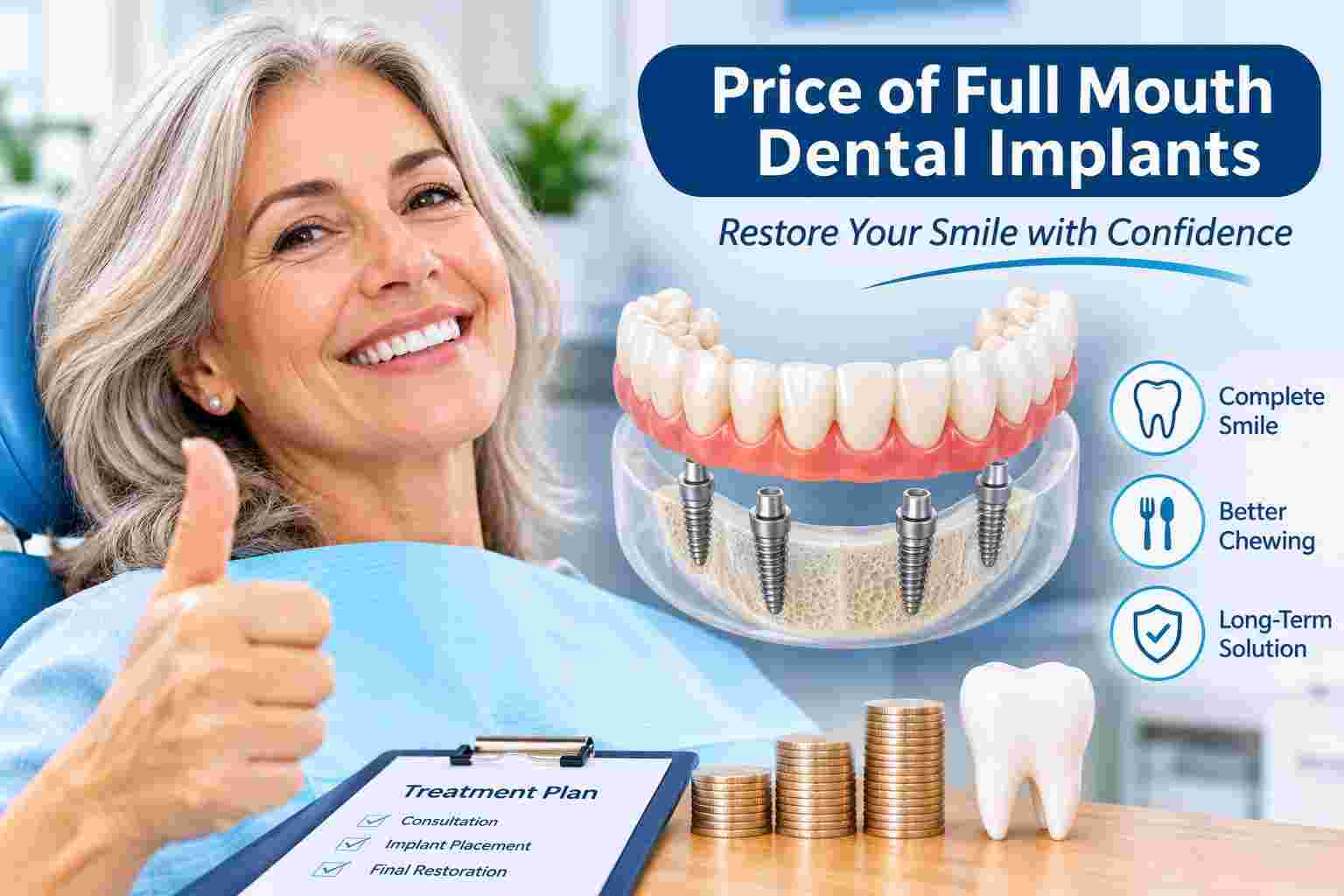
Replacing multiple missing teeth can make a meaningful difference in everyday life. Missing teeth may affect chewing, speech, facial appearance, and confidence. Full mouth dental implants offer a long-term tooth replacement option by using implant-supported restorations to restore the function and appearance of a complete smile. Before choosing this treatment, many patients want to understand the price of full mouth dental implants and what factors influence the overall investment.
The total cost can vary considerably from one patient to another. Understanding the treatment process, possible additional procedures, and long-term care requirements can help you make a more informed decision.
What Are Full Mouth Dental Implants?
Full mouth dental implants are designed to replace most or all teeth in the upper jaw, lower jaw, or both. Instead of replacing every missing tooth with an individual implant, a treatment plan may use strategically placed implants to support a fixed bridge or another type of full-arch restoration.
Dental implants are small posts, commonly made from titanium, that are placed into the jawbone. As the area heals, the bone can integrate with the implant, helping create a stable foundation for replacement teeth.
This approach can restore important functions such as chewing and speaking while providing a natural-looking appearance.
What Is the Price of Full Mouth Dental Implants?
There is no single price that applies to every full mouth dental implant case. The final treatment cost depends on the patient's oral health, the number of implants required, the type of restoration, and whether additional procedures are necessary.
A personalized consultation is the best way to receive an accurate estimate. During the evaluation, a dental professional can examine the teeth and gums, assess the jawbone, and discuss suitable treatment options.
It is important to understand what an estimate includes. Some treatment plans may list implant placement separately from the final restoration, temporary teeth, imaging, or other procedures.
Factors That Affect the Cost of Full Mouth Dental Implants
Several factors can influence the overall price of treatment.
1. Number of Implants Required
The number and placement of implants depend on the patient's jaw structure, bone condition, and restoration design. Some full-arch solutions use fewer implants to support a complete set of replacement teeth, while other cases may require a different approach.
2. Bone Grafting Requirements
Patients who have experienced jawbone loss may need an oral bone graft before or during implant treatment. Bone grafting can help rebuild areas with insufficient bone volume, but it may add to the overall cost and treatment timeline.
3. Type of Replacement Teeth
The material and design of the final restoration can affect the total investment. Options may vary in durability, appearance, and maintenance requirements. A dental professional can explain which restoration is appropriate for your needs.
4. Overall Oral Health
Healthy gums and adequate bone support are important considerations before implant placement. If periodontal disease, infection, or other dental concerns are present, treatment may be recommended before proceeding with implants.
5. Diagnostic Tests and Additional Procedures
Dental imaging, treatment planning, extractions, and other procedures may contribute to the final cost. The specific requirements depend on the condition of the mouth and the complexity of the case.
Are Full Mouth Dental Implants Worth the Investment?
Full mouth dental implants can provide several functional and aesthetic benefits for suitable patients. They are designed to create a stable foundation for replacement teeth, helping improve chewing ability and speech while restoring the appearance of a complete smile.
Unlike removable dentures, fixed implant-supported restorations are secured using dental implants. However, they still require consistent cleaning, professional monitoring, and good oral hygiene.
The long-term value of treatment depends on individual circumstances, the quality of care, and how well the patient maintains the implants and surrounding tissues.
What Happens During the Full Mouth Dental Implant Process?
The treatment process generally involves several stages, although the exact sequence varies by patient.
Initial consultation: The dental professional evaluates oral health, discusses treatment goals, and reviews medical and dental history.
Diagnostic evaluation: Imaging and other assessments help determine bone availability, implant placement locations, and restoration requirements.
Preparatory procedures: Some patients may need tooth extractions, periodontal treatment, or bone grafting before implant placement.
Implant placement: The implants are positioned in the jawbone according to the treatment plan.
Healing period: The implants are given time to integrate with the surrounding bone. Temporary restorations may be used when appropriate.
Final restoration: Once healing and stability have been evaluated, the permanent replacement teeth can be attached.
How Can You Plan for the Cost?
Planning ahead can make a major dental treatment feel more manageable. Ask for a detailed written estimate that explains each stage of treatment and identifies any additional procedures that may be required.
You can also ask whether the practice offers payment arrangements or financing options. If you have dental insurance, check your coverage and annual benefits directly with your provider, since implant coverage varies between plans.
Avoid choosing a treatment based on price alone. The experience of the dental team, quality of treatment planning, materials used, and follow-up care are all important considerations.
Frequently Asked Questions
1. What is the average price of full mouth dental implants?
The price varies depending on the number of implants, restoration materials, bone condition, and additional procedures. A personalized examination is necessary to determine the actual cost.
2. Does full mouth dental implant treatment include temporary teeth?
Some treatment plans include temporary restorations, while others may list them separately. Patients should confirm what is included in their treatment estimate.
3. Is bone grafting always required for full mouth dental implants?
No. Bone grafting is recommended only when additional bone support is needed. Dental imaging and a clinical evaluation help determine whether it is necessary.
4. How long does full mouth dental implant treatment take?
The timeline depends on healing, bone quality, and whether preparatory procedures are needed. Some patients require several months before receiving their final restorations.
5. Do full mouth dental implants require special maintenance?
Yes. Daily cleaning, professional dental visits, and regular monitoring are important for maintaining implant health and protecting the surrounding gums.
Make an Informed Decision About Your Smile
Understanding the price of full mouth dental implants involves more than comparing estimates. The right treatment plan should consider your oral health, jawbone condition, restoration preferences, and long-term needs. A professional evaluation can help identify suitable options and provide a clearer picture of the expected investment.
For guidance on periodontal health, implant preparation, and personalized treatment planning, consult Riverplace Periodontics to discuss the next steps toward a healthier, more confident smile.

 English
 Arabic
 French
 Spanish
 Portuguese
 Deutsch
 Turkish
 Dutch
 Russian
 Romaian
 Portuguese (Brazil)
 Greek