


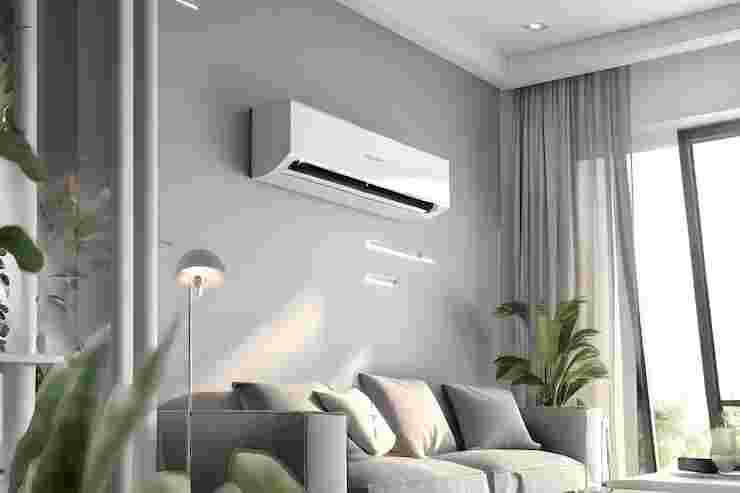
Sweden’s traditionally moderate climate has shaped a relatively measured demand environment for residential cooling equipment. However, changing summer temperature patterns, evolving housing requirements, and greater attention to indoor thermal comfort are creating new considerations for household and commercial cooling decisions. Room air conditioners are becoming relevant for consumers seeking localized temperature control without depending entirely on building-wide cooling infrastructure.
According to a Vyansa Intelligence report, the Sweden room air conditioners market was valued at USD 163.31 Million in 2025 and is projected to reach USD 179.55 Million by 2032, registering a CAGR of 1.36% during 2026-2032. This measured expansion reflects a market where demand development is closely connected to seasonal cooling requirements, household purchasing decisions, product efficiency, and the availability of suitable installation options.
Changing Climate Conditions Are Strengthening Cooling Requirements
Sweden's cooling requirements are influenced by the changing intensity and duration of warm-weather conditions. Although heating remains a major consideration in residential building management, warmer summer periods are encouraging households to consider dedicated cooling equipment for bedrooms, living areas, and other frequently occupied spaces.
The Swedish Meteorological and Hydrological Institute (SMHI) provides relevant climate information through its monitoring and climate analysis resources. Its observations help establish the environmental context in which household cooling requirements are evolving. For manufacturers and distributors, this creates an opportunity to position room air conditioners around seasonal comfort, targeted temperature management, and practical installation requirements.
According to this industry report, demand is not exclusively dependent on climatic conditions. Household preferences, property characteristics, and the ability to install individual cooling systems also influence purchasing decisions. This creates opportunities for compact equipment designed to address specific indoor cooling requirements rather than extensive building modifications.
Split Systems Remain Relevant to Residential Cooling Applications
Product configuration is an important competitive factor because Swedish consumers require equipment that balances cooling performance, installation flexibility, noise management, and operating efficiency. Split air conditioners are particularly relevant to permanent room-level cooling applications, where indoor and outdoor units provide a dedicated cooling arrangement.
Their suitability for residential environments is supported by flexible installation configurations and the ability to cool designated spaces. Window air conditioners and other product formats also address requirements where installation conditions, property ownership, and budget considerations influence equipment selection.
Latest market analysis indicates that product differentiation increasingly depends on inverter technology, energy efficiency, refrigerant selection, and connected functionality. Inverter-based systems can adjust compressor operation according to cooling requirements, supporting more controlled temperature management. Smart connectivity also allows users to manage operating schedules and temperature settings through compatible interfaces.
For manufacturers, the opportunity lies in developing equipment that combines practical cooling performance with lower environmental impact and convenient operation. Product specifications must also reflect the characteristics of Swedish residential buildings, where installation compatibility and indoor noise levels can influence purchase decisions.
Residential Demand and Compact Housing Requirements
Residential applications represent an important demand foundation because individual households require flexible solutions for maintaining indoor comfort during warmer periods. Apartments, detached houses, and vacation properties create different installation and usage requirements, encouraging manufacturers to offer differentiated equipment configurations.
Compact cooling solutions are particularly relevant in apartment environments where consumers may prefer room-specific systems instead of extensive centralized installations. Property restrictions, outdoor-unit placement, electrical infrastructure, and installation permissions can influence the feasibility of different products.
Industry analysis also indicates that commercial applications provide additional demand opportunities. Offices, retail establishments, hospitality facilities, healthcare environments, and educational institutions require indoor temperature management to support occupied spaces and operational comfort. Their purchasing decisions can involve installation suitability, maintenance requirements, energy consumption, and equipment reliability.
In this report, the distinction between residential and commercial demand is important because both customer groups evaluate cooling equipment through different purchasing priorities. Household buyers may emphasize affordability, operating convenience, and room coverage, whereas commercial purchasers can place greater importance on equipment durability, service availability, and operational continuity.
Refrigerant Regulations Are Reshaping Product Development
Environmental compliance is becoming a significant consideration for manufacturers supplying cooling equipment to Sweden. European refrigerant regulations are encouraging a transition towards refrigerants with lower global warming potential, influencing equipment design, product availability, and servicing requirements.
The EU's revised fluorinated greenhouse gas framework establishes restrictions affecting refrigerants used in air-conditioning equipment, including split systems. These requirements create product development challenges for manufacturers that must align existing portfolios with evolving environmental standards.
For suppliers, refrigerant selection is no longer solely a technical specification. It also affects manufacturing decisions, installation practices, technician training, spare-parts availability, and long-term product support. Companies offering compliant equipment and reliable servicing networks can strengthen their competitive positioning.
The regulatory transition also creates opportunities for manufacturers developing alternative refrigerant technologies, energy-efficient compressors, and equipment designed for simplified maintenance. Detailed market insights suggest that competitive differentiation will increasingly depend on the ability to combine environmental compliance with practical cooling performance.
Distribution, Product Availability, and Competitive Positioning
Sales channels influence how room air conditioners reach Swedish households and commercial buyers. Retail electronics and appliance stores provide opportunities for consumers to compare equipment specifications, while online platforms support product discovery and access to different configurations.
Brand-owned websites and distributor networks also contribute to product availability, technical information, and after-sales support. Installation guidance is particularly important for split systems because purchasing decisions involve considerations beyond the initial equipment specification.
Manufacturers and distributors can strengthen demand generation through clear product information, transparent energy-efficiency specifications, refrigerant compliance, and accessible maintenance services. Seasonal product availability and effective distribution planning also influence purchasing opportunities during periods of increased cooling requirements.
Future Opportunities and Industry Considerations
The industry's development will depend on how effectively manufacturers respond to changing household cooling expectations while maintaining product affordability and regulatory compliance. Compact systems, inverter-based equipment, smart controls, and environmentally compliant refrigerants represent important areas for product differentiation.
However, the relatively moderate expansion also highlights several constraints. Seasonal demand patterns, competition from alternative cooling solutions, installation limitations in apartments, and equipment servicing requirements can restrict purchasing activity. Commercial adoption may also depend on the economic justification for installing dedicated room cooling systems.
The central opportunity lies in positioning room air conditioners as practical, efficient, and environmentally responsible solutions for targeted indoor cooling. Manufacturers that align product design with Swedish housing characteristics and customer requirements can address emerging demand without relying exclusively on broader increases in cooling penetration.
Conclusion
Sweden's room cooling requirements are evolving through the interaction of warmer summer conditions, residential preferences, product innovation, and environmental regulation. The industry is therefore likely to remain focused on product efficiency, installation flexibility, refrigerant transition, and dependable after-sales support. For manufacturers and distributors, understanding these demand characteristics will be essential to identifying sustainable commercial opportunities in the country's evolving cooling equipment landscape.

 English
 Arabic
 French
 Spanish
 Portuguese
 Turkish
 Dutch
 Italiano
 Russian
 Romaian
 Portuguese (Brazil)
 Greek