


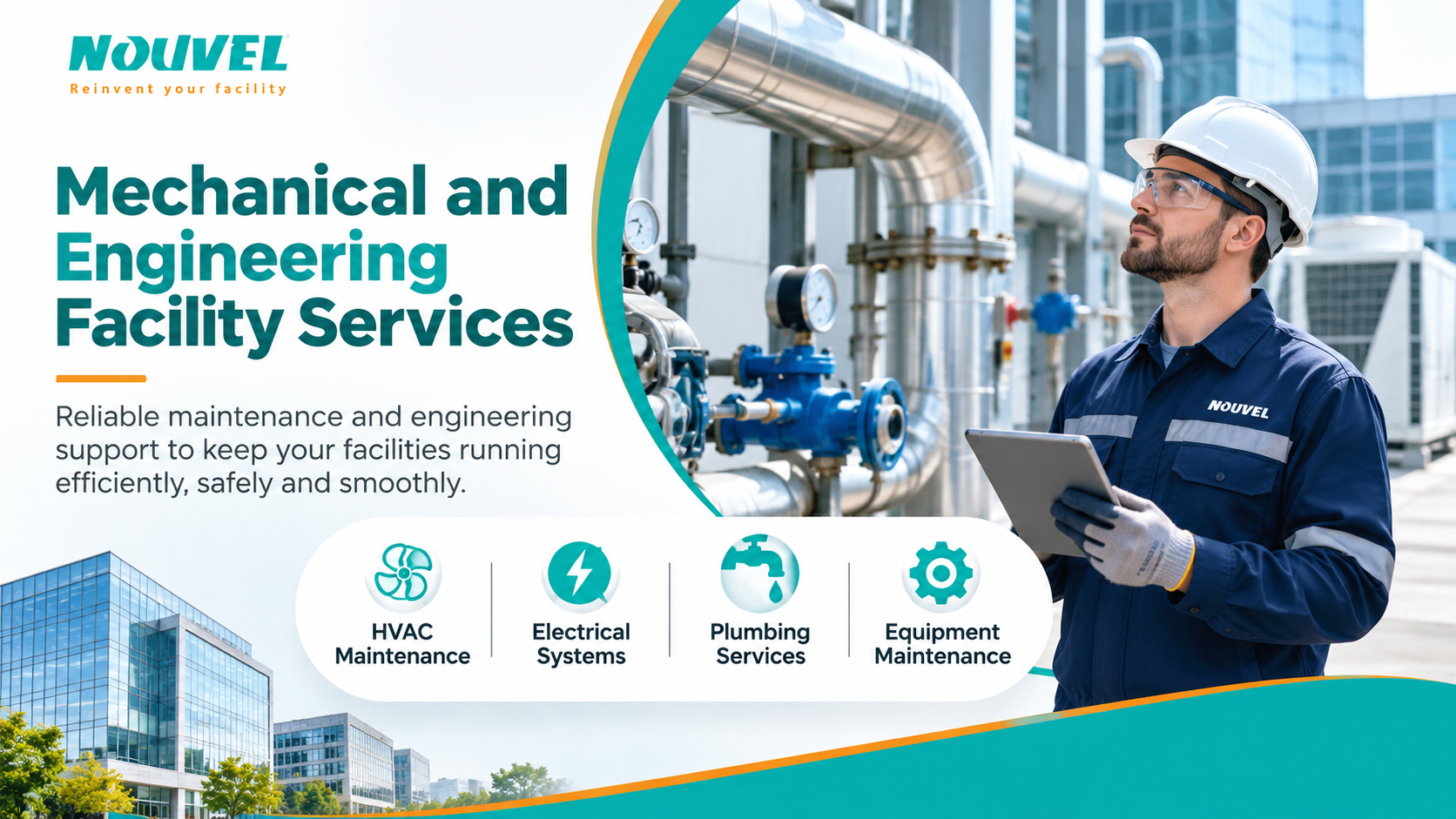
Modern commercial and industrial facilities depend on well-maintained infrastructure to operate efficiently. From electrical systems and air conditioning to plumbing, equipment maintenance, and building infrastructure, every technical component plays an important role in daily operations. This is where Mechanical and Engineering Facility Services become essential for businesses looking to maintain safe, functional, and productive environments.
Professional engineering and facility maintenance support helps organisations manage their buildings, reduce unexpected equipment failures, and maintain essential systems. Whether it is a corporate office, commercial complex, manufacturing unit, or large business facility, having the right technical maintenance approach can make a significant difference.
Nouvel Facility provides mechanical engineering and facility management solutions designed to support the operational requirements of different commercial environments. With a focus on practical maintenance and engineering support, businesses can better manage their infrastructure and day-to-day facility requirements.
1. Understanding the Importance of Mechanical and Engineering Facility Services
Buildings and commercial properties rely on several interconnected mechanical and engineering systems. These include heating, ventilation and air conditioning (HVAC), electrical installations, plumbing networks, fire safety infrastructure, and other essential building services.
Mechanical and Engineering Facility Services help ensure these systems remain functional, properly maintained, and suitable for their intended use.
Without regular maintenance, even minor technical issues can affect workplace operations. For example, an inefficient HVAC system may reduce indoor comfort, while electrical faults can interrupt business activities. Timely inspections and planned maintenance help identify potential problems before they develop into more serious issues.
For businesses operating across the UK, USA, Germany, and France, maintaining building infrastructure is also important for meeting applicable safety requirements and supporting consistent workplace standards.
2. Key Engineering Services Required for Commercial Facilities
Every property has different technical requirements depending on its size, purpose, equipment, and operational demands. However, several engineering services are commonly required across commercial and industrial environments.
Mechanical System Maintenance
Mechanical systems are essential for maintaining building performance. Regular servicing of equipment, ventilation systems, pumps, and other mechanical installations helps support reliable operations.
Preventive maintenance also allows facility teams to identify wear and tear, unusual performance, and potential equipment problems.
Electrical Maintenance and Support
Electrical infrastructure supports lighting, power distribution, equipment, and essential building operations. Regular inspections and maintenance help identify damaged components, overloaded circuits, and other electrical concerns.
Professional electrical maintenance is particularly important in commercial properties where uninterrupted power is necessary for everyday activities.
HVAC and Ventilation Management
Indoor air quality and temperature control influence workplace comfort and building efficiency. HVAC maintenance includes inspecting air conditioning units, ventilation equipment, filters, and related mechanical components.
A properly maintained system can help improve indoor comfort and reduce unnecessary energy consumption.
Plumbing and Building Services
Water supply, drainage, and plumbing installations are important parts of commercial infrastructure. Routine checks help detect leaks, drainage problems, and equipment issues before they cause operational disruption.
These services contribute to maintaining hygienic and functional commercial spaces.
3. Why Preventive Engineering Maintenance Matters
Waiting until equipment stops working can lead to unnecessary expenses and operational difficulties. Preventive maintenance provides a more structured way to manage building systems.
Rather than responding only when something goes wrong, facility management teams follow planned inspection and servicing schedules.
Some important benefits include:
-
Reduced unexpected breakdowns: Regular inspections help identify potential equipment failures at an early stage.
-
Better equipment performance: Servicing and maintenance help keep mechanical and electrical systems operating efficiently.
-
Improved workplace safety: Identifying technical faults can help reduce risks associated with building infrastructure.
-
Longer equipment lifespan: Appropriate maintenance can reduce excessive wear and premature replacement.
-
Better maintenance planning: Scheduled work allows organisations to plan resources and manage maintenance budgets more effectively.
Preventive maintenance is particularly valuable for facilities with complex engineering systems or equipment that operates continuously.
4. Choosing the Right Engineering and Facility Management Partner
Selecting a facility management partner requires more than comparing service prices. Businesses should consider the provider's technical capabilities, service approach, experience, and ability to understand specific property requirements.
Before choosing a service provider, organisations should consider the following factors:
Technical understanding: The provider should understand the mechanical and engineering systems commonly used in commercial buildings.
Maintenance planning: A structured approach to inspections, servicing, and maintenance helps ensure important tasks are not overlooked.
Safety practices: Engineering work should follow relevant safety procedures and applicable local regulations.
Service flexibility: Different properties have different operational requirements. Maintenance solutions should reflect the building's purpose, size, and usage.
Communication and reporting: Clear communication helps property managers understand maintenance activities, technical concerns, and recommended actions.
A dependable facility management arrangement can help businesses focus on their core activities while essential building systems receive appropriate attention.
5. The Growing Role of Integrated Facility Engineering
Facility management is becoming increasingly focused on combining technical maintenance, building operations, and efficient resource management.
Modern facilities may use digital maintenance records, equipment monitoring, energy management systems, and planned inspection schedules to improve operational visibility.
These practices help facility managers understand equipment performance, identify recurring maintenance issues, and make informed decisions about repairs or replacements.
Energy efficiency is another important consideration. Well-maintained HVAC systems, efficient electrical installations, and properly managed mechanical equipment can contribute to more responsible energy use.
For organisations managing multiple properties or international operations, consistent maintenance processes can also help establish common service standards across different locations.
Conclusion
Maintaining commercial infrastructure requires a practical approach to engineering, regular inspections, and effective facility management. Professional Mechanical and Engineering Facility Services help businesses maintain essential building systems, manage technical maintenance requirements, and support safe and efficient workplace operations.
From HVAC and electrical maintenance to mechanical equipment servicing and plumbing support, every aspect contributes to the overall performance of a commercial property.
Nouvel Facility offers mechanical engineering and facility management solutions for businesses seeking structured support for their building infrastructure. To learn more about its services and approach, visit the official website.
Frequently Asked Questions (FAQs)
1. What are mechanical and engineering facility services?
Mechanical and engineering facility services involve maintaining and managing essential building systems, including HVAC, electrical installations, plumbing, mechanical equipment, and other technical infrastructure.
2. Why are engineering maintenance services important for commercial buildings?
They help maintain building functionality, reduce unexpected equipment failures, support workplace safety, and improve the reliability of essential systems.
3. What is included in mechanical facility maintenance?
Mechanical facility maintenance may include HVAC servicing, ventilation system inspections, pump maintenance, mechanical equipment checks, and general building system maintenance.
4. How does preventive maintenance help businesses?
Preventive maintenance helps identify potential faults before they cause major problems. It can also support equipment longevity, better maintenance planning, and reduced operational disruption.
5. What is the difference between mechanical engineering and facility management?
Mechanical engineering focuses on the design, operation, and maintenance of mechanical systems. Facility management covers the wider management of buildings, including maintenance, workplace services, safety, and daily operations.
6. How often should commercial building equipment be maintained?
Maintenance frequency depends on the equipment type, manufacturer recommendations, operating conditions, usage, and applicable safety requirements. Some systems require regular inspections, while others follow scheduled servicing intervals.
7. How can businesses choose a reliable facility engineering service provider?
Businesses should assess technical expertise, maintenance procedures, safety standards, service flexibility, communication, and experience with similar commercial properties.

 English
 French
 Spanish
 Portuguese
 Deutsch
 Turkish
 Dutch
 Italiano
 Russian
 Romaian
 Portuguese (Brazil)
 Greek