


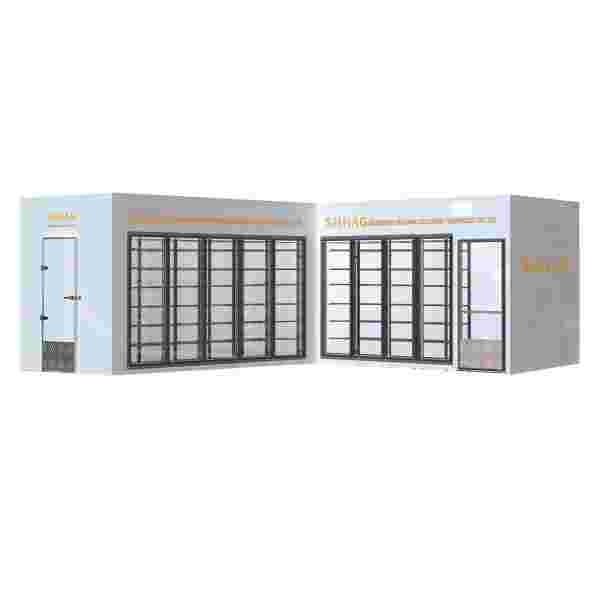
Businesses that handle perishable products need dependable refrigeration to protect product quality and maintain efficient daily operations. Restaurants, supermarkets, hotels, food distributors, and processing facilities all require suitable storage environments where temperature conditions can be managed consistently.
As storage requirements increase, traditional refrigerators may not provide enough capacity or flexibility. Walk-in cold rooms offer a practical alternative by providing dedicated refrigerated spaces where businesses can store larger quantities of products in an organized environment.
A well-planned display walk in cooler can support businesses that need accessible refrigerated storage while maintaining an organized layout. With suitable panels, refrigeration equipment, and installation planning, these facilities can become an important part of commercial cold storage operations.
Understanding Walk-In Cooler Systems
A walk-in cooler is an enclosed refrigerated space designed for storing products at controlled temperatures. Unlike standard commercial refrigerators, it allows employees to enter the storage area and arrange products across shelves, racks, or designated storage sections.
These systems are commonly used in food service, retail, hospitality, and distribution environments. Their capacity and configuration can be adapted to suit different storage volumes and operational requirements.
Walk-in coolers generally consist of insulated panels, doors, flooring where required, and a refrigeration system. Each component contributes to the overall performance of the cold room. Proper planning ensures that the facility provides suitable storage capacity without unnecessary energy consumption or inefficient use of available space.
The Importance of Insulated Cooler Panels
Insulation is one of the most important elements of a walk-in cold room. The panels help reduce heat transfer between the refrigerated interior and the surrounding environment, supporting stable internal conditions.
Insulated panels are commonly manufactured with a core material designed to provide thermal resistance and protective outer surfaces. Their thickness and construction should be selected according to the intended temperature range, room dimensions, and environmental conditions.
Proper panel installation is equally important. Gaps between panels, poorly fitted joints, or damaged sealing materials may allow unwanted heat to enter the storage area. This can increase the workload on the refrigeration system and affect temperature consistency.
Businesses should therefore consider panel quality, joint construction, and installation standards when planning a cold storage facility.
Improving Product Organization and Accessibility
An effective cold room should make stored products easy to identify, access, and manage. Poor organization can lead to wasted space, unnecessary movement, and difficulty maintaining stock rotation.
Walk-in coolers provide opportunities to arrange products using shelves, storage racks, and clearly defined sections. Businesses can separate product categories, organize deliveries, and maintain a logical arrangement based on usage frequency.
For restaurants, this can make ingredients easier for kitchen staff to locate during busy service periods. Supermarkets and food distributors can use organized storage layouts to manage larger inventories more effectively.
A suitable layout should also allow enough space for employees to move safely and access products without blocking airflow or refrigeration components.
Supporting Food Quality and Temperature Management
Temperature control is essential when storing perishable goods. Different products have different storage requirements, so businesses must select refrigeration systems capable of maintaining appropriate conditions for their inventory.
A properly designed walk-in cooler provides a dedicated environment for chilled storage. Its performance depends on several factors, including insulation, refrigeration capacity, door sealing, product loading, and airflow.
Businesses should avoid overcrowding storage areas because excessive loading can restrict air circulation. Products should be arranged to allow cold air to move throughout the room.
Regular temperature monitoring is also important. Installing suitable monitoring equipment and maintaining operational records can help staff identify unusual temperature changes and respond promptly.
Applications Across Different Industries
Walk-in cooler systems support a wide range of commercial activities.
Restaurants and commercial kitchens: Cold rooms provide additional storage capacity for fresh ingredients, dairy products, prepared foods, and beverages.
Supermarkets: Retail businesses use walk-in refrigeration facilities to organize inventory and manage products before transferring them to display cabinets.
Hotels and catering companies: Large food service operations benefit from dedicated storage areas that support preparation and supply management.
Food distribution facilities: Distributors require organized refrigerated spaces for holding products before transportation or delivery.
Food processing businesses: Suitable cold storage helps manage ingredients and finished products as part of wider production operations.
Each industry has different requirements, so storage capacity, temperature range, access arrangements, and product categories should guide equipment selection.
Managing Energy Consumption
Cold storage facilities can consume significant amounts of electricity because refrigeration systems operate for extended periods. Efficient design and responsible operating practices can help businesses manage these costs.
Insulated panels reduce unwanted heat transfer, while properly fitted doors help limit the entry of warmer air. Selecting an appropriately sized refrigeration system is also important. Equipment that does not match the room's requirements may struggle to maintain the desired conditions or consume unnecessary energy.
Other useful practices include keeping doors closed when not in use, avoiding unnecessary door openings, maintaining condenser components, and ensuring that stored products do not obstruct airflow.
Regular maintenance can help identify problems before they develop into expensive operational issues.
Choosing the Right Walk-In Cooler Solution
Selecting a cold room requires careful consideration of both current and future storage needs. Businesses should evaluate the following factors:
-
Storage capacity: Determine the volume and type of products that need refrigeration.
-
Temperature requirements: Select a system suitable for the intended products.
-
Panel insulation: Review panel thickness, construction, and thermal performance.
-
Room dimensions: Plan a layout that makes effective use of available space.
-
Door design: Consider access frequency, dimensions, and sealing performance.
-
Refrigeration capacity: Ensure the cooling system matches the room's size and operating conditions.
-
Maintenance requirements: Understand servicing needs and access to technical support.
Careful planning helps businesses avoid unsuitable equipment choices and build storage facilities that support long-term operational requirements.
Maintaining Reliable Cold Storage Performance
Even a well-designed walk-in cooler requires regular inspection. Door seals, panel joints, refrigeration components, and temperature monitoring equipment should be checked periodically.
Employees should follow proper loading procedures, keep the storage area organized, and report unusual temperature fluctuations. Cleaning routines should also be established to maintain hygienic storage conditions.
Professional servicing can help identify developing problems and maintain the performance of the refrigeration system. Preventive maintenance is generally more manageable than responding to unexpected equipment failures.
Creating a Stronger Foundation for Commercial Refrigeration
Reliable cold storage supports product quality, inventory management, and everyday business operations. Walk-in coolers provide the capacity and organization needed by businesses handling significant quantities of temperature-sensitive goods.
By investing in suitable insulated panels, effective refrigeration equipment, and thoughtful storage layouts, companies can create more dependable cold storage environments. Exploring a display walk in cooler can be a useful starting point for businesses seeking practical refrigeration solutions that support organized storage, controlled temperatures, and long-term operational efficiency.

 English
 French
 Spanish
 Portuguese
 Deutsch
 Turkish
 Dutch
 Italiano
 Russian
 Romaian
 Portuguese (Brazil)
 Greek