


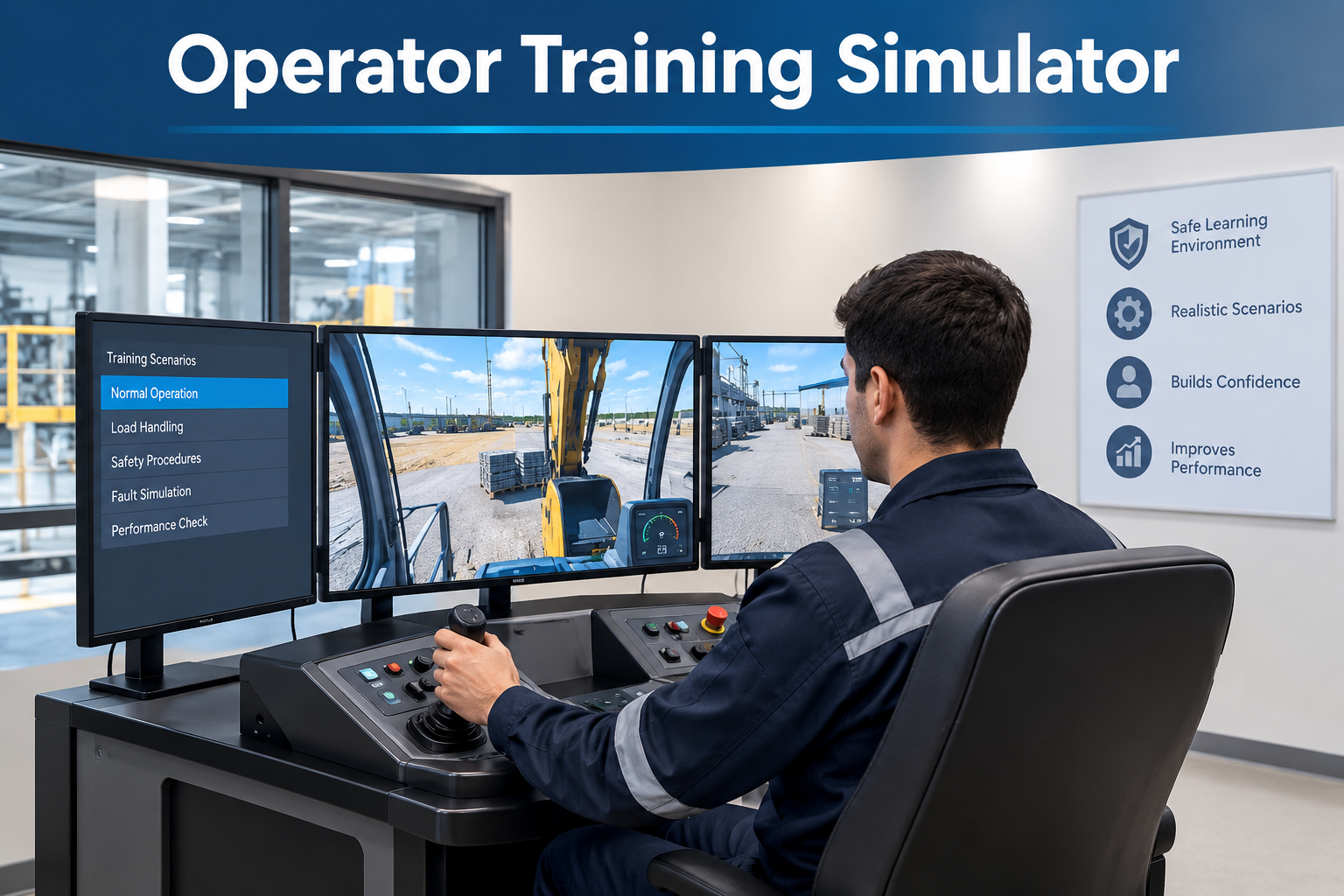
Process industries depend on the continuous and controlled operation of complex systems. Industries such as oil and gas, chemicals, power generation, and manufacturing use different machines, instruments, and control systems to maintain production. Employees working in these environments must understand how processes operate and how to respond when conditions change.
Training operators for such responsibilities requires more than theoretical knowledge. They need practical experience and a clear understanding of different operating conditions. An Operator Training Simulator helps organisations provide this experience through a virtual representation of industrial processes.
Understanding Process Industry Training
Process industries involve several connected operations. A change in one process variable can affect other parts of the system. For example, changes in temperature, pressure, flow rate, or liquid level may influence the overall production process.
Operators must understand these relationships to maintain stable operations. Traditional training can explain the principles, but simulation gives employees an opportunity to observe how process changes affect the entire system.
How Simulation Supports Process Understanding
An Operator Training Simulator recreates selected industrial processes in a digital environment. Trainees can interact with simulated equipment and control systems while observing changes in process conditions.
They can practise starting and stopping processes, adjusting operating parameters, monitoring instruments, and responding to alarms. This makes training more interactive and helps employees connect theoretical concepts with practical activities.
Practising Normal and Abnormal Operations
Operators must be prepared for both routine tasks and unexpected situations. Normal operations may include equipment start-up, process monitoring, production control, and shutdown procedures.
However, industrial systems can also experience equipment failures, unusual pressure changes, temperature variations, and other abnormal conditions. A simulator can recreate these scenarios so operators can practise identifying the problem and following the correct response procedure.
This type of training helps employees understand what can happen when a process moves away from its normal operating range.
Improving Control Room Training
Control room operators monitor industrial processes through control panels and computer-based systems. They need to understand displays, alarms, process trends, and control functions.
Simulation-based training can recreate a control room environment and allow operators to practise different tasks. They can learn how to monitor process information, respond to alarms, and coordinate operating activities.
This is particularly useful for preparing new employees and helping existing staff become familiar with updated control procedures.
Supporting Consistent Training Standards
Large industrial organisations may have several operators working across different shifts. It is important that every employee receives consistent training and understands the same operating procedures.
An Operator Training Simulator can support standardised training exercises. Trainers can use similar scenarios to evaluate employee performance and identify areas where additional learning is required.
Conclusion
Simulation-based learning plays an important role in preparing employees for complex process industry operations. An Operator Training Simulator helps trainees understand industrial processes, practise control-room activities, and develop the ability to respond to changing operating conditions. By using this approach, organisations can strengthen workforce knowledge and support more reliable industrial operations.
FAQs
1. Which industries can use an Operator Training Simulator?
It can be used in process-based industries such as oil and gas, chemicals, power generation, pharmaceuticals, and manufacturing. The training scenarios can be designed according to the processes and operating requirements of a particular industry.
2. How does a simulator help control room operators?
It provides a virtual control-room environment where operators can practise monitoring process variables, responding to alarms, adjusting controls, and following operating procedures.
3. Can simulators recreate equipment failures?
Yes. Depending on the simulator's design, it can recreate selected equipment failures and abnormal process conditions. This allows trainees to practise identifying issues and responding appropriately.
4. Why is practical training important in process industries?
Practical training helps employees understand how different process variables interact. It also prepares them to manage routine activities and respond more confidently to unexpected operating conditions.

 English
 French
 Spanish
 Portuguese
 Deutsch
 Turkish
 Dutch
 Italiano
 Russian
 Romaian
 Portuguese (Brazil)
 Greek