


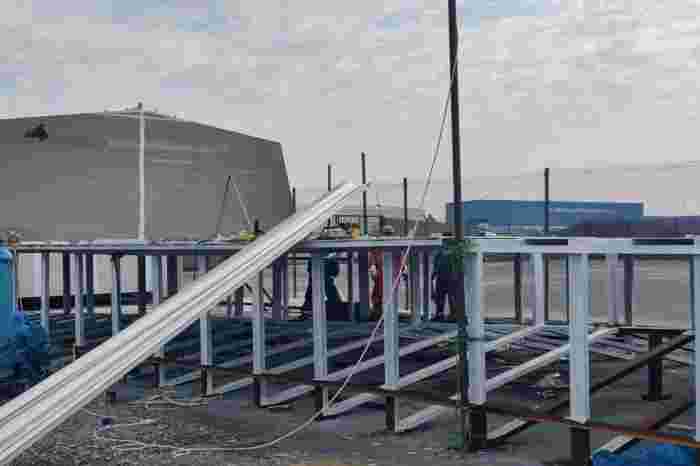
The maritime industry is moving towards a more sustainable future as environmental protection, energy efficiency, and advanced engineering become essential parts of vessel construction. Today, ship building companies are focusing on developing modern vessels that consume less fuel, produce fewer emissions, and provide reliable performance for commercial and industrial operations. Sustainable marine construction is not only about building strong ships but also about creating solutions that reduce environmental impact throughout a vessel's operational life.
With international trade and marine transportation continuing to grow, the demand for environmentally responsible vessels is increasing. Modern shipbuilding now involves lightweight materials, advanced propulsion systems, digital technologies, and improved construction techniques. These developments are helping the maritime sector prepare for changing environmental regulations and future operational requirements.
1. Growing Demand for Sustainable Marine Construction
Sustainability has become a major priority in the global maritime industry. Ships transport a significant proportion of international trade, making them essential to the global economy. However, conventional marine operations also contribute to greenhouse gas emissions and environmental pollution.
According to the International Maritime Organization (IMO), its revised 2023 greenhouse gas strategy aims to achieve net-zero greenhouse gas emissions from international shipping by or around 2050. It also targets a reduction of at least 40% in carbon dioxide emissions per transport work by 2030 compared with 2008.
These targets are encouraging the development of cleaner vessels and more efficient construction methods. Shipbuilders are increasingly considering environmental performance during the initial design stage rather than treating it as an additional requirement after construction.
2. Advanced Vessel Designs for Better Fuel Efficiency
One of the most important developments in sustainable shipbuilding is the use of energy-efficient vessel designs. A ship's hull shape, weight, propulsion arrangement, and hydrodynamic performance directly influence its fuel consumption.
Modern engineering software allows designers to study water resistance and vessel movement before construction begins. By analysing different hull configurations, engineers can identify designs that require less energy to achieve the desired speed.
Improved propeller designs, optimized engine arrangements, and efficient power management systems can further reduce fuel requirements. These improvements are useful for commercial vessels, offshore support ships, tugboats, and barges.
Fuel efficiency also provides financial advantages because lower consumption can reduce operating expenses over time. Therefore, efficient vessel design benefits both the environment and vessel operators.
3. Lightweight Materials and Modern Construction Methods
Material selection is another important factor in sustainable marine construction. Traditional steel remains widely used because of its strength and structural reliability. However, aluminium is also gaining importance in applications where reducing vessel weight is beneficial.
Aluminium offers a favorable strength-to-weight ratio and good corrosion resistance when the correct marine-grade alloy and protective measures are used. Its lightweight properties can help improve vessel efficiency, particularly in smaller commercial boats and specialized marine craft.
Modern fabrication techniques also help reduce unnecessary material consumption. Accurate cutting, advanced welding, and improved production planning can minimize waste during construction.
In addition, selecting durable materials can increase the service life of marine vessels and reduce the frequency of major repairs. Recyclability and material recovery are also important considerations when evaluating the overall environmental impact of construction.
4. Alternative Fuels and Cleaner Propulsion Systems
The transition towards cleaner marine transportation depends heavily on the development of alternative fuels and advanced propulsion technologies.
Several energy solutions are being explored for future vessels:
-
Green hydrogen: Renewable hydrogen can support low-emission marine energy systems.
-
Ammonia: Renewable ammonia is being studied as a potential alternative marine fuel.
-
Methanol: Methanol-based propulsion can offer environmental benefits depending on its production method.
-
Electric propulsion: Battery-powered systems are suitable for certain short-distance and harbour operations.
-
Hybrid propulsion: Combining electric power with conventional engines can improve efficiency under suitable operating conditions.
The IMO's 2030 strategy aims for zero or near-zero greenhouse gas emission technologies, fuels, and energy sources to represent at least 5%, striving for 10%, of the energy used by international shipping.
Although these technologies require further development and suitable infrastructure, they are expected to influence future vessel designs and marine engineering decisions.
5. Smart Technology in Modern Shipbuilding
Digital innovation is transforming the way marine vessels are designed, constructed, and maintained. Computer-aided design, three-dimensional modelling, digital simulations, and automated manufacturing are helping improve construction accuracy.
Engineers can use digital models to evaluate structural strength, stability, hull performance, and propulsion efficiency before physical production begins. This helps identify potential design problems at an early stage and reduces unnecessary modifications.
Automation also supports accurate cutting, welding, and assembly processes. These technologies can improve production consistency, reduce human error, and minimize material wastage.
Smart monitoring systems are equally important during vessel operations. They collect information about engine temperature, fuel consumption, vibration, and equipment performance. This information helps operators identify maintenance requirements and prevent unexpected equipment failures.
6. Environmental Protection Through Better Vessel Construction
Marine pollution prevention is an essential part of sustainable shipbuilding. Modern vessels need effective systems to manage wastewater, oily residues, solid waste, and other potentially harmful materials.
Improved piping arrangements, reliable storage tanks, waste treatment facilities, and suitable protective coatings can help reduce environmental risks.
Corrosion protection is particularly important because marine vessels operate in challenging environments where saltwater, humidity, and changing temperatures can affect structural components. Proper surface preparation, coating selection, and regular inspections can help maintain vessel durability.
Furthermore, efficient onboard waste management systems support compliance with applicable maritime environmental requirements. These measures help protect oceans, coastal areas, and marine ecosystems.
7. The Importance of Marine Services in UAE
The maritime sector in the UAE plays an important role in regional trade, offshore activities, port operations, and commercial transportation. Its strategic location connects major international shipping routes and supports a wide range of marine industries.
The growing demand for modern vessels has increased the importance of construction quality, vessel maintenance, retrofitting, and technical consultancy. Reliable marine services in UAE support the performance and operational life of different types of marine vessels.
Ship repair, aluminium boat construction, tugboat building, barge construction, painting, commissioning, and maintenance are important activities within the wider maritime sector.
VU Marine, established in the UAE in 2009, provides shipbuilding and marine solutions for commercial and industrial applications. Its services include aluminium boat building, barge and tugboat construction, ship repair, retrofitting, marine consultancy, maintenance, painting, and commissioning.
As environmental standards continue to develop, quality construction and effective maintenance will remain important for improving vessel performance and supporting sustainable marine operations.
8. Future Opportunities for the Shipbuilding Industry
The future of marine vessel construction will be influenced by technological development, environmental regulations, and changing customer requirements. Businesses operating in the maritime sector will need to focus on efficiency, durability, safety, and environmental responsibility.
In this changing environment, ship building companies in UAE have opportunities to support commercial shipping, offshore operations, harbour activities, and specialized marine transportation through modern engineering solutions.
Retrofitting existing vessels is another important opportunity. Older ships can sometimes achieve better performance through improved propulsion systems, energy-saving equipment, modern navigation technology, and upgraded onboard machinery.
Research into renewable energy, advanced batteries, lightweight materials, and alternative fuels will also create new possibilities for future vessel construction.
9. Innovation and Long-Term Sustainability
Long-term sustainability requires more than introducing new equipment or selecting environmentally friendly materials. It involves considering the entire lifecycle of a vessel, from initial design and material production to construction, operation, maintenance, and recycling.
Lifecycle assessment helps engineers understand the environmental impact of different construction choices. It also supports better decisions regarding material selection, energy consumption, repair methods, and vessel modernization.
The top shipbuilding companies will increasingly need to focus on combining engineering quality with environmental responsibility. Developing vessels that meet operational requirements while reducing emissions and resource consumption will be an important part of future maritime growth.
Investment in skilled professionals, research, modern equipment, and improved production methods will further support this transition.
Conclusion
Sustainable marine vessel construction is becoming an important part of the maritime industry's future. Energy-efficient designs, lightweight materials, alternative fuels, digital technologies, and improved environmental protection systems are changing the way modern vessels are developed.
The IMO's environmental targets are encouraging the industry to adopt cleaner technologies and reduce the environmental impact of international shipping. At the same time, shipowners are increasingly looking for durable vessels that provide reliable performance and lower operating costs.
VU Marine operates in a maritime sector where quality construction, modern engineering, and dependable marine services are essential. As the industry continues to evolve, innovation and responsible construction practices will help create more efficient vessels and support a sustainable future for global marine transportation.

 English
 Arabic
 French
 Spanish
 Portuguese
 Turkish
 Dutch
 Italiano
 Russian
 Romaian
 Portuguese (Brazil)
 Greek