


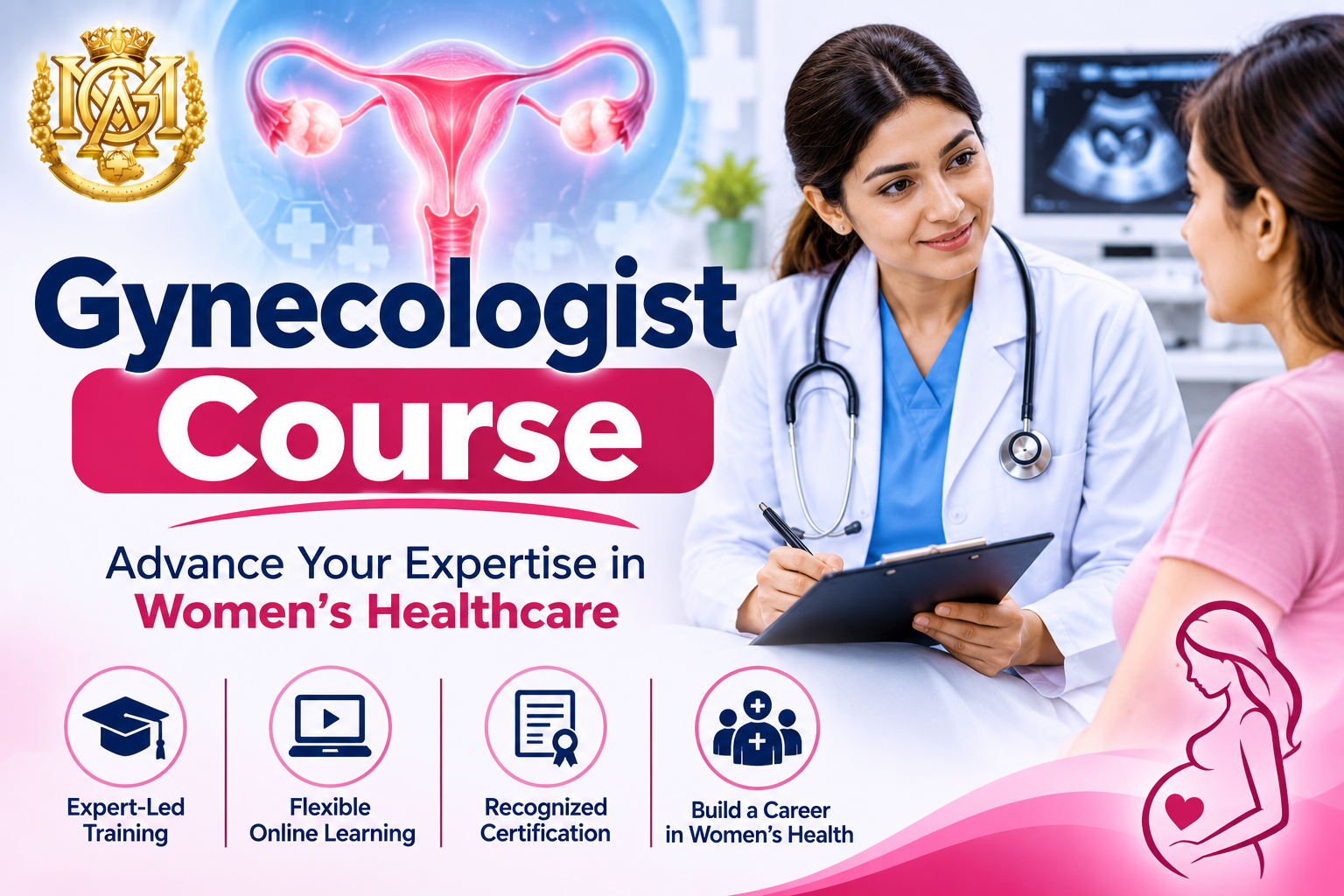
Women's healthcare is much broader than pregnancy and childbirth. It involves reproductive health, hormonal changes, menstrual conditions, fertility concerns and several other medical aspects that require specialised knowledge. For doctors, staying informed about these areas is an important part of professional development.
A gynecologist course can provide an opportunity for eligible medical professionals to explore different subjects within obstetrics and gynaecology through structured academic learning. With medical research and healthcare practices continually evolving, expanding subject knowledge can help doctors remain connected with developments in their chosen field.
1. Why a Gynecologist Course Is Worth Exploring for Medical Professionals
Choosing a specialised area of medical education requires more than simply looking at a certificate. Doctors should consider how a particular programme fits their academic interests and long-term professional objectives.
Gynaecology offers several interesting areas of study, making it a valuable speciality for medical professionals interested in women's health.
Some important reasons to explore this field include:
-
Developing a deeper understanding of reproductive health.
-
Exploring common and complex gynaecological conditions.
-
Understanding hormonal changes and their medical implications.
-
Learning about developments in maternal and reproductive healthcare.
-
Expanding academic knowledge through specialised education.
The right educational programme should offer a clearly structured curriculum and learning objectives that match the doctor's professional background.
2. What Makes a Gynecologist Course Relevant in Modern Medical Education?
Modern medical education isn't limited to textbooks or traditional classroom sessions. Online academic programmes, expert-led discussions and digital learning resources have created additional opportunities for doctors to explore specialised subjects.
In gynaecology, these learning opportunities can cover several important areas of women's healthcare.
For instance, the International Society of Ultrasound in Obstetrics and Gynecology (ISUOG) includes subjects such as early pregnancy assessment, fertility, gynaecological complications and women's reproductive health in its advanced educational curriculum.
This highlights how broad the speciality has become and why continuous academic development matters.
3. Seven Important Areas of Women's Healthcare Doctors Should Understand
Gynaecology covers a wide range of subjects. Exploring these areas can help doctors build a stronger academic foundation.
1. Menstrual Health and Hormonal Disorders
Menstrual health is an essential part of reproductive healthcare. Conditions such as polycystic ovary syndrome (PCOS), endometriosis and abnormal uterine bleeding deserve careful academic attention.
Understanding hormonal regulation and menstrual abnormalities helps doctors explore the underlying medical factors associated with these conditions.
2. Infertility and Reproductive Medicine
Infertility is a complex subject involving both male and female reproductive factors. Doctors interested in reproductive medicine can explore hormonal influences, ovulation-related conditions and different diagnostic approaches.
3. Maternal Health and Pregnancy
Pregnancy involves several physiological changes that influence maternal health. Studying antenatal care, maternal complications and fetal development provides valuable knowledge about different stages of pregnancy.
4. Gynaecological Oncology
Gynaecological oncology focuses on cancers affecting the female reproductive system, including cervical, ovarian and endometrial cancers.
Understanding risk factors, screening approaches and diagnostic principles is an important part of academic learning in this speciality.
5. Pelvic Floor Health
Pelvic floor disorders can affect women's physical health and quality of life. Conditions such as pelvic organ prolapse and urinary incontinence are important subjects within modern gynaecological education.
6. Reproductive Infections
Reproductive and sexually transmitted infections require appropriate medical understanding. Doctors can explore their causes, clinical presentation, diagnostic methods and evidence-based treatment principles.
7. Menopause and Midlife Women's Health
Menopause brings several hormonal and physiological changes. Learning about menopausal symptoms, bone health and hormonal changes helps doctors understand women's healthcare needs during later stages of life.
4. Choosing the Right Learning Programme
With different educational opportunities available, selecting an appropriate programme can sometimes feel overwhelming.
Rather than focusing only on the programme title, doctors should evaluate its academic structure.
Consider these factors before enrolling:
Curriculum: Review the subjects and modules included in the programme.
Faculty: Understand the academic and professional experience of the teaching faculty.
Learning Format: Check whether the programme offers live lectures, recorded sessions or other digital learning resources.
Eligibility: Confirm whether your existing medical qualification meets the admission requirements.
Certification: Understand the awarding institution, accreditation details and professional recognition of the certificate.
These details can help doctors make a more informed educational decision.
5. Exploring Advanced Obstetrics and Gynaecology Education
For doctors who want to explore women's healthcare in greater depth, specialised academic programmes can provide a structured learning pathway.
Medical Global Academy offers online educational opportunities for qualified medical professionals interested in expanding their subject knowledge.
Doctors looking to explore this speciality can visit the gynecologist course programme page to learn more about the Obstetrics and Gynaecology programme.
A well-planned learning schedule can also make continuing education easier for busy medical professionals. Online learning allows doctors to engage with academic material while managing their existing professional responsibilities.
However, online academic education should be distinguished from supervised clinical training. Completing an online programme alone does not establish specialist registration or independent clinical practice eligibility.
6. How Specialised Education Can Support Long-Term Career Development
Medical careers don't follow a single path. Some doctors develop an interest in reproductive medicine, while others explore maternal health, gynaecological oncology or medical research.
Specialised education can support these interests by providing opportunities to study relevant subjects in greater detail.
Depending on their recognised qualifications and professional experience, doctors may explore opportunities in:
-
Women's healthcare.
-
Reproductive medicine.
-
Maternal healthcare.
-
Medical research.
-
Academic teaching.
-
Specialised clinical education.
It's important to remember that career opportunities depend on recognised qualifications, regulatory requirements and relevant clinical experience.
7. The Future of Women's Healthcare Education
Medical education continues to change alongside technological developments and new research findings.
Digital learning platforms, advanced imaging technologies and research-based teaching resources are influencing how medical professionals access educational material.
For doctors interested in obstetrics and gynaecology, these developments create opportunities to explore specialised subjects beyond conventional learning methods.
Continuous education, therefore, isn't just an additional achievement. It's an important part of staying academically informed in a changing medical environment.
Conclusion
Women's healthcare involves several interconnected medical disciplines, each requiring a sound understanding of reproductive health, hormonal conditions, pregnancy and gynaecological disorders.
For medical professionals, exploring specialised education can be a meaningful way to strengthen academic knowledge and discover new areas of interest.
The key is to choose a programme that offers relevant learning objectives, a transparent curriculum and an educational structure suited to existing professional commitments.
Ultimately, continuous learning helps doctors stay curious, informed and prepared for the changing landscape of modern medicine.

 English
 French
 Spanish
 Portuguese
 Deutsch
 Turkish
 Dutch
 Italiano
 Russian
 Romaian
 Portuguese (Brazil)
 Greek