


Introduction
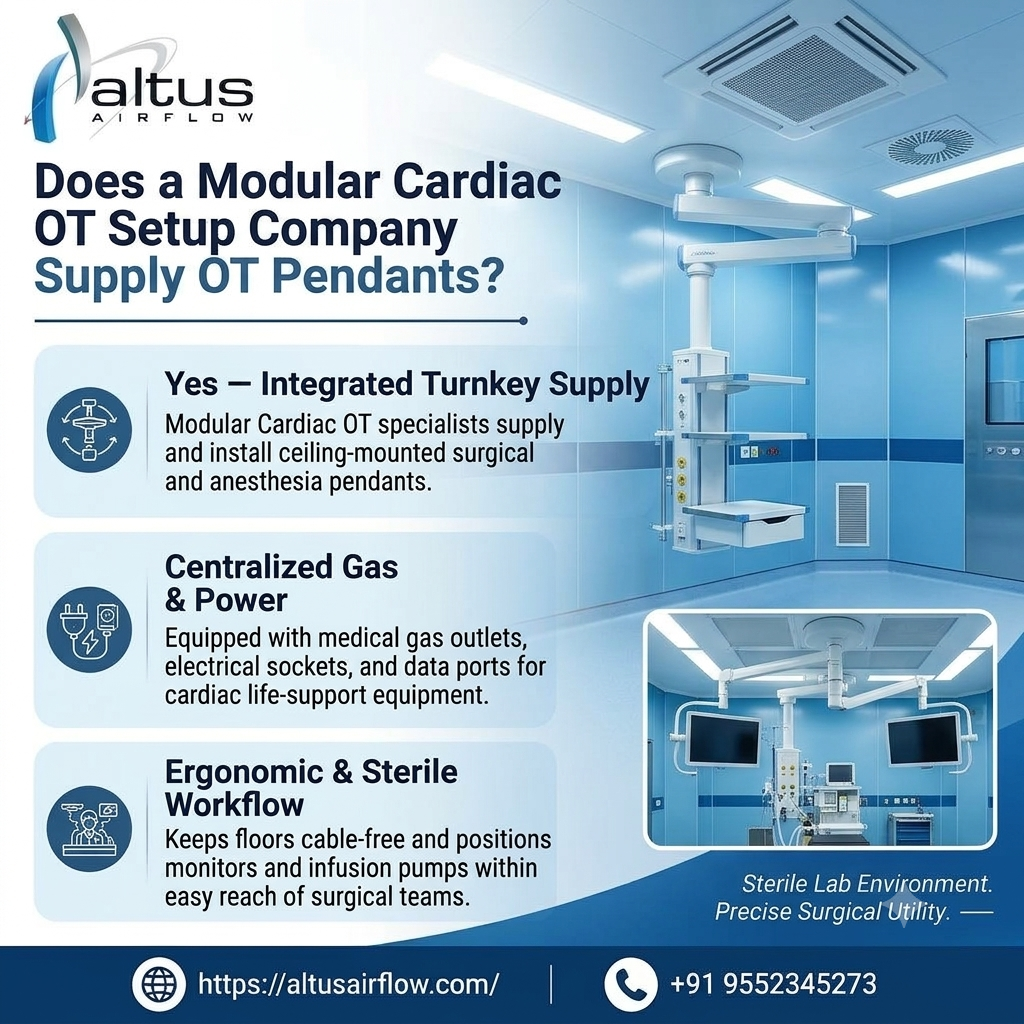
Altus Airflow understands that OT pendants are essential components of modern cardiac operating theatre infrastructure. A Modular Cardiac OT Setup Company can supply and integrate specialised medical pendants designed to organise medical gas outlets, electrical connections, data points, and equipment mounting arrangements. These systems help surgeons, anaesthesiologists, and nursing staff access essential utilities during complex cardiac procedures. Proper pendant selection and positioning improve workspace organisation, support clinical workflows, and reduce unnecessary floor-level equipment obstructions within the operating theatre.
OT pendants must be planned according to the hospital's equipment requirements, room layout, and medical workflow. Their integration with surgical lights, ventilation systems, and other ceiling-mounted installations is important for creating an organised and functional cardiac operating environment.
1. What Are OT Pendants in a Cardiac Operating Theatre?
OT pendants are specialised ceiling-mounted medical equipment support systems used in operating theatres. They provide convenient access to medical gases, electrical power, communication connections, and equipment mounting facilities.
Unlike conventional equipment stands, medical pendants are suspended from the ceiling and can be positioned according to the requirements of surgical teams.
In cardiac operating theatres, these systems support several essential activities, including anaesthesia administration, patient monitoring, surgical equipment operation, and medical device connectivity.
Common OT pendant components include:
-
Medical gas outlets for oxygen, medical air, and vacuum.
-
Electrical sockets for medical equipment.
-
Data and communication connections.
-
Equipment shelves and mounting brackets.
-
Cable management arrangements.
-
Adjustable arms and positioning mechanisms.
-
Integrated service panels.
The configuration depends on the clinical requirements, medical equipment specifications, and operating theatre layout.
2. Does a Modular OT Setup Provider Supply Medical Pendants?
Yes, specialised operating theatre infrastructure providers can supply medical pendants as part of a complete modular OT project or as a separately specified component.
A Modular Cardiac OT Setup Company generally coordinates pendant requirements with the hospital's architectural plans, electrical infrastructure, medical gas distribution, and equipment specifications.
The supply and integration process may involve:
Requirement assessment: Understanding the number of pendants, their intended functions, and the medical devices that will be connected.
Pendant selection: Identifying suitable configurations based on anaesthesia, surgical, and equipment management requirements.
Technical coordination: Reviewing medical gas connections, electrical outlets, data points, and equipment mounting requirements.
Installation planning: Determining suitable ceiling locations and ensuring compatibility with the structural support system.
Testing and commissioning: Checking connections, positioning mechanisms, electrical safety, and operational performance.
Hospitals should confirm whether pendant supply, installation, testing, and commissioning are included within the selected project scope.
3. Different Types of OT Pendants Used in Cardiac Operating Theatres
Different cardiac procedures require different equipment arrangements. Therefore, medical pendants are available in several configurations to support specific clinical functions.
A. Anaesthesia Pendants
Anaesthesia pendants are designed to support equipment and utilities required by anaesthesiologists.
They are generally positioned near the anaesthesia workstation and patient head area.
Common features include:
-
Oxygen outlets.
-
Medical air outlets.
-
Vacuum connections.
-
Electrical power sockets.
-
Data connections.
-
Equipment shelves.
-
Mounting provisions for monitoring devices.
These pendants help organise anaesthesia-related equipment and keep essential connections accessible during procedures.
B. Surgical Pendants
Surgical pendants are designed to support medical equipment used by surgeons and other operating theatre professionals.
They may include electrical outlets, data connections, instrument shelves, and mounting arrangements for selected medical devices.
Their positioning should allow convenient access without obstructing surgical lights or interfering with the operating table.
C. Single-Arm Pendants
Single-arm pendants generally feature one movable support arm that allows medical professionals to position the equipment according to their requirements.
They are suitable for selected operating theatre applications where controlled movement and convenient equipment access are important.
D. Double-Arm Pendants
Double-arm pendants provide additional positioning flexibility through two connected arms.
They can support equipment arrangements that require a wider movement range or more flexible positioning.
The selection between single-arm and double-arm configurations depends on the room dimensions, ceiling arrangement, equipment requirements, and clinical workflow.
E. Electric Motorised Pendants
Motorised pendants provide electrically controlled positioning for selected equipment support applications.
Depending on the model, authorised users can adjust the height and position through integrated controls.
These systems can help medical professionals position equipment without manually moving heavy support assemblies.
4. What Equipment Can Be Integrated into OT Pendants?
OT pendants can accommodate several types of medical equipment and utility connections.
Their exact configuration should be finalised before installation to ensure compatibility with the hospital's clinical requirements.
Important integration options include:
Medical gas outlets: These provide connections for oxygen, medical air, nitrous oxide where applicable, and vacuum services according to the intended clinical application.
Electrical outlets: Multiple power sockets support anaesthesia workstations, patient monitors, infusion devices, and other medical equipment.
Data connectivity: Network and communication connections support compatible medical devices and hospital information systems.
Equipment shelves: Shelves provide organised support for selected monitors and other approved medical devices.
Cable management: Proper cable routing helps reduce tangling and keeps the working area organised.
Monitor mounting arrangements: Dedicated mounting provisions allow compatible displays to be positioned conveniently for clinical staff.
Equipment compatibility, outlet standards, load capacity, and medical gas identification should be verified during project planning.
5. Importance of OT Pendant Positioning in Cardiac Surgery
Correct pendant positioning is essential because cardiac surgical procedures involve several professionals working around the operating table.
Poor positioning can restrict movement, obstruct access to equipment, and create unnecessary cable management challenges.
A properly planned pendant arrangement offers several advantages.
Better Equipment Accessibility
Medical professionals can access electrical connections, gas outlets, and equipment without unnecessary movement.
Improved Workspace Organisation
Ceiling-mounted systems reduce dependence on floor-standing equipment supports and help maintain a more organised operating area.
Reduced Cable Clutter
Integrated cable management helps keep electrical and data connections organised.
Improved Clinical Workflow
Proper positioning allows surgical teams to arrange equipment according to their responsibilities.
Flexible Equipment Placement
Movable pendant arms allow selected equipment to be positioned according to procedural requirements.
Pendant placement should be reviewed through detailed layout drawings and coordination meetings involving surgeons, anaesthesiologists, biomedical engineers, and infrastructure specialists.
6. How Are OT Pendants Integrated with Modular OT Ceiling Systems?
OT pendants are generally installed through specially designed ceiling support arrangements.
Their installation requires coordination between the modular ceiling structure and the building's structural framework.
Important considerations include:
Structural support: The supporting structure must accommodate the pendant's weight, equipment load, and movement requirements.
Ceiling coordination: Pendant locations should be finalised alongside modular ceiling panels and service access arrangements.
Surgical light positioning: Pendant arms should not obstruct surgical lights or interfere with their adjustment.
Ventilation coordination: Equipment placement should be reviewed to minimise interference with the designed airflow distribution.
Service connections: Electrical, medical gas, and data connections should be routed through appropriate pathways.
Maintenance access: The installation should allow inspection and servicing of connections and mechanical components.
Proper coordination before ceiling installation helps avoid conflicts between different operating theatre systems.
7. Safety Requirements for Medical OT Pendants
Safety is an important consideration when selecting and installing medical pendants.
Since these systems support medical utilities and equipment, their design and installation should comply with applicable technical and healthcare requirements.
Important safety considerations include:
-
Suitable structural load-bearing capacity.
-
Secure ceiling mounting arrangements.
-
Correct medical gas outlet identification.
-
Appropriate electrical protection.
-
Proper earthing and bonding.
-
Safe cable routing.
-
Reliable mechanical movement.
-
Suitable locking and positioning mechanisms.
-
Compatibility with medical equipment.
-
Appropriate cleaning and disinfection requirements.
Medical gas connections should be tested for correct identity, leakage, pressure, and performance before clinical use.
Electrical connections should also undergo suitable inspection and safety testing.
Hospitals should maintain installation records, equipment documentation, and inspection schedules for ongoing operational reliability.
8. What Should Hospitals Consider Before Selecting OT Pendants?
Selecting the right pendant system requires an understanding of the operating theatre's clinical and technical requirements.
Hospitals should evaluate several factors before finalising their selection.
Clinical Requirements
The pendant arrangement should reflect the needs of surgeons, anaesthesiologists, nurses, and other medical professionals.
Equipment Compatibility
The system should accommodate the dimensions, weight, power requirements, and mounting specifications of the intended medical devices.
Movement and Positioning
The movement range should provide convenient access without interfering with other ceiling-mounted installations.
Medical Gas Configuration
The number and type of gas outlets should match the clinical application.
Electrical and Data Connections
Power sockets and data points should be planned according to equipment requirements.
Cleaning and Maintenance
Materials and surface finishes should support routine cleaning and disinfection. Components should also remain accessible for servicing.
Future Expansion
Hospitals should consider provisions for additional equipment and possible changes in clinical requirements.
These considerations help ensure that pendant systems remain functional and suitable for the intended operating environment.
9. Installation and Commissioning of OT Pendants
OT pendant installation involves multiple technical activities that must be completed in a planned sequence.
A typical installation process includes:
-
Site assessment: Review the operating theatre layout, ceiling configuration, and existing infrastructure.
-
Requirement finalisation: Identify pendant types, utility connections, and equipment mounting needs.
-
Technical drawings: Prepare installation layouts showing pendant locations and service connections.
-
Structural preparation: Confirm that suitable ceiling support arrangements are available.
-
Pendant installation: Install the support assemblies and mounting components according to manufacturer instructions.
-
Utility integration: Connect medical gases, electrical services, and data infrastructure.
-
Functional testing: Verify arm movement, locking arrangements, and equipment mounting stability.
-
Safety inspection: Conduct the required medical gas and electrical safety checks.
-
Commissioning: Document test results and verify that the system meets the approved specifications.
Commissioning should be completed by qualified personnel before the equipment is released for clinical operation.
10. Why Is Integrated Pendant Planning Important in Modern Cardiac OTs?
Modern cardiac operating theatres contain several ceiling-mounted and wall-mounted systems. These include surgical lights, medical pendants, ventilation outlets, monitoring displays, and other specialised equipment.
Planning these components independently can create installation conflicts and restrict equipment movement.
Integrated planning helps coordinate:
-
Pendant locations and operating table positioning.
-
Surgical light movement and illumination coverage.
-
Medical gas distribution.
-
Electrical and data infrastructure.
-
Airflow distribution and ventilation outlets.
-
Equipment accessibility.
-
Ceiling maintenance access.
A coordinated design also helps ensure that different systems function together without unnecessary interference.
Hospitals should involve clinical representatives, architects, electrical consultants, HVAC specialists, and medical equipment suppliers during the planning process.
Conclusion
OT pendants are important components of modern cardiac operating theatre infrastructure because they organise medical gas connections, electrical supplies, data points, and equipment mounting arrangements. Specialised providers can supply and integrate different pendant configurations according to clinical requirements, ceiling structures, and equipment specifications. Proper selection, positioning, installation, and commissioning help improve equipment accessibility, workspace organisation, and surgical workflow.
Choosing a reliable Modular Cardiac OT Setup Company helps hospitals coordinate pendant systems with modular ceilings, ventilation, electrical infrastructure, and other essential operating theatre components.
Altus Airflow focuses on specialised modular healthcare infrastructure and coordinated operating theatre solutions. Altus Airflow supports hospitals in planning functional surgical environments through attention to equipment integration, technical requirements, and installation quality.
Frequently Asked Questions (FAQs)
1. Does a Modular Cardiac OT Setup Company supply OT pendants?
Yes, a Modular Cardiac OT Setup Company can supply and integrate medical pendants according to the hospital's clinical and technical requirements.
2. What is the main purpose of an OT pendant?
It provides convenient access to medical gases, electrical connections, data points, and equipment mounting facilities.
3. Which types of OT pendants are used in cardiac operating theatres?
Common types include anaesthesia pendants, surgical pendants, single-arm pendants, double-arm pendants, and motorised pendants.
4. Can OT pendants support anaesthesia equipment?
Yes, anaesthesia pendants can accommodate suitable medical gas outlets, power sockets, data connections, and equipment shelves.
5. Are OT pendants installed on modular ceilings?
They are installed using appropriately designed ceiling support arrangements coordinated with the building structure.
Read Our Previous Blog ---------------> How can a Cardiac Modular Operation Theatre increase hospital efficiency?

 Arabic
 French
 Spanish
 Portuguese
 Deutsch
 Turkish
 Dutch
 Italiano
 Russian
 Romaian
 Portuguese (Brazil)
 Greek