


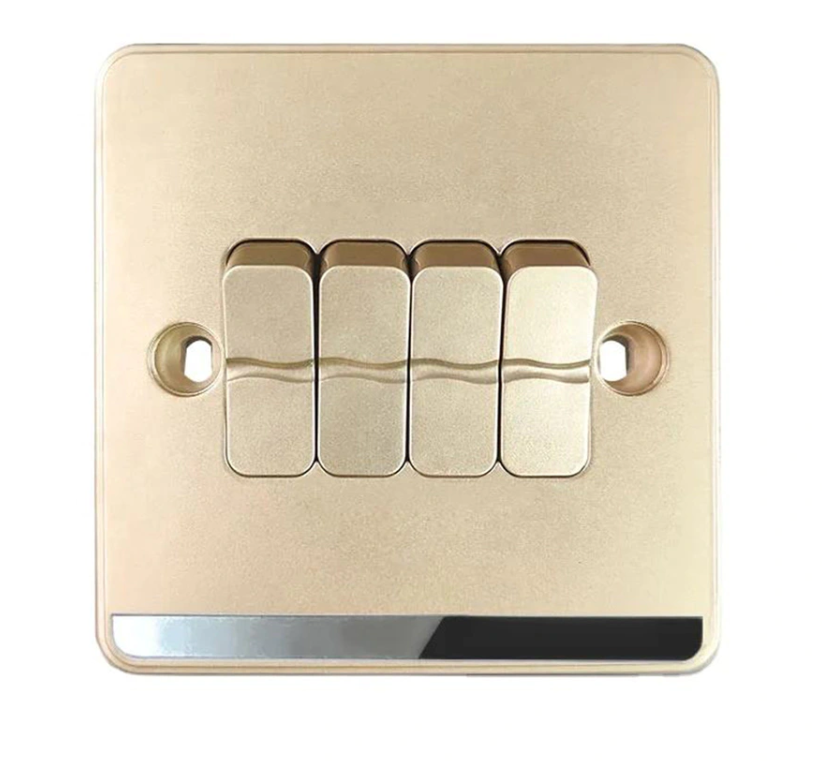
A wall switch may occupy only a small area, but its design has a noticeable influence on both room functionality and interior appearance. In residential and commercial buildings, gang switches help organize multiple lighting controls within a shared panel. This makes products from a Gang Switch Factory relevant to electrical wholesalers, building material importers, contractors, and private-label electrical brands.
Different buildings have different control requirements. A single-gang switch is suitable for controlling one lighting circuit, while a double-gang model provides two separate switching positions. Three-gang and four-gang switches can accommodate additional lighting groups in larger rooms or shared spaces. This range allows buyers to select products according to room layouts and electrical installation plans.
The operating mechanism is another factor that distinguishes switch models. Rocker switches use a simple pressing action and are commonly found in residential interiors. Push-button switches offer a different appearance and operating feel, while some specialized models incorporate indicator lights to show switching status. Each structure creates a different product experience and can serve a particular market segment.
A Gang Switch Factory may also offer several installation styles. Surface-mounted switches are used in applications where the wiring arrangement and wall structure require an external mounting solution. Flush-mounted versions sit within a wall box, creating a more integrated appearance. The mounting dimensions and terminal positions are important details for buyers coordinating switches with existing electrical layouts.
Exterior design has become an important part of product selection. A simple white faceplate can suit apartments and general housing projects, while black, champagne gold, silver, and other finishes provide additional options for hotels and decorative interiors. Square, rectangular, and rounded panel shapes also give brands different ways to organize their product collections.
Material and structural details deserve attention during product development. Engineering plastics are commonly used for insulating components, while decorative panels may feature glass-style or metallic finishes. Button dimensions, panel thickness, internal layout, and terminal design can vary between product series. These specifications help determine how a switch fits into a particular installation system.
Choosing products from a Gang Switch Factory involves more than selecting the number of buttons. Panel appearance, installation type, internal structure, material selection, and available configurations all contribute to product suitability. For importers and electrical project suppliers, these details provide a practical basis for building a switch portfolio that serves different building styles and installation needs.

 Arabic
 French
 Spanish
 Portuguese
 Deutsch
 Turkish
 Dutch
 Italiano
 Russian
 Romaian
 Portuguese (Brazil)
 Greek