Introduction
Laminate flooring has become one of the most popular flooring options for modern homes. It offers the look of hardwood while being more affordable and easier to install. Many homeowners choose laminate floors because they are durable, stylish, and available in many designs that match different interior styles. However, even though laminate flooring is strong, it still requires proper care to maintain its appearance and lifespan.
One of the most important aspects of laminate floor care is using the right cleaning method. Using excessive water or harsh chemicals can damage the surface over time. This is why choosing a proper laminate floor cleaner is essential for maintaining the floor’s shine and protecting its finish. Unlike traditional cleaning methods that may leave too much moisture behind, specialized cleaners are designed to clean laminate surfaces safely.
Many people assume laminate flooring is maintenance-free, but that is not entirely true. Dust, dirt, pet hair, and small debris can accumulate on the surface daily. If these particles are not removed regularly, they can scratch the protective layer of the flooring. Over time, these scratches can make the floor look dull and worn.
Using a good laminate floor cleaner helps remove dirt without damaging the protective coating. It also prevents water from soaking into the seams between the planks, which is one of the biggest causes of laminate floor damage.
Understanding Laminate Flooring
What Makes Laminate Floors Different
Laminate flooring is made using multiple layers that are pressed together to create a durable surface. The top layer is a protective coating that gives the floor its resistance to scratches, stains, and fading. Beneath this layer is a decorative image layer that gives laminate its wood or stone appearance.
Because laminate flooring is not solid wood, it reacts differently to moisture. While the surface is water-resistant, the inner layers can absorb moisture if water seeps into the edges. This is why excessive water exposure can cause swelling or warping over time.
For example, if water from a mop stays on the floor for too long, it may slowly seep into the seams between planks. This can cause the edges to lift or expand. Once this happens, the floor may no longer look smooth.
Using the right cleaning method and a proper laminate floor cleaner helps prevent this problem by keeping moisture levels low during cleaning.
Why Proper Cleaning Matters
Proper cleaning not only keeps laminate floors looking attractive but also extends their lifespan. Dirt and dust may seem harmless, but they can act like sandpaper when people walk across the floor. Over time, this friction can slowly damage the protective surface layer.
For example, small stones or sand brought in from outside can create tiny scratches when walked on repeatedly. These scratches may not be visible immediately, but they can accumulate over time and reduce the floor’s shine.
Using a suitable cleaning routine and the right products ensures that dirt is removed safely without damaging the surface. Regular cleaning also prevents stubborn stains from building up.
Choosing the Right Laminate Floor Cleaner
Use Cleaners Designed for Laminate Floors
Not all cleaning products are suitable for laminate surfaces. Some strong chemical cleaners contain ingredients that can damage the protective coating of the floor. Over time, these chemicals may cause discoloration or dullness.
A laminate floor cleaner is specifically designed to clean laminate surfaces without harming the finish. These cleaners usually contain gentle ingredients that remove dirt and stains while leaving the surface streak-free.
For example, if a kitchen floor has dried food spills or grease marks, a laminate-safe cleaner can remove these stains without leaving sticky residue.
Using the correct product helps maintain the floor’s appearance while protecting its protective layer.
Avoid Harsh Chemicals
Harsh chemicals such as bleach or ammonia can damage laminate flooring. These substances may weaken the protective layer and cause fading or discoloration.
For instance, some people try using strong disinfectants on floors to remove stains quickly. While these products may work temporarily, repeated use can make the floor look dull.
Instead, mild cleaning solutions or a dedicated laminate floor cleaner should be used. These products are formulated to clean effectively while preserving the floor’s finish.
Check Product Labels Before Use
Before using any cleaning product, it is always a good idea to check the label and confirm that it is safe for laminate flooring. Many manufacturers provide clear instructions about how the cleaner should be used.
For example, some cleaners are ready to use directly on the floor, while others may need to be diluted with water. Following the instructions helps ensure the cleaner works properly and prevents accidental damage.
Daily Cleaning Habits for Laminate Floors
Regular Sweeping or Vacuuming
One of the easiest ways to maintain laminate flooring is regular sweeping or vacuuming. Dust, hair, and small debris accumulate daily, especially in high-traffic areas such as hallways and living rooms.
Removing this debris prevents scratches and keeps the floor looking clean. A soft broom or a vacuum cleaner with a hard floor setting works well for this task.
For example, homes with pets may experience more hair and dirt on the floor. Sweeping or vacuuming every day can prevent buildup and make deeper cleaning easier.
Use a Microfiber Mop
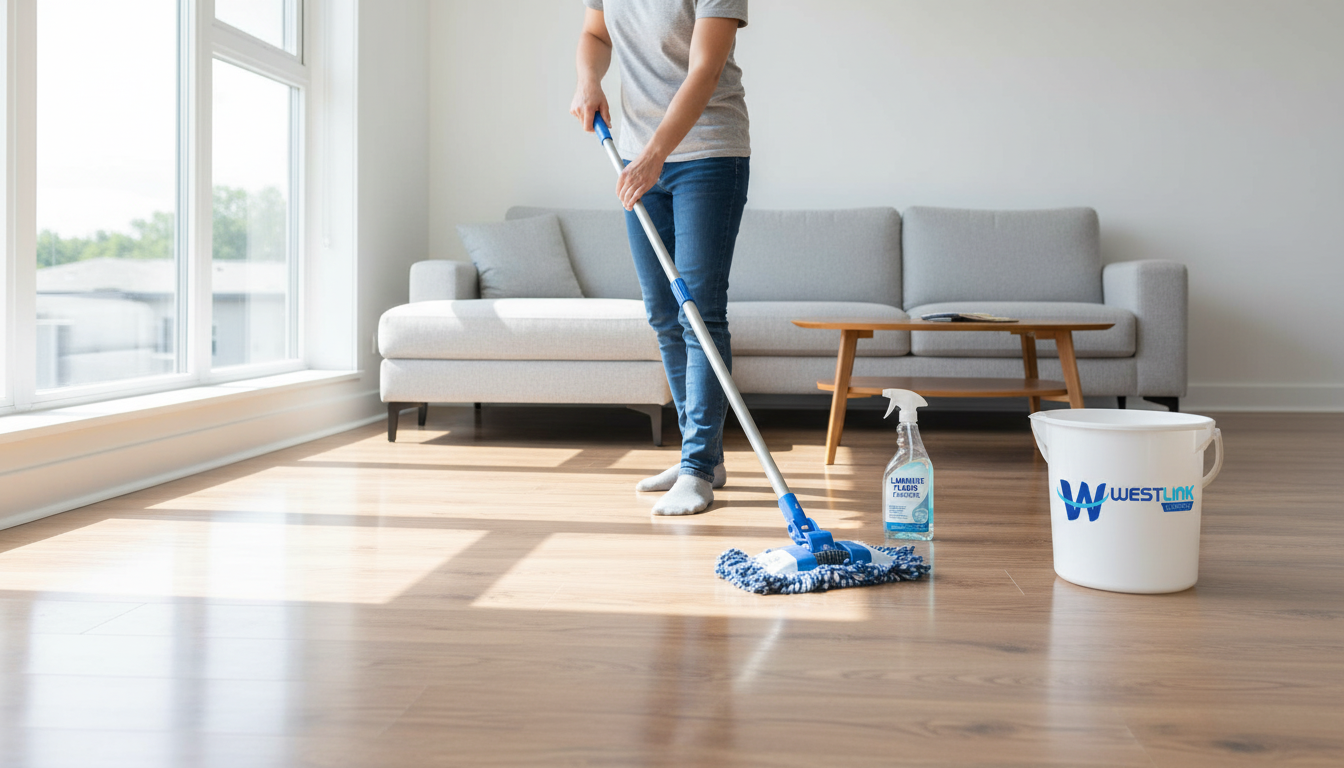
Microfiber mops are ideal for laminate floors because they are gentle and absorb dirt effectively. When used with a laminate floor cleaner, a microfiber mop can remove stains without scratching the surface.
Unlike traditional cotton mops, microfiber materials trap dust and moisture more efficiently. This means less water is needed during cleaning.
For instance, if someone spills coffee or juice on the floor, a microfiber mop can easily wipe it away without spreading the liquid across the surface.
Clean Spills Immediately
One of the most important habits for laminate floor care is cleaning spills as soon as they occur. Even though laminate surfaces resist water, leaving liquid on the floor for long periods can cause damage.
For example, if a glass of water spills and is left unattended, the liquid may slowly seep into the seams between planks. This can lead to swelling or warping.
Using a cloth or a laminate floor cleaner to wipe spills immediately helps prevent long-term damage.
Deep Cleaning Techniques for Laminate Floors
Use a Damp Mop Instead of a Wet Mop
When deep cleaning laminate floors, it is important to control the amount of water used. A damp mop works better than a wet mop because it reduces the risk of water entering the seams of the floor.
For example, when cleaning kitchen floors where grease or food residue may accumulate, lightly dampening the mop with a laminate cleaner is enough to remove stains.
Excess water should always be avoided because laminate flooring is sensitive to moisture.
Work in Small Sections
Cleaning floors in small sections helps ensure that moisture does not remain on the surface for too long. After cleaning one area, it can be quickly dried before moving to the next section.
For instance, when cleaning a large living room, dividing the floor into smaller areas allows for more controlled cleaning.
This technique helps maintain the floor’s appearance and prevents water damage.
Preventive Maintenance Tips
Use Floor Mats and Rugs
Floor mats placed near entrances help reduce the amount of dirt brought inside the home. Shoes often carry sand, dust, and small stones that can scratch laminate flooring.
For example, placing a mat near the front door allows people to wipe their shoes before entering. This simple step can significantly reduce the amount of debris on the floor.
Protect Floors from Furniture Scratches
Furniture legs can scratch laminate surfaces when moved across the floor. Adding protective pads to furniture legs prevents this problem.
For instance, chairs that are frequently moved during meals may create scratches over time. Installing felt pads under the legs can protect the floor from damage.
Maintain Indoor Humidity
Laminate flooring performs best in stable indoor humidity conditions. Extremely high humidity can cause expansion, while very dry air may cause shrinkage.
Maintaining balanced indoor humidity helps protect the floor and maintain its structure.
Common Mistakes to Avoid
Using Too Much Water
One of the most common mistakes when cleaning laminate floors is using excessive water. Traditional wet mopping can leave puddles that damage the floor.
Instead, cleaning should always be done with minimal moisture.
Using Abrasive Cleaning Tools
Rough brushes or abrasive pads can scratch the protective layer of laminate flooring. Once this layer is damaged, the floor may become more vulnerable to stains and wear.
Soft cleaning tools such as microfiber cloths are a better choice.
Conclusion
Laminate flooring is a practical and attractive choice for many homes, but it requires proper care to maintain its beauty and durability. Regular cleaning, careful moisture control, and the use of appropriate products all play an important role in preserving the floor’s condition.
Using a reliable laminate floor cleaner helps remove dirt and stains safely while protecting the floor’s protective layer. Simple habits such as sweeping regularly, cleaning spills quickly, and using microfiber mops can prevent scratches and moisture damage.
By following these best practices, homeowners can keep their laminate floors looking clean, shiny, and well-maintained for many years. Choosing the right cleaning routine and using a quality hard floor cleaning solution for laminate surfaces ensures the flooring remains both functional and visually appealing.
FAQs
What is the best way to clean laminate floors daily?
Daily cleaning can be done by sweeping or vacuuming to remove dust and debris.
Can I use water to clean laminate floors?
Yes, but only in small amounts. A damp mop is recommended instead of a wet mop.
Is vinegar safe for laminate flooring?
Vinegar can sometimes dull the floor’s finish if used frequently, so a laminate-specific cleaner is usually a better option.
How often should laminate floors be deep cleaned?
Deep cleaning once a week is usually enough for most homes.
Can steam mops be used on laminate floors?
Steam mops are generally not recommended because the heat and moisture can damage laminate flooring over time.

 Arabic
 French
 Spanish
 Portuguese
 Deutsch
 Turkish
 Dutch
Dutch
 Italiano
 Russian
 Romaian
 Portuguese (Brazil)
 Greek
Greek