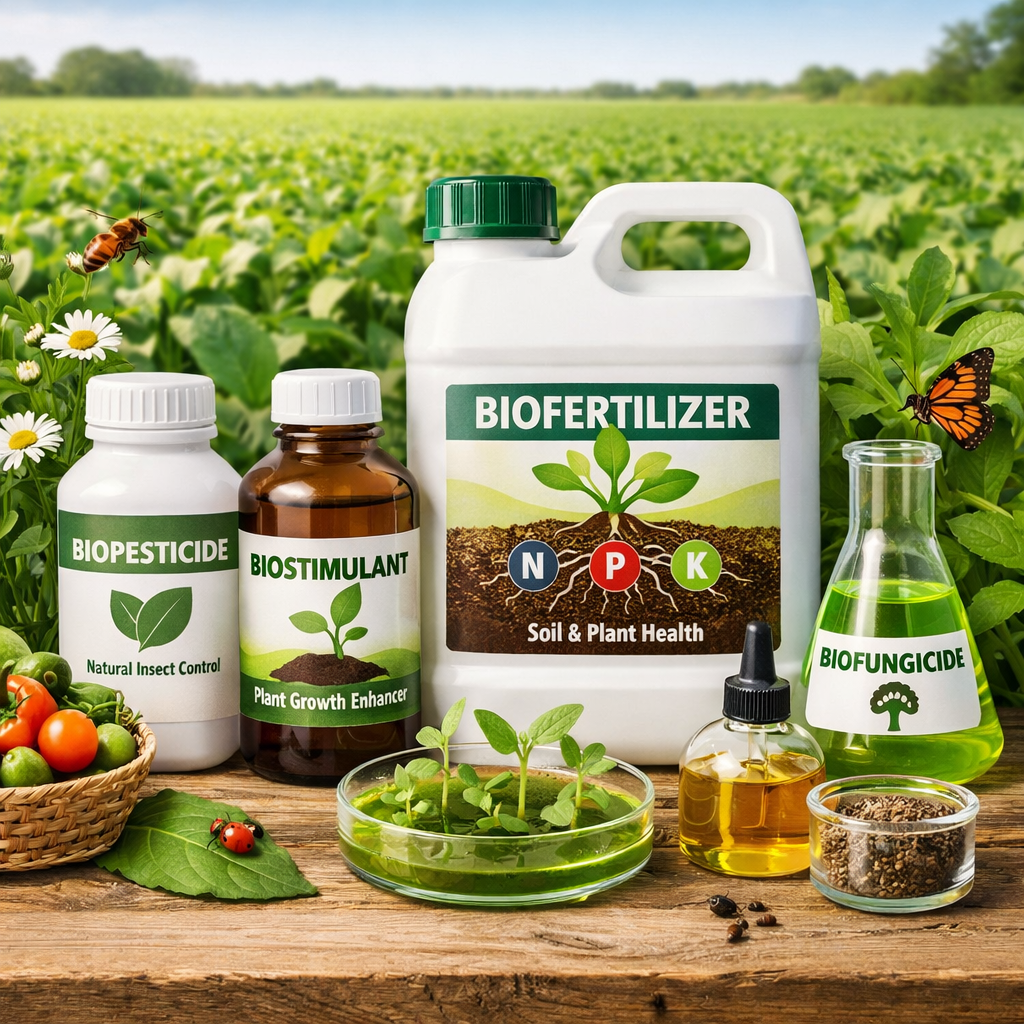
The Agricultural Biologicals Market Segmentation framework developed by The Insight Partners provides the most granular and commercially actionable view of how demand is distributed, growing, and shifting across the biological crop inputs industry through 2034. With five distinct segmentation dimensions, each providing a different lens on market structure, the full report enables precise strategy development for every category of market participant.
The agricultural biologicals market is forecast to reach US$ 43.10 billion by 2034 from US$ 18.36 billion in 2025, registering a CAGR of 10.2% from 2026 to 2034 as per the full report. The segmentation structure covers type (biopesticides, biostimulants, biofertilizers, others), source (microbials, biochemicals, others), application mode (foliar spray, soil treatment, seed treatment, others), application (cereals and grains, oilseeds and pulses, fruits and vegetables, others), and five geographic regions with country-level data for 18 nations.
Request Sample Pages of this Research Study @ https://www.theinsightpartners.com/sample/TIPRE00003668
Market Drivers
Segmentation analysis reveals that the drivers of demand operate with distinct intensity and specificity across each product type, source, and application category, requiring differentiated strategies for suppliers targeting different parts of the market.
Within the type segmentation, biopesticides are driven by the regulatory withdrawal of synthetic crop protection actives and the growing organic farming mandate for biological pest management solutions. The biopesticide segment's driver base is the most directly linked to regulatory timelines, making it particularly responsive to policy-accelerating events such as the announcement of new synthetic active ingredient withdrawals or the implementation of reduced pesticide use targets.
The biostimulants segment is driven by climate change adaptation requirements and the growing commercial recognition that plant stress tolerance enhancement has measurable yield protection value in the context of increasingly erratic weather patterns. Biostimulants are the type segment most closely associated with the abiotic stress driver, and their demand is expected to grow fastest among the type categories as climate variability intensifies and the agronomic case for stress tolerance enhancement strengthens.
Biofertilizers are driven by the combination of soil health restoration imperatives and the economic incentive to reduce synthetic nitrogen and phosphorus fertilizer costs, which represent major variable input expenses for cereal and row crop producers. The driver for biofertilizer adoption in large-scale row crop farming is fundamentally economic as well as environmental, making this segment less dependent on regulatory mandates and more responsive to the input cost economics of commercial farming.
Within the application mode segmentation, foliar spray is driven by convenience and infrastructure compatibility, seed treatment is driven by efficiency and early season performance benefits, and soil treatment is driven by soil health and microbiome restoration programs associated with regenerative agriculture commitments.
Within the crop application segmentation, cereals and grains generate the largest absolute volume of biological input demand due to the sheer scale of global cereal production area, while fruits and vegetables generate the highest per-acre value of demand due to the premium economics of horticultural crop production.
Competitive Landscape
- BASF SE
- Corteva Inc
- UPL Ltd
- Syngenta AG
- Bayer AG
- Koppert BV
- Biolchim SpA
- Yara International ASA
- Certis USA LLC
- Valent Biosciences LLC
- Pro Farm Group Inc
- Gowan Co
Also Available In: Korean | German | Japanese | French | Chinese | Italian | Spanish

 English
 Arabic
 French
 Spanish
 Portuguese
 Deutsch
 Turkish
 Dutch
Dutch
 Italiano
 Russian
 Romaian
 Greek
Greek