


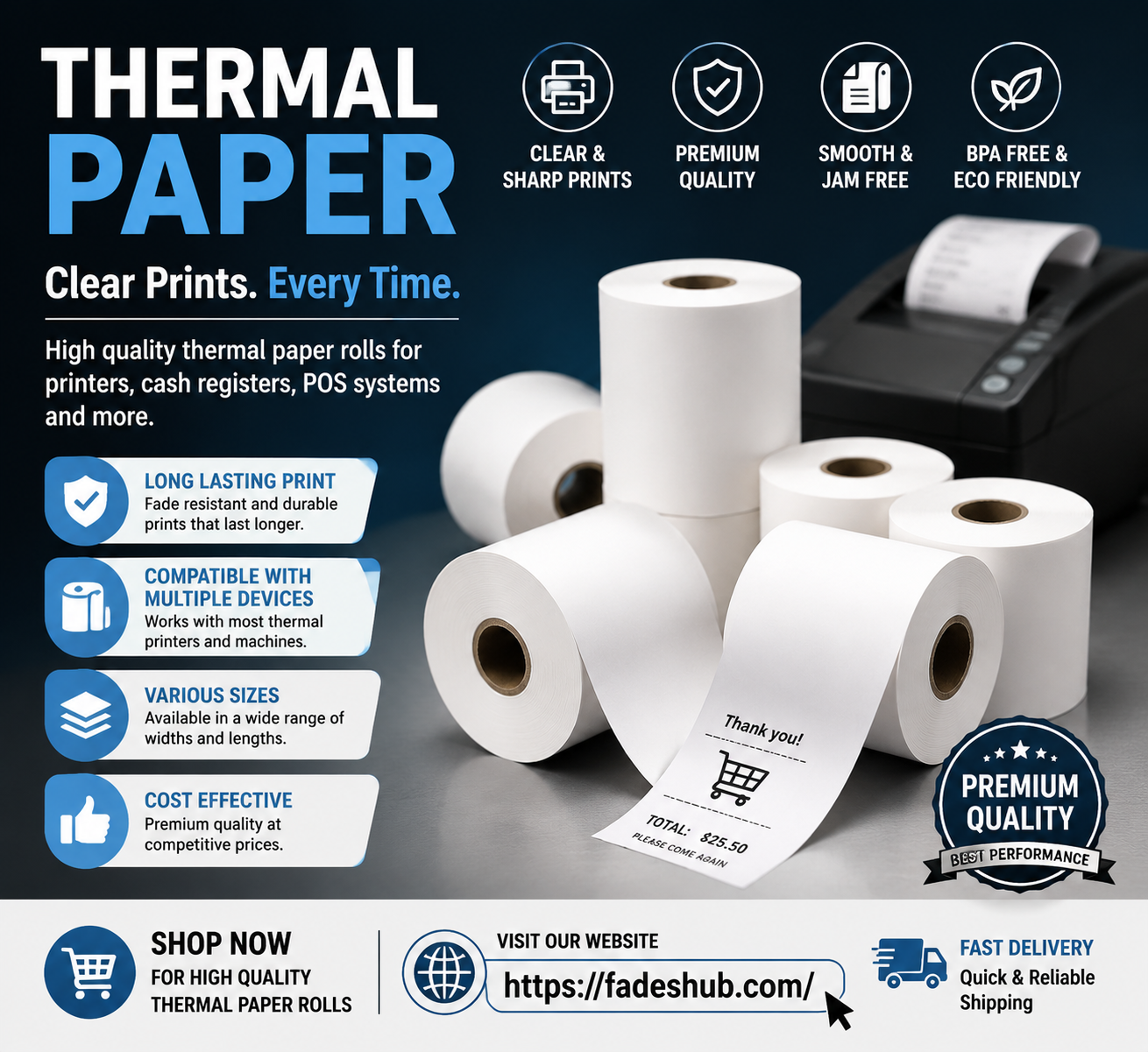
Complete Guide to Thermal Paper and Its Uses Across Industries
Thermal paper has become a fundamental component for businesses that rely on printing receipts, labels, and tickets quickly and efficiently. Designed for use in thermal printers, these specialized papers react to heat to produce clear, legible text and barcodes without the need for ink or toner. Thermal paper is widely used in retail, restaurants, pharmacies, logistics, and banking, providing a reliable solution for businesses that require fast, accurate, and professional printing. Using thermal paper enhances operational efficiency by allowing businesses to produce receipts, labels, or tags instantly. Its clean and maintenance-free operation makes it an attractive choice over traditional printing methods that require ribbons or cartridges. Thermal paper rolls are available in various sizes, thicknesses, and coatings, making them adaptable for multiple applications and printer types.
Understanding Thermal Paper
Thermal paper is a coated paper that reacts to heat, producing visible characters and images. The coating contains heat-sensitive chemicals that darken when exposed to the thermal print head, creating text, numbers, or barcodes instantly.
How It Works
-
Heat Activation: The printer’s thermal head applies heat directly to the paper.
-
Chemical Reaction: The coating changes color when heated.
-
Instant Printing: Text, barcodes, and images appear immediately without ink.
-
Consistent Quality: Ensures clear and readable output with minimal effort.
Applications of Thermal Paper Rolls
Thermal paper is versatile and serves multiple industries:
Retail and Supermarkets
-
Printing customer receipts
-
Managing sales and transactions
-
Tracking inventory through barcodes
Restaurants and Cafes
-
Printing customer bills
-
Generating kitchen order tickets
-
Managing table service efficiently
Pharmacies
-
Labelling medications
-
Printing patient and transaction records
-
Supporting compliance and inventory management
Logistics and Warehousing
-
Generating shipping labels
-
Tracking packages and shipments
-
Managing inventory efficiently
Banking and ATMs
-
Producing secure transaction receipts
-
Offering fast and reliable customer documentation
Types of Thermal Paper Rolls
Thermal paper rolls are available in various sizes, materials, and durability levels, making them suitable for a wide range of business and printing requirements.
Direct Thermal Rolls
-
Heat-sensitive and do not require ink or ribbons
-
Ideal for short-term receipts, tickets, and labels
-
Quick and efficient printing
Thermal Transfer Rolls
-
Require ribbon to produce durable, long-lasting labels
-
Suitable for outdoor, long-term, or inventory applications
-
Provides high-quality barcode and text printing
BPA-Free Rolls
-
Environmentally safer, free from Bisphenol-A
-
Reduces potential chemical exposure
-
Popular among businesses seeking safer printing options
Premium and High-Quality Rolls
-
Enhanced durability for longer storage of printed documents
-
Consistent clarity and print accuracy
-
Designed for high-demand and high-volume printing environments
Advantages of Using Thermal Paper
Faster Printing
Thermal printers work quickly, reducing wait times for receipts or labels.
No Ink Needed
Eliminates the need for costly ribbons, cartridges, or toner.
Reduced Maintenance
Fewer moving parts and simple operation decrease printer downtime.
Clear Print Quality
High-quality thermal paper ensures sharp text and barcodes for accurate scanning.
Cost-Efficient
Thermal paper minimizes ongoing supply and maintenance costs.
Reliability
Provides consistent results across high-volume printing applications.
Tips for Choosing the Right Thermal Paper
-
Width and Size: Match the paper roll size to your printer specifications.
-
Length: Longer rolls reduce the frequency of replacements.
-
Material: Choose between direct thermal, thermal transfer, or BPA-free options.
-
Print Quality: Ensure the coating and thickness support clear, readable prints.
-
Durability: Select premium rolls for labels or receipts that require longer retention.
Industry Trends and Innovations
Eco-Friendly Options
Sustainable and biodegradable papers are increasingly preferred in retail and hospitality.
Improved Print Technology
Advancements in thermal printers allow higher resolution and faster output.
Wider Adoption
As businesses aim to improve operational efficiency, thermal paper usage continues to expand across industries.
Integration with POS Systems
Thermal paper rolls integrate seamlessly with point-of-sale systems, ensuring smooth transactions and accurate record-keeping.
Frequently Asked Questions
What is thermal paper?
Thermal paper is coated paper that produces text and images when heat is applied from a thermal printer.
Why use thermal paper instead of standard paper?
It allows for fast, ink-free printing, reduces maintenance, and ensures clear and reliable output.
Are there different types of thermal paper?
Yes. Options include direct thermal, thermal transfer, BPA-free, and premium durable rolls.
What industries use thermal paper the most?
Retail, restaurants, pharmacies, logistics, warehouses, and banking rely heavily on thermal paper.
How should thermal paper be stored?
Keep rolls in a cool, dry place away from direct sunlight or moisture to preserve quality.
Is thermal paper environmentally friendly?
Many BPA-free or unbleached options are available that are safer and more sustainable.
Conclusion
Thermal paper rolls are essential for businesses that value efficiency, accuracy, and professional presentation. By choosing the right type, size, and quality, companies can ensure consistent results, reduce operating costs, and streamline daily operations. From retail receipts to shipping labels, thermal paper continues to be a critical tool for modern business processes.
If you want to now more then you have to go here

 English
 Arabic
 French
 Spanish
 Portuguese
 Deutsch
 Turkish
 Dutch
Dutch
 Italiano
 Russian
 Romaian
 Portuguese (Brazil)